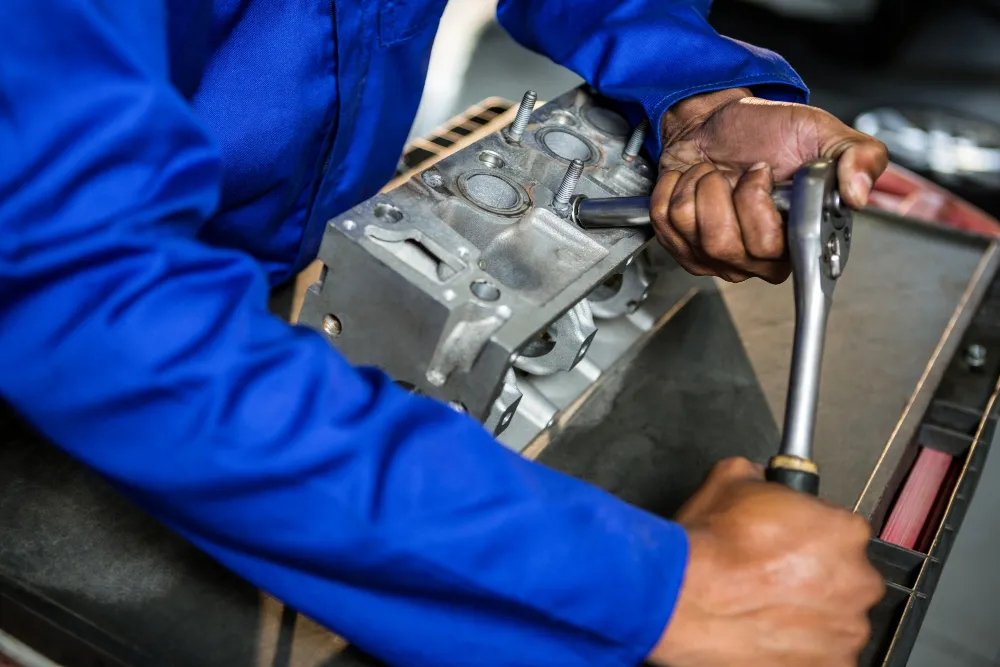

The engine block serves as the primary structural foundation of an engine and contains several critical components that must work together precisely. Continuous heat, pressure, friction, and vibration can gradually affect its condition, especially in engines that have experienced extensive service. When damage or wear becomes significant, professional inspection can determine whether restoration is practical. During engine block rebuilding, technicians evaluate the block carefully, identify damaged areas, and use suitable machining procedures to restore important surfaces. Proper rebuilding can help improve dimensional accuracy, support dependable operation, and extend the useful life of the engine.
Why Problems Develop
Engine block problems can develop for several reasons, including overheating, poor lubrication, coolant issues, corrosion, excessive operating stress, and prolonged use. Some damage occurs gradually, while other problems can appear suddenly following a serious mechanical failure. Because the block supports cylinders, bearings, cooling passages, and other important areas, even relatively small defects can influence overall engine performance. A detailed inspection is therefore necessary before rebuilding begins. Technicians examine both visible and hidden areas to determine the severity of damage and identify which surfaces require machining, repair, measurement, or other restoration procedures.
Common Problems Found During Inspection
Cylinder Bore Wear
Cylinder bore wear is one of the most common problems found in heavily used engine blocks. Continuous piston movement gradually affects the cylinder walls, particularly when lubrication is inadequate or operating conditions are severe. Wear can create an uneven bore shape, reducing the proper fit between pistons, rings, and cylinder walls. During rebuilding, technicians measure each bore carefully to determine its condition and dimensional accuracy. If sufficient material remains, machining may restore the bore to an appropriate size and finish. Accurate cylinder restoration helps support compression, lubrication control, and smoother piston movement.
Cylinder Bore Distortion
Cylinder bores can also become distorted because of overheating, mechanical stress, previous repairs, or uneven operating conditions. A bore may develop taper, out of round conditions, or other dimensional variations that are difficult to identify through visual inspection alone. Precision measuring equipment helps technicians determine the exact condition of each cylinder. When appropriate, machining can correct these irregularities and restore the bore geometry. Maintaining consistent cylinder dimensions is important because pistons and rings depend on accurate surfaces for proper operation. Correcting distortion can therefore contribute to improved compression and reduced internal wear.
Cracks in the Block
Cracks can develop in engine blocks because of overheating, freezing coolant, impact, excessive stress, or manufacturing defects. Some cracks may be visible, while others can remain hidden until specialized inspection methods are used. Cracked areas require careful evaluation because the location and severity of the damage determine whether restoration is practical. Technicians may inspect cooling passages, cylinder areas, mounting sections, and other vulnerable locations. If the damage can be safely repaired, suitable restoration techniques may be applied before final machining and inspection. Proper crack evaluation helps prevent unreliable repairs and unnecessary engine assembly.
Damaged Deck Surfaces
The deck surface forms an important sealing area between the engine block and cylinder head. Warping, corrosion, erosion, or previous machining can affect its flatness and reduce sealing performance. An uneven deck can contribute to combustion leakage, coolant problems, or gasket failure. During rebuilding, technicians measure the surface to identify deviations from the required specifications. If suitable, controlled machining can restore flatness and create an appropriate finishing condition. Proper deck restoration supports reliable gasket sealing and helps maintain the correct relationship between the cylinder head, block, and internal engine components.
Worn Main Bearing Locations
Main bearing locations support the crankshaft and must maintain accurate alignment for reliable engine operation. Excessive wear, bearing failure, improper lubrication, or crankshaft problems can affect these areas. Damage may appear as wear, distortion, or misalignment across the main bearing locations. During rebuilding, technicians carefully inspect and measure these surfaces to determine whether correction is necessary. Line boring or related machining procedures may be used when appropriate to restore alignment and dimensional accuracy. Correctly restored bearing locations help the crankshaft rotate smoothly and reduce the possibility of premature bearing and internal engine wear.
Additional Restoration Concerns
Corroded Cooling Passages
Cooling passages inside an engine block are exposed to coolant and can experience corrosion, deposits, or restricted flow over time. Contaminated or neglected cooling systems may accelerate this condition and reduce the block's ability to transfer heat effectively. During rebuilding, technicians inspect accessible cooling areas and look for evidence of corrosion or blockage. Cleaning and suitable restoration procedures can help improve coolant circulation where possible. Addressing cooling passage problems is important because inadequate heat management can contribute to overheating and additional engine damage. A properly inspected block provides a stronger foundation for reliable engine operation.
Damaged Threaded Holes
Threaded holes are used for securing cylinder heads, covers, brackets, accessories, and other engine components. Repeated assembly, corrosion, excessive tightening, or cross threading can damage these threads and prevent fasteners from holding correctly. During rebuilding, technicians inspect critical threaded locations and determine whether repair is required. Damaged threads may sometimes be restored using suitable thread repair methods or machining procedures. Correctly repaired threads help maintain secure component attachment and appropriate clamping force. This small but important restoration step can prevent installation problems and support dependable engine assembly after rebuilding is completed.
Warped or Distorted Areas
Engine blocks can experience distortion when exposed to extreme temperatures, uneven cooling, severe mechanical loads, or previous machining errors. Distortion may affect several surfaces simultaneously and can interfere with the correct installation of internal and external components. Precision measurement helps identify areas that have moved outside acceptable dimensional limits. Technicians then determine whether controlled machining can restore the necessary geometry without compromising structural integrity. Correcting distortion requires careful planning because excessive material removal can create additional problems. Proper evaluation ensures that restoration remains focused on achieving accurate dimensions while preserving the usable structure of the block.
Surface Finish Problems
Machined surfaces require suitable finishes because surface texture can affect sealing, lubrication, bearing contact, and component movement. Excessive roughness, scoring, corrosion, or previous machining marks can interfere with proper assembly. During rebuilding, technicians evaluate important surfaces and determine whether additional finishing is necessary. Appropriate grinding, honing, or machining procedures can improve surface characteristics while maintaining required dimensions. Surface preparation should be based on the specific component and its function rather than applying one finish to every area. Proper finishing helps create better contact between mating parts and supports consistent engine performance after assembly.
The Importance of Precision During Rebuilding
Measuring Critical Dimensions
Accurate measurement is central to successful engine block rebuilding because many internal dimensions directly influence engine operation. Technicians measure cylinder bores, bearing locations, deck surfaces, and other critical areas using suitable precision instruments. Measurements help establish the extent of wear and determine how much material can safely be removed during machining. Comparing results against appropriate specifications allows the rebuilding process to remain controlled and predictable. Measurement should occur before, during, and after major machining operations where necessary. This systematic approach helps identify dimensional problems early and reduces the risk of incorrect component fit.
Maintaining Proper Alignment
Alignment is particularly important for areas associated with the crankshaft, camshaft, cylinders, and other rotating or reciprocating components. A block can have individually accurate surfaces while still presenting problems if those surfaces are not correctly aligned with one another. Rebuilding procedures therefore include appropriate alignment checks before final assembly. Precision machining can correct certain alignment issues when the block remains structurally suitable for restoration. Proper alignment reduces uneven loading and unnecessary friction while supporting smoother component movement. Careful attention to geometry helps ensure that restored engine blocks provide a reliable foundation for rebuilt internal components.
Checking the Finished Block
A final inspection provides an important opportunity to confirm that rebuilding work has achieved the intended results. Technicians review critical dimensions, surface conditions, alignment, repaired areas, threaded locations, and other relevant features. The finished block should be evaluated against the requirements of the specific engine application before assembly begins. Any remaining irregularities can potentially be addressed at this stage rather than after the engine is operating. Thorough final inspection supports confidence in the restoration and reduces the likelihood of problems caused by overlooked damage, inaccurate machining, or unsuitable surface conditions.
Benefits of Addressing Block Problems
Supporting Better Engine Performance
A properly restored engine block provides an accurate foundation for pistons, bearings, crankshafts, cylinder heads, and other internal components. Correct dimensions and suitable surface conditions help these parts operate within their intended relationships. Addressing bore wear, deck distortion, bearing alignment, cracks, corrosion, and thread damage can reduce potential sources of mechanical problems. Rebuilding does not guarantee performance by itself, but accurate restoration provides an important foundation for successful engine assembly. When other components are also properly inspected and serviced, a restored block can contribute to dependable operation and consistent engine performance.
Extending Useful Engine Life
Engine block restoration can extend the useful life of an engine when the block remains structurally suitable for rebuilding. Correcting wear and restoring important surfaces allows existing components or properly matched replacement components to operate under more appropriate conditions. This can be particularly valuable when replacing the complete engine would involve greater expense or availability concerns. The decision to rebuild should always follow a professional assessment of the block's condition. When restoration is technically appropriate, careful machining and inspection can help preserve the block while providing a dependable foundation for continued engine service.
Conclusion
Engine blocks can develop numerous problems throughout their service life, including cylinder bore wear, distortion, cracks, damaged deck surfaces, worn bearing locations, corrosion, thread damage, and surface irregularities. Each condition requires careful inspection before an appropriate restoration method is selected. Precision measurement, controlled machining, alignment verification, surface finishing, and final quality checks all contribute to a successful rebuilding process. Addressing these problems systematically can help restore important engine dimensions and provide a stronger foundation for assembly. Professional rebuilding can therefore be a practical option when an engine block remains suitable for restoration. For reliable engine block restoration and machining support, Rutt's Machine Shop Inc. can assist with professional rebuilding requirements.






















Sign in to leave a comment.