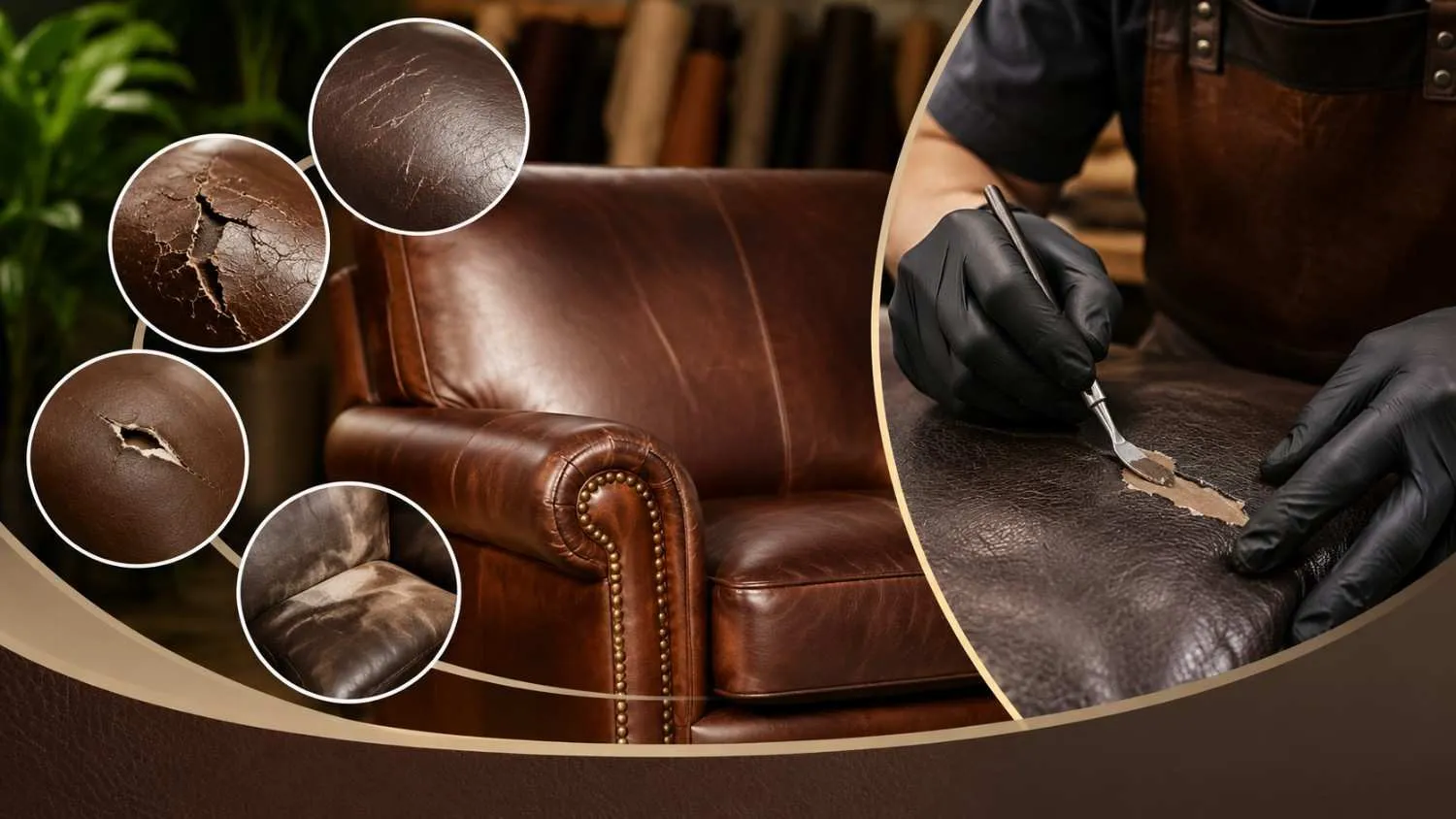

Leather damage is more common than most furniture owners realize—and most of it is fixable. Professional leather repair addresses issues like surface scratches, deep cracks, peeling top coats, colour fading, and torn seams. Experts use fillers, dyes, and bonding compounds to restore the leather's appearance and structural integrity without requiring a full replacement.
If you own a leather sofa, armchair, or set of dining chairs, you've likely noticed at least one of these problems developing over time. The good news is that understanding what's causing the damage helps you choose the right fix—and avoid making it worse with the wrong product.
Why Leather Deteriorates Over Time
Leather is a natural material. It breathes, absorbs oils, and reacts to heat and humidity. Without consistent conditioning, the fibres dry out and lose flexibility. Once that happens, everyday use — sitting, standing, shifting — accelerates surface breakdown.
Common causes of leather deterioration include:
- Direct sunlight and UV exposure causing fading and drying
- Body oils and sweat breaking down the surface coating
- Pets scratching or puncturing the surface
- Spills left untreated, especially acidic liquids
- Low-quality leather or bonded leather that delaminates faster
The 5 Most Common Leather Damage Problems
1. Surface Scratches
The most common complaint of leather furniture owners is scratches. Light scratches only scratch the surface coating and rarely penetrate the hide itself. Often, they are caused by keys or pet claws or belt buckles catching on the seat.
Minor scratches will usually be buffed out by experts, using a leather conditioner or a light compound. For more serious damage they put a thin layer of leather filler on, sand it flush and then recolour to match the original finish. When it is done professionally it is almost invisible.
2. Cracking and Leather Crack Repair
Cracking is one of the more serious types of damage and it’s usually a result of years of neglect rather than a one-off incident. When leather is completely dried, the surface cracks along stress lines, particularly on seat cushions and arm rests.
A good process for leather crack repair is to clean the area, apply a flexible leather filler into the cracks and let it cure, then re-dye and seal. One thick coat is not as good as several thin applications of filler. The pros always work in layers.
Cracks that run through to the hide backing are more difficult to reverse but can be stabilised. It’s always better to intervene early - small cracks that are treated quickly seldom develop into full splits.
3. Peeling and Flaking
Peeling almost always indicates bonded leather or a failing polyurethane (PU) coating rather than full-grain leather. Bonded leather is made from leather scraps and synthetic binders — once the top coat starts to separate, it peels in sheets and flakes.
Repair options depend on how far the peeling has spread:
- Localised peeling: Edges are re-bonded, loose material is removed, and the area is resurfaced with a flexible coating
- Widespread peeling: Full resurfacing using a leather repair kit or professional recoating service
- Delamination across the entire piece: May require panel replacement if the substrate is too damaged
4. Colour Fading
Fading is usually noticed in leather that is exposed to sunlight or placed by windows. UV rays break down the dye in the surface layer, resulting in patches that appear bleached or uneven. Fading is most obvious on dark leathers black and brown.
Professional re-dyeing restores the depth and consistency of the colour. Experts clean and prepare the surface, then apply several thin coats of leather dye to match the original shade. Finally, a topcoat sealant is applied to protect the new colour, and to extend the life of the finish.
If you simply paint over the faded leather without any preparation, it will not cover evenly and will peel off very soon. Preparation is a must in any good repair job.
5. Tears and Worn Cushions
Tears may range from a clean cut to a ragged split with loss of material. The repair method will depend on the size, location and if the backing is still intact.
If the tear is small, the conservator will place a sub-patch (a thin piece of fabric) behind the tear for support and then fill in the damaged area and re-colour the surface. Larger rips will require a colour-matched leather patch to blend into the surrounding area.
Worn cushion surfaces (where the top layer has thinned and lost texture) are treated with a combination of filler, retexturing compounds and dye. The most technically demanding part of this fix is recreating the original grain pattern, and it is here that expert skill reveals itself.
When to DIY vs. Call a Professional
| Damage Type | DIY Suitable? | Professional Recommended?
|
|---|---|---|
| Light surface scratches | Yes | Optional |
| Deep cracks | Partially | Yes |
| Peeling / flaking | Small areas only | Yes |
| Colour fading | No | Yes |
| Tears and punctures | No | Yes |
| Worn cushion surfaces | No | Yes |
How to Prevent Future Leather Damage
Repairs restore what's lost, but prevention keeps your leather looking newer for longer. A few consistent habits make a significant difference:
- Condition leather every 3–6 months using a pH-neutral conditioner
- Keep furniture away from direct sunlight or use UV-protective window film
- Wipe up spills immediately with a clean, dry cloth — never rub
- Avoid harsh cleaning sprays or alcohol-based products
- Use a leather protector after any professional repair to seal the surface
Leather furniture is an investment. In the UK, a quality leather sofa can range from £800 to over £3,000 — making repair a far more cost-effective option than replacement in most cases.
Choosing the Right Leather Repair Service
Not all repair services deliver the same results. When evaluating a professional, look for technicians who use flexible, water-based repair compounds, offer colour-matching consultations, and can show before-and-after examples of similar repairs.
For furniture owners dealing with any of the issues covered above, DKS International provides expert leather restoration services with a focus on precision colour matching and long-lasting results. Their team handles everything from minor scratches to full surface restoration.
Frequently Asked Questions
Can cracked leather be fully repaired?
Yes, most cracked leather can be significantly improved with professional repair. Technicians use flexible fillers and re-dyeing to restore the surface. The earlier the cracks are treated, the better the final result — deep cracks that have reached the backing are harder to reverse but can still be stabilised.
How long does a professional leather repair last?
A quality professional repair, properly sealed and cared for, typically lasts 3–5 years or longer. Longevity depends on the type of leather, the level of daily use, and whether you follow a basic conditioning routine. Repairs on bonded leather tend to have a shorter lifespan than those on full-grain leather.
Is it worth repairing a peeling leather sofa?
It depends on the extent of the damage and the leather type. Localised peeling on full-grain or corrected-grain leather is almost always worth repairing. Widespread delamination on bonded leather may not be cost-effective to restore — a professional assessment will tell you quickly which category your sofa falls into.
What causes leather to crack and peel?
Cracking is caused by moisture loss in the leather fibres — typically from lack of conditioning, low humidity, or heat exposure. Peeling is usually a coating failure, most common in bonded or PU leather. Both issues worsen significantly if left untreated, so early repair saves both money and the furniture.
Can leather colour be restored after fading?
Yes. Professional re-dyeing restores faded leather effectively. Technicians match the original colour, prepare the surface, and apply multiple coats of leather dye followed by a protective topcoat. DIY colourants rarely achieve a seamless finish — professional colour matching produces a result that's difficult to distinguish from the original.
How much does leather repair typically cost in the UK?
Costs vary based on damage type and area size. Minor scratch or crack repairs can start from around £50–£100, while full re-dyeing or panel replacement may range from £150 to £400 or more. In most cases, repair is significantly cheaper than replacing a leather sofa, which averages £800–£2,000 in the UK.


























Sign in to leave a comment.