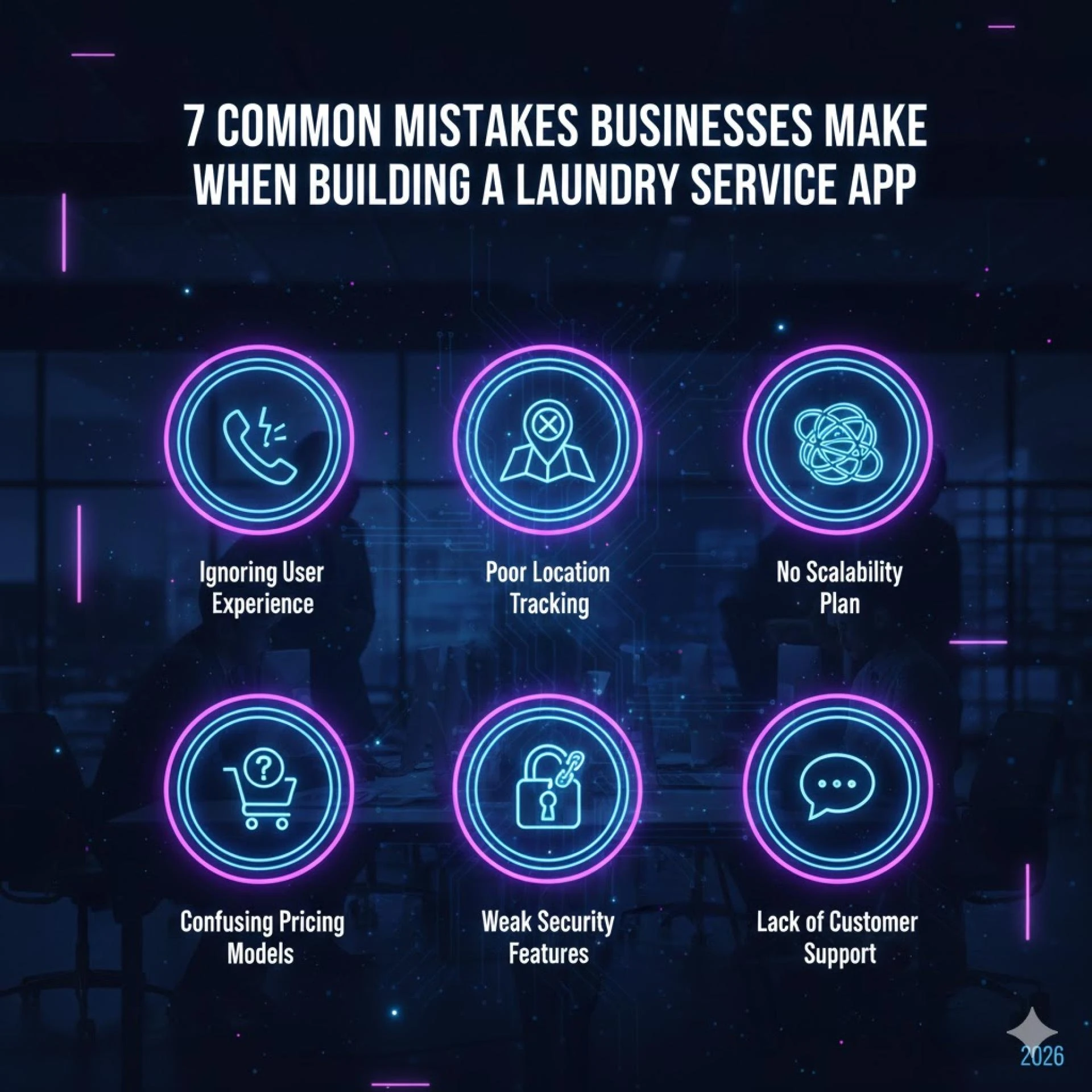

The on-demand economy is changing service industries. Laundry services are also affected. Many urban areas are growing, and people want convenience. Many entrepreneurs are putting money into mobile laundry services. They focus on pickup and delivery.
Building a successful laundry service app needs more than a simple booking interface. Bad planning can cause delays. Tech issues make things worse. Weak operations can lead to failed platforms.
To grow and earn more in the long run, steer clear of these mistakes with your tech team or laundry app developer:
1. Skipping Market and Operational Research
A common mistake is starting development without checking demand or knowing the logistics.
Businesses often fail to assess:
- Target audience behavior
- Local competition
- Pricing expectations
- Delivery radius feasibility
- Fleet management requirements
A laundry app isn't a digital tool. It links closely to real-world tasks like pickup, cleaning, and delivery. Without aligning app functionality with operational capacity, inefficiencies arise rapidly.
Proper feasibility analysis ensures the technology supports actual service delivery.
2. Ignoring a Clear Business Model
Many startups start development without defining how they will generate revenue.
Common monetization models include:
- Per-order commission
- Subscription plans
- Tiered service pricing
- Express delivery fees
- Marketplace commission model
Without clarity, the app’s feature set becomes inconsistent. For example, subscription systems need recurring billing integration. Marketplace models must have vendor dashboards.
A structured revenue strategy must guide the development roadmap from the beginning.
3. Overcomplicating the User Experience
Laundry services are convenience-driven, and if booking requires too many steps or complex inputs, users quickly abandon the process, making it essential for a professional laundry app development company to design streamlined, user-centric experiences.
Common UX mistakes include:
- Cluttered interface
- Excessive form fields
- Confusing pricing display
- Poor navigation
- Lack of order tracking transparency
An effective app should allow users to schedule pickup in under a minute. Simplicity increases retention.
A skilled laundry app development company prioritizes intuitive UX design and seamless workflows.
4. Neglecting Scalable Architecture
Early-stage apps are often built for short-term MVP launches without considering future expansion.
Scalability factors include:
- Multi-city support
- Multi-vendor capability
- Cloud-based infrastructure
- Load balancing
- API flexibility
If architecture isn't modular, adding features later can be costly. It also becomes complicated.
Planning for growth from the beginning prevents redevelopment costs.
5. Weak Admin and Vendor Dashboards
Many businesses focus on the customer app, often neglecting backend management systems.
Critical backend features include:
- Order management dashboard
- Delivery staff tracking
- Inventory status monitoring
- Commission calculation
- Analytics reporting
Without proper administrative control, operational chaos follows. Backend systems are as important as the user interface.
Professional development teams emphasize robust admin infrastructure alongside customer-facing features.
6. Underestimating Logistics Integration
Laundry delivery apps rely heavily on logistics efficiency.
Common oversights include:
- No real-time tracking
- Poor route optimization
- Manual dispatching systems
- Lack of SMS/email notifications
Using GPS tracking, automated dispatch, and push notifications boosts reliability and customer satisfaction.
Technology must align with fleet operations for smooth service execution.
7. Overlooking Security and Compliance
Handling user data, payment information, and location tracking introduces compliance responsibilities.
Frequent security mistakes include:
- Weak encryption protocols
- Insecure payment gateways
- Poor authentication systems
- Lack of GDPR or regional compliance measures
A secure infrastructure protects both customer data and business reputation.
An experienced laundry app development company ensures:
- End-to-end encryption
- Secure API architecture
- PCI-compliant payment integration
- Regular vulnerability testing
Security is not optional — it is foundational.
Additional Strategic Errors Businesses Make
Beyond technical development, strategic missteps also impact performance.
Lack of Marketing Alignment
Some businesses build an app without planning user acquisition strategies. Before you launch, think about these options. Use organic SEO. Try paid ads. Set up referral programs. Form local partnerships.
Ignoring Customer Feedback Loops
Post-launch analytics and user reviews provide valuable insights. Businesses that fail to iterate based on feedback lose a competitive advantage.
No Performance Monitoring
Without tracking:
- Daily active users
- Order completion rates
- Customer retention
- Average order value
Growth decisions become guesswork.
The Role of Structured Development Planning
Building a laundry service app requires structured execution across many phases:
- Need gathering
- UI/UX wireframing
- Backend architecture design
- Frontend development
- API integration
- Testing and QA
- Deployment
- Maintenance and updates
Each stage demands technical precision and operational awareness.
Working with a laundry app development company cuts execution risk. It also ensures that digital systems connect seamlessly with real-world logistics.
Technology Stack Considerations
Modern laundry service apps typically rely on:
- React Native or Flutter for cross-platform development
- Node.js or Laravel for backend systems
- Cloud hosting (AWS, Azure, or Google Cloud)
- Firebase for real-time notifications
- Stripe or Razorpay for payment integration
- Google Maps API for tracking
Selecting the right stack impacts scalability, performance, and maintenance costs.
Long-Term Impact of Avoiding These Mistakes
When businesses avoid these common errors, they achieve:
- Faster time-to-market
- Lower operational inefficiencies
- Higher customer retention
- Improved delivery accuracy
- Stronger data security
- Scalable infrastructure for expansion
A well-architected app supports long-term profitability rather than short-term experimentation.
Conclusion
Building a laundry service app involves far more than coding a booking system. It requires operational alignment, scalable architecture, secure infrastructure, and strategic planning.
The seven common mistakes listed above can make or break a project. Skipping research and ignoring backend systems are two examples. These errors often lead to failure.
Businesses that plan their growth do better. They check their market and team up with skilled tech experts. This way, they can succeed in the tough on-demand service market.
Avoiding these errors isn’t about preventing failure. It's about building a digital platform. This platform helps with long-term performance, growth, and operational excellence.


























Sign in to leave a comment.