
Introduction
Ask around about smart home automation, and KNX automation tends to come up with a lot of baggage attached. It's too expensive. Too complicated. Only for massive mansions with unlimited budgets.
Most of this reputation is outdated, based on how KNX was implemented decades ago rather than how it actually works today. Some of it was never true to begin with.
Here's a clear-eyed look at the most common KNX myths and what's actually accurate.
Myth 1: KNX Automation Is Only for Massive Luxury Homes
This is probably the most persistent myth, and it's simply not accurate.
While KNX is genuinely popular for villa automation due to its scalability, it's used just as effectively in mid-sized homes, apartments undergoing renovation, and even commercial spaces.
Why This Myth Exists
KNX has historically been associated with high-end projects because it requires wiring during construction, which naturally pairs it with larger renovation or new-build projects, regardless of home size.
The Reality
The system itself scales to the property, not the other way around. A well-designed KNX setup for a three-bedroom home can be just as efficient and reliable as one in a sprawling villa, simply on a smaller scope.
Myth 2: KNX Is Prohibitively Expensive Compared to Other Systems
KNX does typically cost more upfront than wireless home automation options. That part is true. But "expensive" only tells half the story.
What Gets Left Out of This Comparison
- Wireless systems often need components replaced or upgraded every 5 to 8 years
- KNX installations from decades ago are frequently still fully operational today
- Long-term total cost of ownership often favours KNX once replacement cycles are factored in
A Fairer Way to Compare Cost
Rather than comparing upfront price alone, it's worth comparing cost per year of expected system life. A wired KNX system with a 15-year lifespan often works out more cost-effective than replacing a wireless system two or three times over the same period.
Myth 3: KNX Systems Are Too Complicated for Everyday Use
This myth confuses installation complexity with everyday usability, which are two completely different things.
What's Actually Complex
The programming and design phase of a KNX automation system does require specialised, certified expertise. That part is genuinely technical.
What's Actually Simple
Once properly installed, day-to-day use is straightforward, often simpler than juggling multiple apps for different wireless devices. A well-programmed KNX system typically means the following:
- One interface for lighting, climate, and shading
- Physical switches that still work exactly as expected
- Scenes and routines that run automatically, without homeowner intervention
The complexity lives with the installer during setup, not with the homeowner during daily use.
Myth 4: You Can't Add KNX to an Existing Home
This one is only partially true, and the nuance matters.
Where the Myth Comes From
Because KNX requires dedicated wiring, many assume it's impossible to add to a home that's already built and finished.
The More Accurate Picture
KNX can be added to existing homes, particularly during renovations when walls are already being opened up. It's simply more disruptive and costly compared to installing it during new construction.
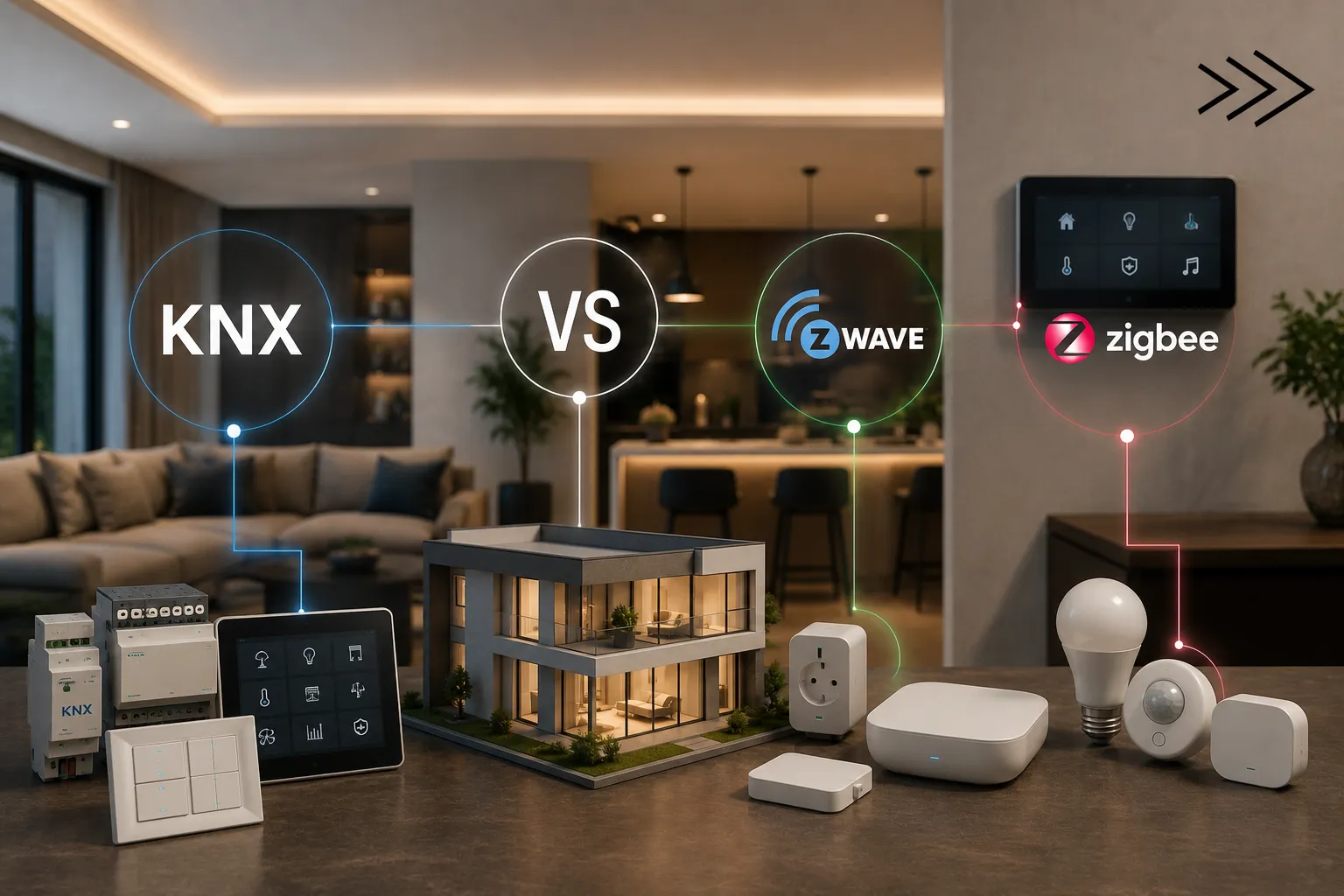
For homeowners not planning a renovation, hybrid setups are also common, using KNX as a backbone where feasible and wireless devices elsewhere, connected through a gateway.
Myth 5: KNX Doesn't Work Well With Modern Smart Devices
Some assume that because KNX is an older, established standard, it doesn't integrate well with newer smart home products like voice assistants or wireless sensors.
Why This Isn't Accurate
KNX is an open standard supported by hundreds of manufacturers, and modern gateways allow it to communicate with popular wireless ecosystems, voice assistants, and even security systems, including CCTV installation setups.
The open nature of KNX is actually one of its biggest advantages. Unlike proprietary systems tied to a single brand's ecosystem, KNX isn't at risk of becoming obsolete if one manufacturer discontinues a product line.
Myth 6: KNX Automation Doesn't Make Sense for Security Systems
Some homeowners assume KNX is mainly for lighting and climate, treating security as a separate, unrelated system.
The More Common Reality
In practice, KNX frequently serves as the backbone connecting lighting, climate, access control, and security together, including integration with CCTV installation and alarm systems.
This integration means a triggered security sensor can automatically adjust lighting or send alerts, rather than functioning as an isolated system with no connection to the rest of the home.
If you've been avoiding KNX automation because of outdated assumptions about cost or complexity, it's worth getting a proper consultation based on your actual property, since many of these concerns simply don't apply the way they used to.
Myth 7: Once Installed, KNX Systems Can't Be Changed or Expanded
This myth likely comes from confusing "wired" with "fixed," which isn't accurate.
What's True
The physical wiring is installed once, and changing it later is more involved than adjusting a wireless setup.
What's Also True
The programming and functionality of a KNX system can be modified, expanded, and reconfigured extensively without touching the wiring itself. Adding new scenes, adjusting automation logic, or integrating new compatible devices is a software-level change, not a rewiring project.
This is actually one of KNX's core strengths for villa automation projects that may expand or change over time, such as adding a home cinema room or extending outdoor lighting automation.
Conclusion
Most myths about KNX automation come from outdated assumptions or confusing installation complexity with everyday usability. In reality, KNX is scalable across property sizes, cost-effective over the long term, genuinely simple to use once installed, and flexible enough to integrate with modern devices and security systems like CCTV installation.
For homeowners weighing wired versus wireless home automation, it's worth separating fact from outdated reputation before ruling KNX out based on myths that no longer hold up.
Considering KNX for Your Home
If misconceptions about cost or complexity have held you back from exploring KNX automation, it's worth getting a straightforward, honest assessment based on your actual property.
Get in touch for a free consultation on whether KNX automation, a wireless system, or a hybrid approach makes the most sense for your home.
Frequently Asked Questions
Is KNX automation only suitable for large villas? No, KNX scales to the property size. It works well in mid-sized homes and apartments undergoing renovation, not just large villa automation projects.
Is KNX automation more expensive than wireless smart home systems long-term? Not necessarily. While upfront costs are higher, KNX's long lifespan often makes it more cost-effective over 10 to 15 years compared to replacing wireless systems multiple times.
Can KNX automation be added to an existing home without major renovation? It's possible but more disruptive than new construction. Many homeowners use a hybrid approach, combining KNX with wireless devices through a gateway instead.
Does KNX work with modern smart home devices and voice assistants? Yes, through gateways that allow KNX to integrate with popular wireless ecosystems, voice assistants, and security systems.
Can a KNX system be expanded after installation? Yes, programming and functionality can be modified and expanded extensively without altering the original wiring, making it flexible for future upgrades like CCTV installation or added automation zones.























Sign in to leave a comment.