
Introduction
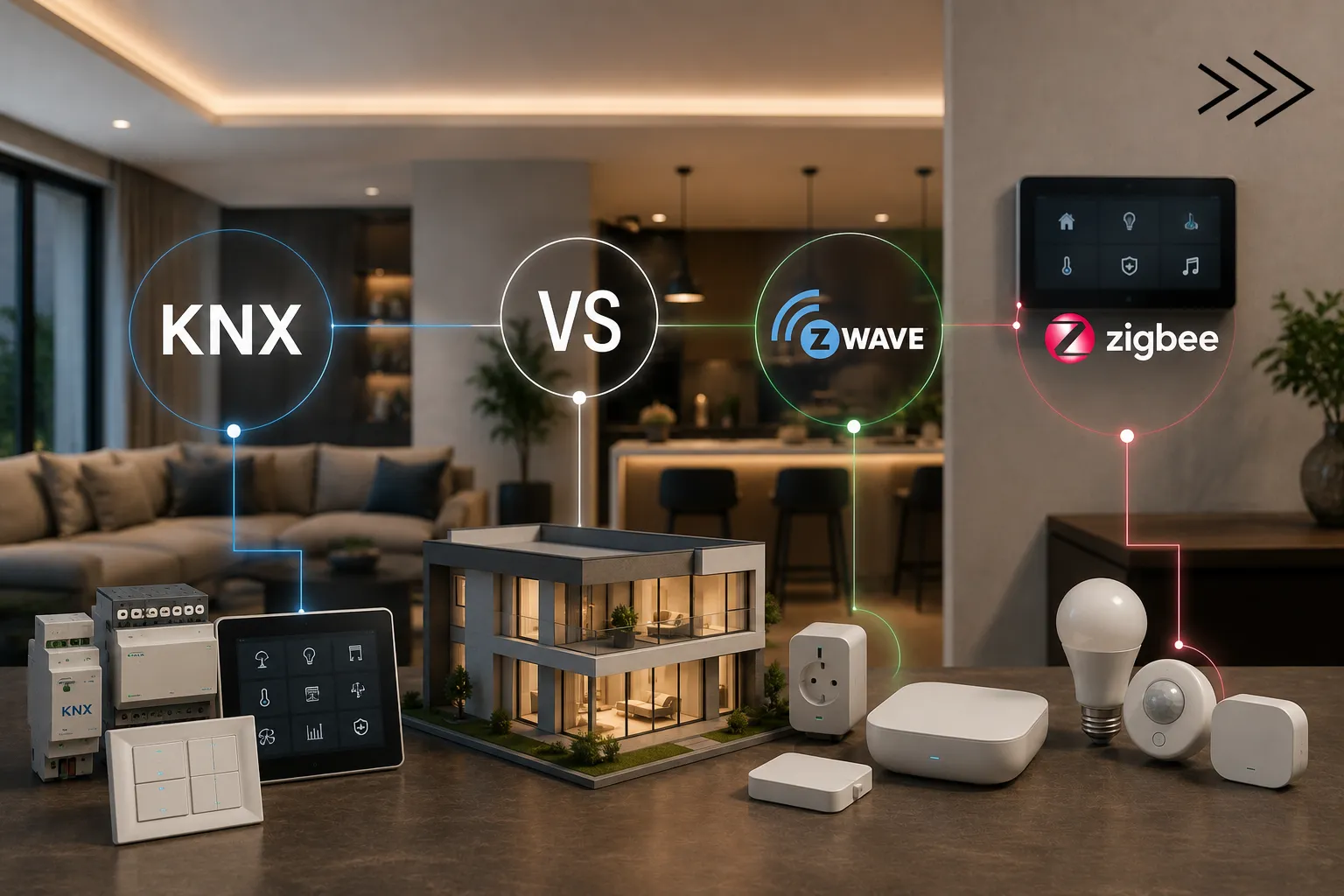
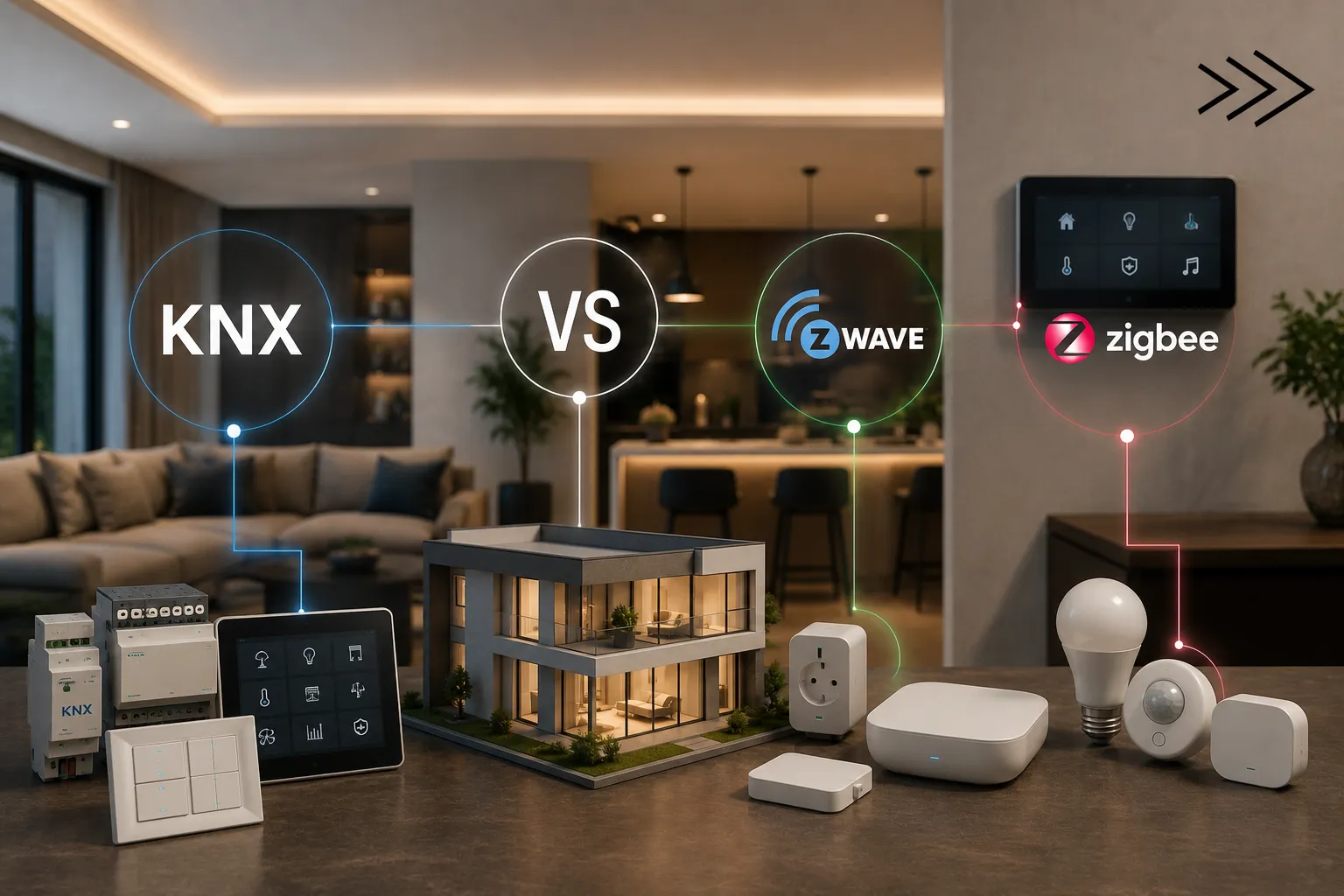
If you've started researching smart home automation, you've probably run into three names over and over: KNX, Z-Wave, and Zigbee.
They all promise the same outcome — a connected, automated home — but they work in fundamentally different ways, and choosing the wrong one can mean expensive rework down the line.
This isn't a "best vs worst" comparison, because the right answer genuinely depends on your property, your budget, and how long you want the system to last. Here's how these three protocols actually compare, without the marketing spin.
What Are KNX, Z-Wave, and Zigbee, Exactly
Before comparing them, it helps to understand what each one actually is.
- KNX automation is a wired, open-standard protocol used primarily in residential and commercial buildings, especially larger properties and new builds
- Z-Wave is a wireless protocol designed for retrofit-friendly home automation, common in individual smart devices like locks and sensors
- Zigbee is another wireless protocol, widely used in consumer smart home ecosystems and often built into products from major tech brands
All three can control lighting, climate, and security. The differences show up in reliability, scalability, and long-term cost.
KNX Automation: The Wired, Enterprise-Grade Option
KNX has been around since the late 1980s and is one of the most established standards in building automation worldwide.
How KNX Works
KNX runs on dedicated wiring installed during construction or renovation. Devices communicate over this physical bus line rather than relying on Wi-Fi or radio signals.
This wired foundation is why KNX automation is the standard choice for villa automation and large residential projects—it doesn't compete for bandwidth with your home network and isn't affected by wireless interference.
Strengths of KNX
- Extremely reliable, with no signal drop-off common in wireless systems
- Open standard supported by hundreds of manufacturers, so you're not locked into one brand
- Long lifespan—systems installed 10–15 years ago are often still fully functional
- Scales well for large, complex properties with many integrated systems
Limitations of KNX
- Requires professional installation and certified programming
- Higher upfront cost due to cabling and labour
- Best suited to new builds or major renovations, since retrofitting wiring into finished walls is costly
Z-Wave: The Retrofit-Friendly Wireless Standard
Z-Wave was built specifically for homes where running new cables isn't practical.
How Z-Wave Works
Z-Wave devices communicate wirelessly over a dedicated frequency band, separate from Wi-Fi, which reduces interference with your internet connection.
It uses a mesh network, meaning each device can relay signals to others, extending range without needing extra hardware.
Strengths of Z-Wave
- No wiring required, making it ideal for existing homes and apartments
- Strong device interoperability, since most Z-Wave products are certified to work together
- Lower upfront cost compared to wired systems
- Good range for mid-sized homes thanks to mesh networking
Limitations of Z-Wave
- Can struggle with very large properties without additional range extenders
- Fewer high-end integration options compared to KNX for complex villa-scale projects
- Still dependent on hubs and occasional firmware updates
Zigbee: The Consumer Ecosystem Favourite
Zigbee is likely the protocol you've encountered without realizing it, since it powers many popular smart home products.
How Zigbee Works
Like Z-Wave, Zigbee uses a wireless mesh network. It operates on a different frequency band, though, which occasionally overlaps with Wi-Fi channels in densely connected homes.
Strengths of Zigbee
- Wide product availability across major smart home brands
- Generally lower device cost than Z-Wave or KNX components
- Good for lighting-heavy setups and smaller automation projects
- Easy entry point for homeowners starting with basic home automation
Limitations of Zigbee
- Less standardised than Z-Wave, meaning compatibility between brands can be inconsistent
- More prone to interference in homes with many Wi-Fi devices
- Not typically used for large-scale villa automation or commercial-grade projects
KNX vs Z-Wave vs Zigbee: Side-by-Side Comparison
| Factor | KNX | Z-Wave | Zigbee |
| Connection type | Wired | Wireless | Wireless |
| Best for | Villas, new builds, large homes | Retrofit homes, apartments | Consumer devices, lighting |
| Installation | Professional, cabled | DIY or professional | DIY-friendly |
| Reliability | Very high | High | Moderate to high |
| Upfront cost | Higher | Moderate | Lower |
| Long-term lifespan | 10–15+ years | 7–10 years | 5–8 years |
| Brand interoperability | Excellent (open standard) | Good | Variable |
Which One Should You Actually Choose
There's no universal winner here — the right protocol depends on three things: your property type, your timeline, and how far you want the system to scale.
Choose KNX Automation If
- You're building a new home or doing a major renovation
- You want a system built for villa automation or a large, multi-zone property
- Long-term reliability and brand flexibility matter more than upfront cost
Choose Z-Wave If
- You're automating an existing home without wanting to open up walls
- You want strong device compatibility without committing to a wired infrastructure
- Your property is small to mid-sized
Choose Zigbee If
- You're starting with a smaller home automation setup, like smart lighting or plugs
- Budget is a primary concern
- You're not planning extensive security or climate integration in the near future
If your plans include CCTV installation, multi-zone climate control, or whole-property lighting, it's worth having a professional assess your home before choosing a protocol—the right infrastructure decision now can save significant retrofit costs later.
Can These Protocols Work Together
In some situations, yes. Many systems use KNX to support the building's main systems. Like lights, temperature, and safety. And then connect Z-Wave or Zigbee devices at the edges using special devices called gateways.
This way of combining things is becoming more and more usual in homes that are being automated, especially when the people living there want the dependability of KNX for parts but also want to add smart gadgets from stores later.
Still bringing everything together makes things more complicated. It is better to plan this with someone who knows a lot about automation instead of trying to put it all together later.
Conclusion
KNX, Z-Wave, and Zigbee are all part of home automation. They do things, but they are good for different situations.
KNX automation is great for people who own homes and want to put in a system that will last a long time. This is especially true for people who have houses or are building a new home.
Z-Wave is a choice for people who already have a home and want to be able to control things without using wires.
Zigbee is an option for people who do not have a lot of money and just want to be able to control a few basic things like lights.
The best choice is not about which one's the best technically. It is about which one's the best for your home and what you want to do in the long term with your smart home automation, like KNX, Z-Wave, and Zigbee.
Not Sure Which Protocol Fits Your Home
When you are trying to decide between KNX, Z-Wave, and Zigbee, it is a good idea to think about your property and what you want. You should also think about how much money you have to spend.
Our team can help you figure out what the choice is for your home. For example, if you have a house, a wired KNX system might be the way to go. If you have a house, Z-Wave might be better because it is easy to install without messing with the walls.
You can talk to us for free. We will give you our honest opinion. We will not try to sell you something you do not need.
Frequently Asked Questions
Is KNX better than Z-Wave and Zigbee? KNX isn't universally "better" — it's more reliable and scalable for large properties like villas, but Z-Wave and Zigbee are more practical and affordable for smaller homes or retrofits.
Can I mix KNX with Z-Wave or Zigbee devices? Yes, through gateways that bridge the protocols. This hybrid setup is common in larger homes that want KNX's reliability with the flexibility of consumer wireless devices.
Which protocol is best for a villa automation project? KNX automation is generally the preferred choice for villas due to its reliability, scalability, and ability to integrate lighting, climate, and security into one system.
Do Z-Wave and Zigbee work without professional installation? Yes, both are largely DIY-friendly, though professional installation is recommended for larger or more complex home automation setups.
Is KNX automation worth the higher cost? For new builds and large properties, yes, its longevity and open-standard flexibility often make it more cost-effective over a 10 to 15-year period compared to replacing wireless systems.
Does the choice of protocol affect CCTV installation? Indirectly, yes. KNX-based systems often integrate CCTV installation and security more seamlessly into the overall automation platform, while Z-Wave and Zigbee typically treat security cameras as a separate connected system.

























Sign in to leave a comment.