

Why Tax Mistakes Cost Malta Businesses More Than Money
Running a business in Malta comes with real tax responsibilities. Between provisional tax, VAT returns, and annual filings, it is easy for small errors to slip through, especially when you are focused on day-to-day operations.
These errors rarely stay small. A missed deadline or an incorrect filing can lead to fines, interest charges, and unwanted attention from the Commissioner for Revenue. This is why many growing companies choose to work with a tax advisor in Malta early on, rather than waiting for a problem to appear.
In this guide, we break down the most common tax mistakes Malta businesses make, why they happen, and how to avoid them before they cost you time and money.
1. Missing Provisional Tax and Filing Deadlines
Malta has a structured tax calendar, and provisional tax payments are due at specific points during the year. Many business owners either forget these dates or underestimate how much time is needed to prepare accurate figures.
Did You Know? Late payment of provisional tax in Malta can trigger both interest and administrative penalties, even if the amount owed is eventually paid in full.
A simple fix is setting calendar reminders well ahead of each due date, not on the day itself. Better still, keep your bookkeeping current throughout the year so your figures are ready whenever a deadline approaches.
2. Poor Record-Keeping and Bookkeeping Gaps
Tax mistakes rarely start with the tax return itself. They usually start months earlier, with missing receipts, unrecorded expenses, or invoices filed inconsistently. When records are incomplete, it becomes difficult to claim legitimate deductions or prove figures if questions arise later.
Common Mistakes We See
- Storing receipts in different formats across email, paper, and spreadsheets
- Recording expenses only at year-end instead of monthly
- Failing to separate deductible and non-deductible costs
Consistent, month-by-month bookkeeping is the single biggest factor in avoiding tax errors. It also makes year-end filing far less stressful.
3. Misunderstanding VAT Obligations
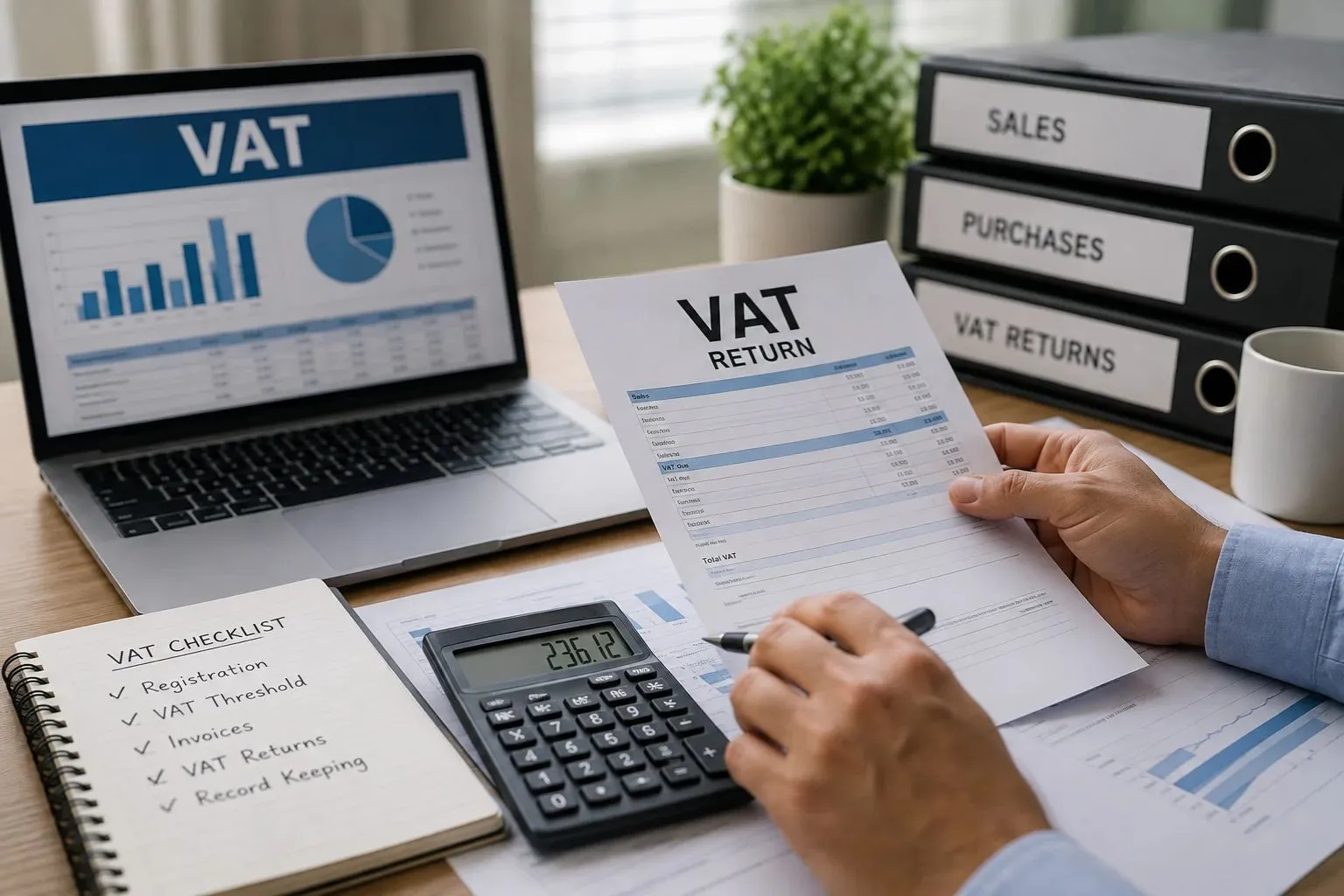
VAT is one of the areas where Malta businesses most often go wrong, particularly companies trading internationally or scaling quickly.
VAT Registration Thresholds
Some business owners assume VAT registration is optional until turnover reaches a certain level, without realising that different activities have different thresholds and rules. Registering late, or under the wrong category, can create backdated liabilities.
Incorrect VAT Returns
Even registered businesses make mistakes on their returns, such as applying the wrong VAT rate, missing reverse charge rules on cross-border services, or reclaiming input VAT incorrectly. These errors are often only caught during an audit, by which point corrections are more complicated.
4. Mixing Personal and Business Finances
It is common, especially among smaller businesses and sole traders, to pay for business expenses from a personal account or vice versa. While it may feel harmless, this habit creates confusion around what is genuinely deductible and makes it harder to present clean accounts.
Pro Tip: Open a dedicated business bank account from day one, even if your company is small. It creates a clear line between personal and business spending and saves hours of untangling during tax season.
5. Ignoring Tax Planning Until Year-End
Many businesses only think about tax when a deadline is close. By then, most of the opportunities to plan ahead, such as timing certain expenses or structuring income more efficiently, have already passed.
Tax planning works best as an ongoing conversation, not a once-a-year scramble. Reviewing your position quarterly gives you time to make adjustments while there is still room to act, rather than reacting under pressure.
6. Filing Taxes Without Professional Guidance
Malta's tax rules are detailed, and they change. Business owners who handle filings entirely on their own, particularly as the business grows or starts trading internationally, often miss reliefs they are entitled to or misapply rules that were never designed for their situation.
Expert Insight: Based on supporting businesses across different industries and structures, one pattern comes up again and again: companies that bring in support before problems appear spend far less time and money fixing issues than those who wait until after a penalty notice arrives. Working with a tax advisor in Malta from the start is almost always cheaper than correcting mistakes later.
This does not mean every business needs a large finance department. It means having someone who understands both the rules and your specific business, so nothing important gets missed.
How the Right Support Helps You Stay Ahead
None of these mistakes are unusual, and none of them are unavoidable. What separates businesses that stay compliant from those that end up dealing with penalties is usually structure: clean bookkeeping, a clear tax calendar, and someone keeping an eye on deadlines before they become urgent.
That is the gap Precision Point fills for businesses across Malta and Gozo. Rather than only stepping in once a year for filings, the team keeps recurring accounting, VAT, and tax work moving in the background, so nothing is left to chance.
Talk to a Tax Advisor in Malta Today
If tax deadlines, VAT returns, or bookkeeping gaps are taking up more of your time than they should, it may be time for a second set of eyes on your accounts.
Precision Point works with businesses across Malta and Gozo to keep accounting, tax, and compliance organised and on track, so you are not left managing it alone.
Book a Consultation or get in touch to see how a more structured approach to your business tax could work for you.
FAQs
1. What is the most common tax mistake Malta businesses make?
Missing provisional tax deadlines and poor record-keeping are the two most frequent issues, since both tend to build up quietly until a filing is due.
2. How often should a small business review its tax position in Malta?
Ideally every quarter. Reviewing figures regularly makes it easier to catch errors early and plan ahead, rather than reacting close to a deadline.
3. Do all Malta businesses need to register for VAT?
Not automatically. Registration depends on the type of activity and turnover involved, which is why it is worth checking your specific situation rather than assuming a general threshold applies.
4. What happens if a business misses a tax deadline in Malta?
Late payments and filings can result in interest charges and administrative penalties, even if the outstanding amount is later settled in full.
5. When should a business bring in outside help with taxes?
The earlier, the better. Businesses that seek support before issues appear generally spend less time and money than those who wait until after a problem has already occurred.


























Sign in to leave a comment.