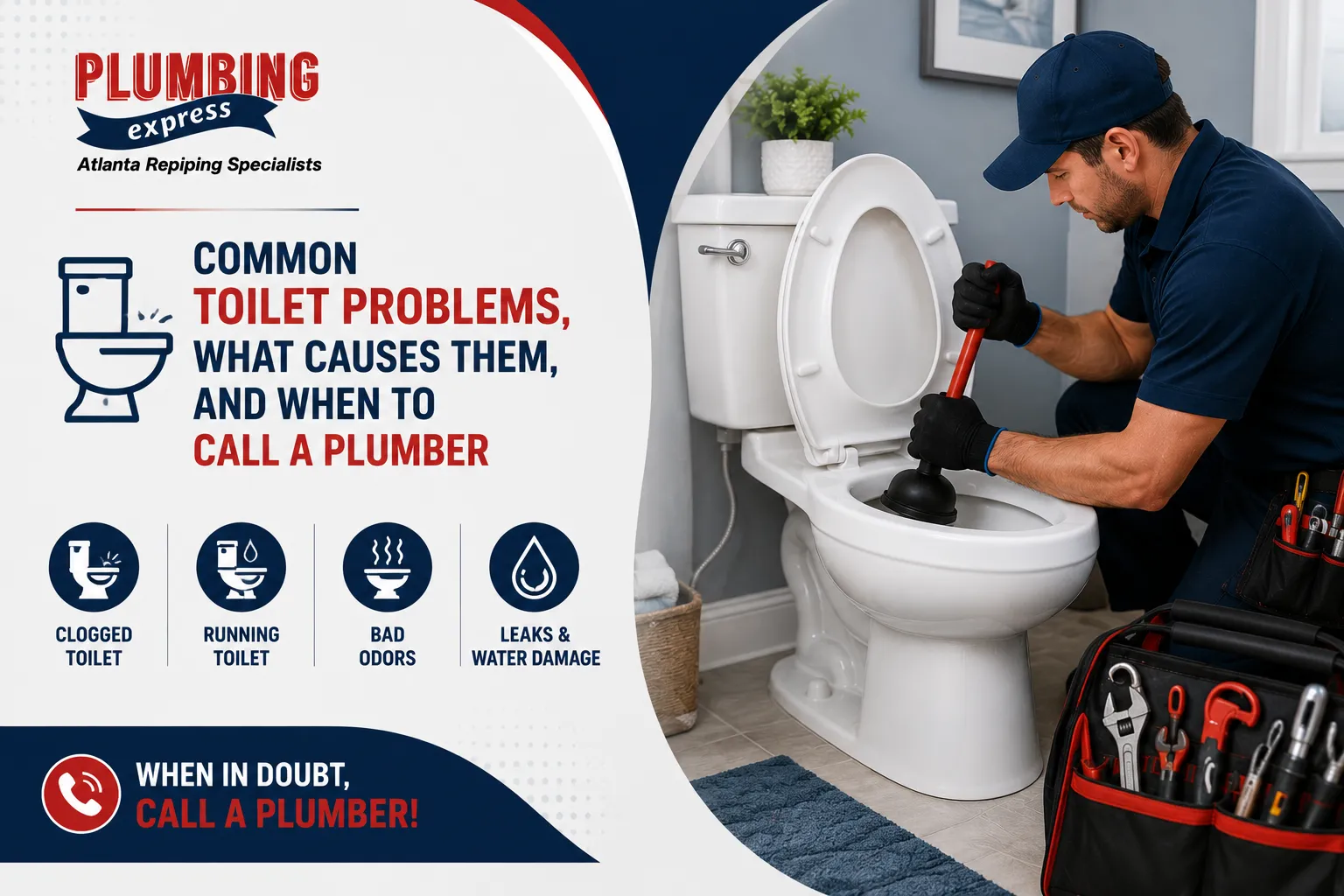

The toilet is one of the most frequently used plumbing fixtures in any home, yet it is often overlooked until something goes wrong. A toilet that won't flush, keeps running, clogs repeatedly, or leaks around the base can quickly become more than a minor inconvenience.
Many toilet problems begin with a worn component or improper use. Others can indicate a larger issue somewhere within the home's plumbing or drainage system. Understanding the difference can help homeowners respond appropriately and avoid unnecessary water damage or repeated repairs.
For homeowners throughout Metro Atlanta, knowing the warning signs of toilet problems can make it easier to determine when a simple adjustment may be enough and when professional service is the better choice.
Why Toilets Develop Problems
A toilet may look relatively simple from the outside, but several components work together every time it is flushed.
These include:
- Fill valve
- Flush valve
- Flapper
- Handle
- Flush chain
- Overflow tube
- Tank
- Bowl
- Wax seal
- Supply line
When one of these components becomes worn, damaged, or improperly adjusted, the toilet may stop operating correctly.
Age, mineral buildup, frequent use, improper flushing habits, and normal wear can all contribute to toilet problems.
A Toilet That Keeps Running
A constantly running toilet is one of the most common plumbing problems homeowners encounter.
In many cases, the issue is related to the tank.
Potential causes include:
- Worn flapper
- Faulty fill valve
- Incorrect water level
- Damaged flush valve
- Loose or improperly adjusted chain
Although the sound may seem harmless, a running toilet can continuously waste water.
If basic adjustments don't solve the issue, a professional inspection can determine which component needs to be repaired or replaced.
Toilets That Won't Flush Properly
Sometimes a toilet flushes but doesn't remove waste effectively.
This can happen when:
- Water levels are too low
- The flush mechanism is malfunctioning
- The toilet has a partial blockage
- Mineral buildup is restricting water flow
- The drainage system has an issue
If the toilet repeatedly struggles to clear the bowl, simply flushing it multiple times may not solve the underlying problem.
Repeated weak flushing should be investigated rather than ignored.
Frequent Toilet Clogs
Occasional clogs can happen, but a toilet that clogs repeatedly may have an underlying problem.
Common causes include:
- Excessive toilet paper
- Flushing inappropriate materials
- Partial blockages
- Drainage restrictions
- Problems further down the plumbing line
Homeowners should avoid flushing items that aren't intended to go through the toilet.
Even materials that seem small can accumulate or become caught in existing restrictions.
What Should You Never Flush?
Toilets are designed primarily for human waste and toilet paper.
Items that should generally not be flushed include:
- Paper towels
- Facial tissues
- Hygiene products
- Cotton products
- Cleaning wipes
- Household trash
- Other non-degradable materials
Even products marketed as flushable can contribute to drainage problems in certain plumbing systems.
When homeowners dispose of these materials properly instead of flushing them, they reduce the risk of blockages.
Water Leaking Around the Base of the Toilet
Water appearing around the bottom of a toilet should never be ignored.
A leak around the base can potentially be associated with:
- Damaged wax seal
- Loose toilet connection
- Cracked toilet
- Supply line problem
- Drainage issue
Continued moisture around the toilet can damage flooring and nearby materials.
If the source isn't immediately obvious, professional inspection is recommended.
A Toilet That Rocks or Moves
A properly installed toilet should sit securely on the floor.
If the toilet rocks when someone sits down, there may be an installation or connection issue.
Possible causes include:
- Loose mounting bolts
- Uneven flooring
- Damaged flange
- Deteriorated wax seal
Continuing to use a loose toilet without addressing the problem can potentially worsen leaks or damage surrounding components.
Condensation vs. a Plumbing Leak
Sometimes homeowners notice water around the toilet tank and assume the toilet is leaking.
However, moisture can also result from condensation.
When warm, humid air comes into contact with a cooler toilet tank, water can form on the exterior surface.
Persistent moisture should still be investigated because a genuine leak can look similar.
A professional can help determine whether the water is coming from condensation, a supply connection, or the toilet itself.
A Toilet That Won't Stop Filling
A toilet that continues filling after the tank reaches its normal water level may have a problem with the fill valve or another tank component.
Besides the noise, continuous filling can waste water.
Adjusting the water level or replacing a worn component may resolve the problem, but homeowners should avoid forcing or damaging unfamiliar parts.
If the problem persists, professional repair can help restore normal operation.
Strange Sounds From Your Toilet
Unusual toilet sounds can sometimes provide clues about plumbing problems.
Homeowners may hear:
- Gurgling
- Hissing
- Whistling
- Banging
- Repeated refilling
A hissing sound may indicate that water is continuously entering the tank.
Gurgling can sometimes be associated with drainage or venting issues, especially when it occurs alongside slow drainage or bubbling.
Persistent unusual sounds should be evaluated rather than ignored.
Toilet Problems Can Sometimes Point to Drainage Issues
Not every toilet problem originates with the toilet itself.
A toilet is connected to the home's larger drainage system, so problems further down the line can affect its performance.
Warning signs may include:
- Toilet and shower backing up
- Multiple slow drains
- Gurgling fixtures
- Water appearing in another drain
- Repeated toilet clogs
When multiple fixtures experience problems simultaneously, the issue may require broader plumbing diagnosis.
Hard Water and Mineral Buildup
Water quality can also affect plumbing fixtures.
Minerals in water can accumulate around valves, openings, and internal components over time.
Mineral buildup may contribute to:
- Reduced water flow
- Sticking valves
- Difficulty operating components
- Reduced flushing performance
If buildup becomes significant, replacing individual components or professionally servicing the fixture may be necessary.
Can You Repair a Toilet Yourself?
Some minor toilet issues may be manageable for homeowners who are comfortable with basic maintenance.
For example, replacing a toilet flapper or adjusting a chain can sometimes be straightforward.
However, professional assistance is advisable when the problem involves:
- Persistent leaks
- Damaged flooring
- Repeated clogs
- Sewer backups
- Broken components
- Toilet flange problems
- Multiple affected fixtures
- Unknown causes
Trying to repair an unfamiliar plumbing component can sometimes create additional problems.
When Should You Replace a Toilet Instead of Repairing It?
Repair isn't always the best long-term solution.
Replacement may make more sense when:
- The toilet is severely cracked
- Repairs are becoming frequent
- The fixture is significantly outdated
- Water efficiency is poor
- Replacement parts are difficult to obtain
- The toilet has persistent performance problems
A professional plumber can help determine whether repairing the existing fixture or replacing it would be more practical.
How to Prevent Toilet Problems
Good toilet maintenance begins with proper use.
Homeowners can reduce problems by:
Flush Only Appropriate Materials
Avoid treating the toilet as a trash can.
Don't Ignore Running Water
Address continuous running as soon as possible.
Avoid Excessive Force
Handles and other components can become damaged when operated aggressively.
Inspect for Leaks
Periodically check around the base, supply line, and tank.
Address Repeated Clogs
Frequent clogs may indicate an underlying issue rather than simply bad luck.
Don't Use Excessive Chemical Cleaners
Some harsh chemicals can damage plumbing components and create safety concerns.
What to Do If Your Toilet Overflows
An overflowing toilet requires quick action.
The first step is to stop the flow of water.
Depending on the toilet design, you may be able to turn the shutoff valve near the base of the toilet clockwise.
If the toilet continues overflowing or the cause is unclear, professional assistance may be necessary.
Cleaning up standing water promptly is also important to reduce the risk of damage.
Why Professional Toilet Repair Matters
Toilet problems can appear simple, but the correct repair depends on identifying the actual cause.
A professional plumber can inspect the fixture and surrounding plumbing to determine whether the issue involves:
- Internal components
- Supply connections
- Drainage
- Seals
- Flanges
- Venting
- Larger plumbing problems
Correct diagnosis helps prevent repeated repairs and ensures the problem is addressed appropriately.
Why Choose Plumbing Express for Toilet Repair Services in Metro Atlanta?
Toilet problems can quickly disrupt a household, particularly when they involve leaks, repeated clogs, or constant water usage. Plumbing Express provides professional Toilet Repair Services in Metro Atlanta, helping homeowners address common toilet problems and restore reliable fixture performance.
Their plumbing professionals can evaluate symptoms, identify worn or damaged components, and determine whether repair or replacement is the most appropriate solution.
Whether your toilet is constantly running, failing to flush properly, leaking around the base, or repeatedly clogging, professional service can help identify the cause and provide an effective solution.
Frequently Asked Questions
Why does my toilet keep running?
A running toilet is often caused by a worn flapper, faulty fill valve, incorrect water level, or another issue inside the tank.
Why does my toilet keep clogging?
Repeated clogs can result from excessive toilet paper, inappropriate materials being flushed, partial blockages, or problems deeper within the drainage system.
Is water around the base of a toilet serious?
It can be. Water around the base may indicate a damaged seal, connection, flange, or another plumbing issue. Persistent leaks should be inspected promptly.
How do I know whether my toilet needs repair or replacement?
Minor component problems can often be repaired. Replacement may make more sense when the toilet is cracked, outdated, repeatedly failing, or becoming expensive to repair.
Can a toilet problem indicate a sewer line issue?
Yes. If the toilet is affected along with multiple drains or fixtures, the problem may originate further down the drainage system and require professional diagnosis.
Keep Your Toilet Working Reliably
Toilets are essential household fixtures, and even a small problem can quickly become frustrating. A running toilet can waste water, a leak can damage flooring, and repeated clogs can indicate a deeper plumbing problem.
Paying attention to warning signs and addressing issues early can help homeowners avoid unnecessary damage and more expensive repairs.
If you're experiencing a persistent toilet problem and need Toilet Repair Services in Metro Atlanta, Plumbing Express can help diagnose the issue and determine the appropriate repair or replacement solution.
From worn internal components to leaks, clogs, and more complex plumbing concerns, professional attention can help restore reliable performance and keep your home's plumbing system working as it should.

























Sign in to leave a comment.