
Choosing the right financing option can significantly impact your business's growth trajectory and profitability. For entrepreneurs going through India's lending landscape, understanding the differences between MSME loans and traditional business loans, particularly regarding interest rates and eligibility, proves essential for making informed borrowing decisions.
Whilst both financing types serve business needs, they cater to different enterprise sizes, risk profiles, and operational stages. In this article, we will compare the interest rates offered by online lending partners and traditional bank loans.
Understanding MSME Loans and Their Structure
An MSME loan specifically targets micro, small, and medium enterprises as classified under the Udyam Registration framework. These loans recognise that smaller businesses face unique challenges, such as limited credit history, asset-light operations, and fluctuating cash flows, requiring tailored financial products.
Government-backed MSME loan schemes like the Credit Guarantee Fund Trust for Micro and Small Enterprises (CGTMSE), Pradhan Mantri Mudra Yojana (PMMY), and Stand-Up India provide crucial support through collateral-free financing and lower interest rates. These programmes aim to democratise credit access, enabling entrepreneurs to build enterprises without pledging substantial assets.
The MSME loan criteria generally emphasise business viability and growth potential over extensive operational history. Lenders evaluate factors like Udyam registration status, GST compliance, bank statements, and basic financial projections rather than demanding multi-year audited accounts.
Traditional Business Loan Framework
Traditional business loans, offered by commercial banks and financial institutions, target established corporations seeking significant capital for expansion, equipment acquisition, or real estate investments. These loans usually require businesses to demonstrate proven track records spanning 3-5 years, substantial annual turnover, and strong asset bases.
The application process involves rigorous due diligence, including comprehensive financial statement analysis, collateral valuation, and detailed business plan scrutiny. While this thoroughness ensures lower default risks for lenders, it creates barriers for newer or smaller enterprises lacking extensive documentation.
Traditional loans excel at funding large-scale projects with amounts frequently exceeding ₹1 crore and repayment tenures stretching to 15 years, making them suitable for capital-intensive industries like manufacturing or infrastructure.
MSME Interest Rate vs Traditional Loan Rates
While MSME loans and traditional business loans both serve entrepreneurial needs, their interest rate structures differ due to target audiences, risk profiles, and regulatory support. This makes it important to understand the difference between the interest rates offered by MSME loan and traditional business loans:
MSME Business Loan Interest Rates
The MSME business loan interest rate landscape in 2025 ranges from 8% to 24% per annum, with considerable variation based on lender type and borrower profile. Public sector banks like State Bank of India offer rates starting at 8% annually, while Canara Bank begins at 9.20% and Punjab National Bank at 9.60%.
Government-supported MSME loan scheme for new business ventures provide particularly attractive rates. MUDRA loans charge between 6-9% per annum, significantly lower than commercial alternatives. Private sector banks and NBFCs typically price MSME loans between 14-20% annually, balancing competitive rates with faster processing.
Digital lenders and fintech platforms charge 15-24% per annum but compensate with rapid approvals, minimal documentation, and collateral-free structures that appeal to businesses unable to meet traditional banking requirements. These higher rates reflect the elevated risk profiles associated with smaller enterprises and unsecured lending.
Traditional Business Loan Interest Rates
Traditional business loans generally start at 10% per annum but vary widely based on loan amount, tenure, and security offered. Secured loans backed by property or machinery command lower rates, often 10-14% annually, due to reduced lender risk.
NBFCs offering traditional business financing charge between 21-32% per annum for unsecured products, substantially higher than bank rates but accessible to businesses with moderate credit scores. Processing times for traditional loans span 2-4 weeks minimum, with documentation requirements including audited financials, tax returns, and detailed project reports.
The interest rate differential between MSME and traditional loans narrows for borrowers with excellent credit profiles and substantial collateral. However, the MSME interest rate advantage becomes pronounced when comparing government-backed schemes against conventional commercial lending.
Key Differences in Loan Structures
MSME loans and traditional business loans diverge fundamentally in their design, reflecting the distinct needs of small enterprises versus established operations. This difference ensures MSME loans foster grassroots entrepreneurship, while traditional options sustain large-scale industrial growth. Let us understand the key differences in their loan structures:
Loan Amounts and Tenure Options
MSME loans typically cap at ₹10 crore under schemes like CGTMSE, with repayment tenures ranging from 12 months to 15 years, depending on the loan purpose and amount.
Traditional business loans accommodate larger funding requirements, ₹10 crore to ₹50 crore or more, with tenures stretching up to 30 years. This flexibility suits established businesses undertaking major expansion projects or acquisitions requiring long-term capital deployment.
For MSME loan schemes for new businesses, amounts often start modestly at ₹50,000 under the Shishu category of PMMY, scaling to ₹10 lakh for established micro enterprises, ensuring accessibility across growth stages.
Eligibility and Documentation Requirements
The MSME loan criteria prioritise inclusivity; businesses that have been operational for just 12 months qualify for most schemes, with relaxed credit score requirements often accepting scores above 650. Documentation needs remain minimal: Udyam certificate, GST registration, bank statements for 6 months, and basic identity proofs suffice for smaller loan amounts.
Traditional business loans impose stringent eligibility barriers, including a minimum 3-year operational history, credit scores exceeding 700, annual turnover thresholds of ₹50 lakh or more, and comprehensive financial documentation, including audited statements, income tax returns, and detailed cash flow projections.
For collateral requirements, MSME loans offer collateral-free options up to ₹10 crore under CGTMSE, while traditional loans typically mandate security for amounts exceeding ₹25 lakh.
Choosing Between MSME and Traditional Loans
Your business stage, funding requirement, and urgency determine the optimal financing route. MSMEs requiring amounts below ₹2 crore benefit significantly from dedicated MSME loans offering lower interest rates, flexible eligibility, and faster processing.
Established businesses seeking substantial capital for expansion exceeding ₹5 crore, willing to pledge collateral and navigate detailed documentation, may find traditional business loans more suitable despite potentially higher rates for unsecured portions.
For new ventures, exploring MSME loan schemes for new business options like PMEGP (offering 15-35% capital subsidy) or MUDRA (providing collateral-free financing up to ₹10 lakh) delivers significant advantages over traditional channels that typically reject startups lacking operational history.
Wrap Up
Understanding the nuanced differences between MSME and traditional business loans empowers entrepreneurs to select financing aligned with their growth stage, risk appetite, and capital needs.
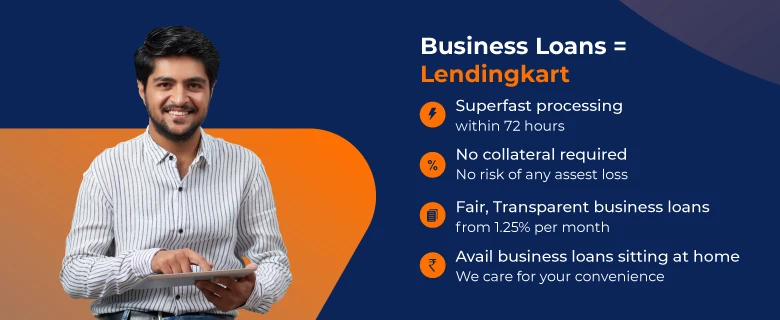
LendingKart msme loan exemplifies modern MSME lending by offering competitive interest rates starting at competitive rates, with collateral-free loans. Their digital platform delivers approvals within 24-72 hours, requiring minimal documentation, which includes the Udyam certificate, GST registration, and recent bank statements.
For MSMEs seeking quick, hassle-free financing at competitive interest rates, LendingKart's streamlined processes and flexible repayment options make it an ideal financing partner.

























Sign in to leave a comment.