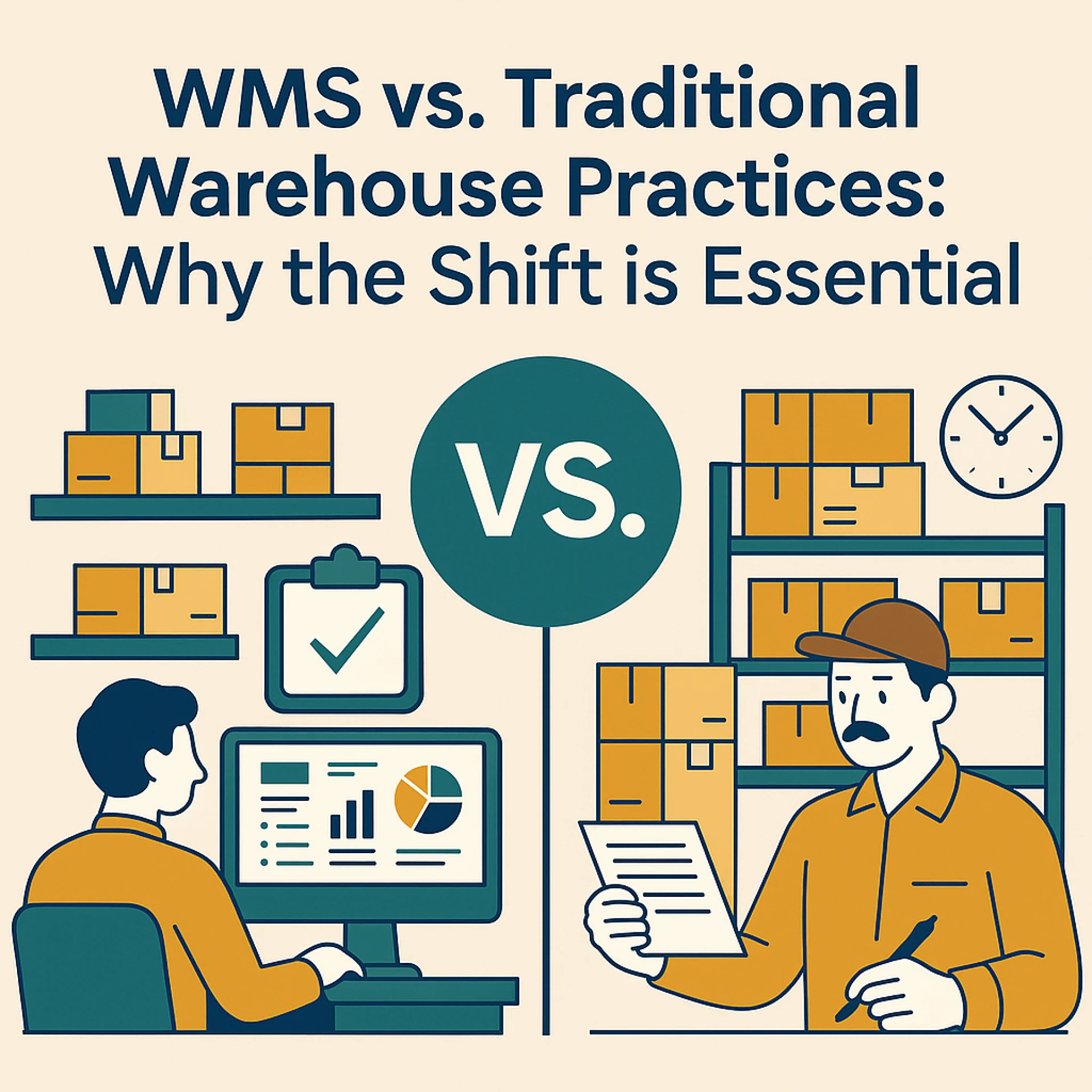

Warehouses are the backbone of any supply chain, ensuring goods move smoothly from suppliers to customers. However, managing a warehouse efficiently is no small task. For years, traditional warehouse practices, relying heavily on manual processes and paper-based systems, were the norm. Today, the warehousing management system (WMS) is transforming how warehouses operate, offering a modern solution that outshines older methods.
What are Traditional Warehouse Practices?
Traditional warehouse practices involve manual processes, often supported by basic tools like pen, paper, and spreadsheets. Workers rely on physical records to track inventory, manage stock levels, and coordinate picking and packing. These methods were effective when warehouses were smaller and supply chains simpler, but they come with significant limitations in today’s fast-paced world.
In a traditional setup, workers might walk through aisles to count stock by hand, update ledgers, or check clipboards for instructions. Managers often depend on their experience to decide where to store goods or how to prioritise tasks. While these methods may feel familiar, they are prone to errors, time-consuming, and struggle to keep up with modern demands.
What is a Warehousing Management System?
A warehousing management system is software designed to streamline warehouse operations. It automates and optimizes tasks like inventory tracking, order picking, and stock replenishment. Unlike traditional methods, a WMS uses real-time data to provide visibility into every aspect of the warehouse, from stock levels to worker productivity.
The system integrates with other tools, such as barcode scanners and warehouse equipment, to ensure accuracy and efficiency. For example, a WMS can direct workers to the exact location of an item, suggest optimal picking routes, and update inventory levels instantly. This technology is a game-changer for warehouses handling large volumes of goods or complex supply chains.
Key Differences Between WMS and Traditional Practices
The shift from traditional warehouse practices to a warehousing management system is driven by clear differences in efficiency, accuracy, and scalability. Here are the main distinctions:
1. Accuracy and Error Reduction
Traditional warehouses rely on manual data entry, which is prone to human error. A misplaced digit in a spreadsheet or a miscounted pallet can lead to stock discrepancies, delayed shipments, or unhappy customers. These mistakes add up, costing time and money to fix.
A warehousing management system eliminates much of this risk. By using barcode scanning and automated data capture, a WMS ensures inventory records are accurate. Real-time updates mean managers always know what’s in stock, reducing the chances of overstocking or running out of key items.
2. Speed and Efficiency
Manual processes are slow. Workers in a traditional warehouse might spend hours searching for items, checking stock levels, or preparing orders. This inefficiency is a major bottleneck when demand spikes or deadlines loom.
A WMS boosts speed by automating repetitive tasks. For instance, it can generate picking lists and guide workers along the shortest routes to collect items. This cuts down on wasted time and ensures orders are fulfilled faster. In a competitive market where road transport is the primary mode of delivery, speed is critical to meeting customer expectations.
3. Scalability
Traditional practices struggle to scale. As a warehouse grows, manual systems become harder to manage. More stock means more paperwork, more workers, and more opportunities for errors. Small warehouses might cope, but larger operations quickly outgrow these methods.
A warehousing management system is built for scalability. Whether a warehouse handles 1,000 or 100,000 items, a WMS can manage the complexity. It adapts to changing needs, such as seasonal demand surges or new product lines, without requiring a complete overhaul of processes.
4. Real-Time Visibility
In traditional setups, managers often lack real-time insights. Stock counts might be updated weekly, leaving gaps in knowledge that lead to poor decision-making. For example, a manager might order more stock, unaware that excess inventory is already sitting in the warehouse.
A WMS provides real-time visibility into every aspect of warehouse operations. Dashboards show current stock levels, order statuses, and worker performance at a glance. This data empowers managers to make informed decisions, such as reordering stock at the right time or reallocating workers to high-priority tasks.
5. Cost Management
Manual processes are costly in the long run. Errors lead to returns, rework, or lost sales. Inefficient picking and packing slow down operations, requiring more labour hours to get the job done. These hidden costs add up quickly.
A warehousing management system reduces costs by streamlining operations. Fewer errors mean fewer returns, and faster processes require less labour. The system can also optimise storage, ensuring goods are placed in ways that save space and reduce handling costs. Over time, these savings can significantly impact a company’s bottom line.
Why the Shift to WMS is Essential
The modern supply chain is fast, complex, and unforgiving. Customers expect quick deliveries, accurate orders, and competitive prices. Traditional warehouse practices simply can’t keep up with these demands. Here’s why switching to a warehousing management system is no longer optional:
Meeting Customer Expectations
In a world where road transport dominates logistics, customers expect deliveries to arrive on time. A WMS ensures orders are picked, packed, and shipped efficiently, reducing delays and improving customer satisfaction. Real-time tracking also allows businesses to provide accurate delivery updates, building trust with clients.
Staying Competitive
Companies that stick to traditional practices risk falling behind competitors who have embraced technology. A warehousing management system gives businesses an edge by improving efficiency and reducing costs. This allows them to offer better prices or invest in other areas of the supply chain, such as faster road transport options.
Handling Complexity
Modern warehouses deal with diverse products, fluctuating demand, and tight schedules. A WMS handles this complexity with ease, providing tools to manage multiple tasks at once. For example, it can prioritise urgent orders while ensuring regular stock replenishment continues smoothly.
Future-Proofing Operations
As businesses grow, their warehousing needs evolve. A warehousing management system is flexible enough to adapt to new challenges, whether it’s integrating with new suppliers or expanding to multiple locations. Investing in a WMS now prepares warehouses for future growth and technological advancements.
Challenges of Switching to a WMS
While the benefits are clear, transitioning to a warehousing management system isn’t without challenges. The initial cost of software, hardware, and training can be significant. Workers accustomed to traditional methods may resist change, and integrating a WMS with existing systems can take time.
However, these challenges are short-term. The long-term gains in efficiency, accuracy, and cost savings far outweigh the upfront investment. Proper training and a clear implementation plan can ease the transition, ensuring workers and managers quickly adapt to the new system.
The Road Ahead
The shift from traditional warehouse practices to a warehousing management system is a necessary step for businesses aiming to thrive in today’s supply chain. Manual processes, while familiar, are too slow, error-prone, and inflexible to meet modern demands. A WMS offers a smarter, faster, and more reliable way to manage warehouse operations, from inventory tracking to order fulfillment.
By adopting a warehousing management system, businesses can reduce costs, improve customer satisfaction, and stay competitive in a fast-moving market. The technology is not just a luxury; it’s a necessity for warehouses looking to succeed in an era where efficiency and accuracy are everything.
Ready to transform your warehouse operations? Get in touch with a reliable 3PL provider like Varuna Group today. They offer cutting-edge warehousing solutions, including advanced warehousing management systems tailored to your needs. Get ready to stay ahead of the competition.





























Sign in to leave a comment.