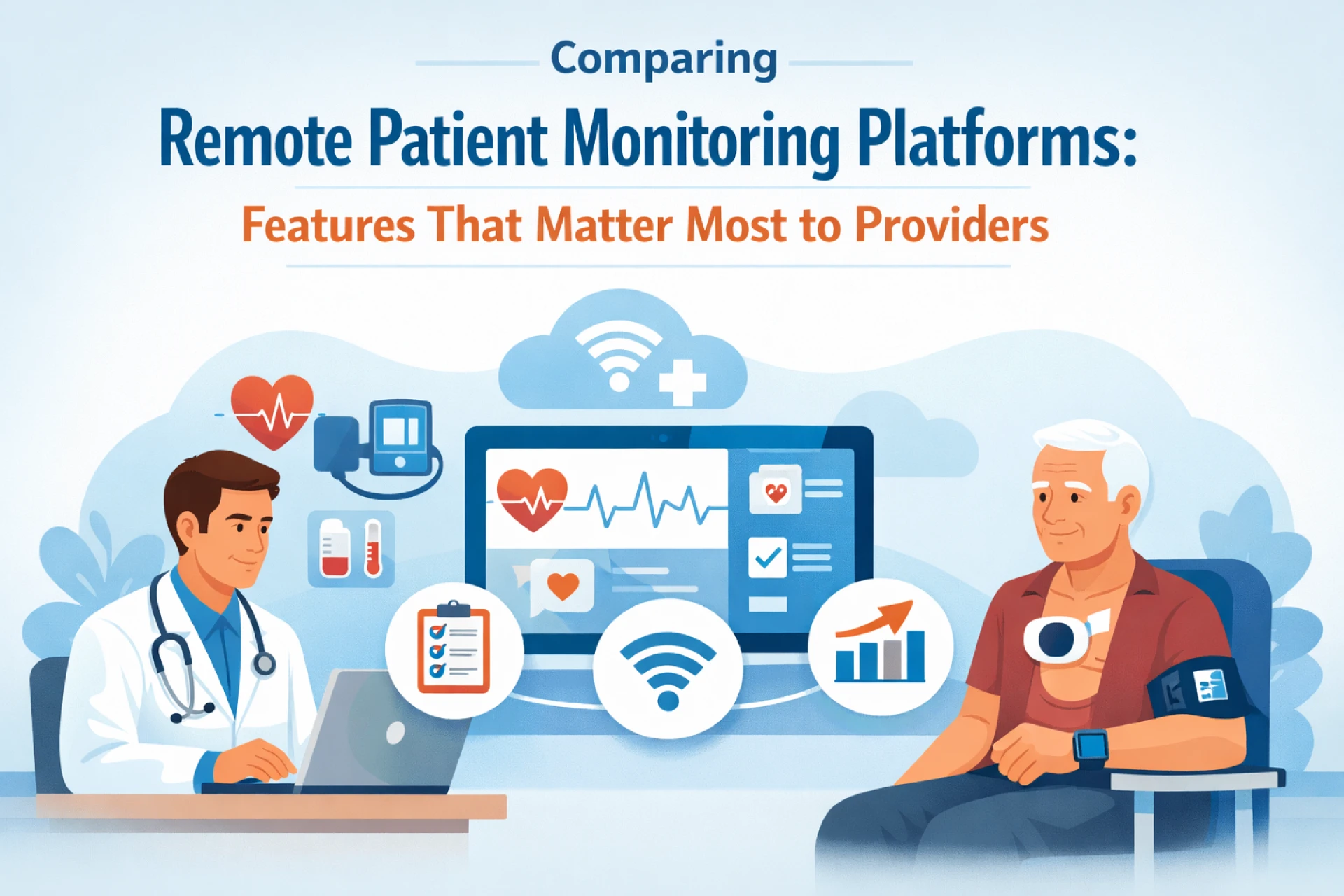
As the healthcare landscape rapidly evolves, remote patient monitoring platforms are becoming essential tools for providers who want to deliver high-quality care beyond traditional clinical settings. With the rise of chronic illnesses and the growing need for effective patient engagement, these platforms are revolutionizing how healthcare professionals track, manage, and improve patient health outcomes. But with so many remote patient monitoring platforms available, how can providers choose the right solution for their practice?
This comprehensive guide dives deep into the features that matter most when comparing remote patient monitoring platforms. Whether you’re a healthcare provider, administrator, or IT decision-maker, understanding these key features will help you make an informed choice for your organization.
The Importance of Remote Patient Monitoring Platforms
Remote patient monitoring platforms enable healthcare providers to collect real-time health data from patients outside of traditional clinical environments. This technology bridges the gap between patients and providers, making chronic disease management, post-acute care, and preventive health easier and more effective. With the rise of value-based care, these platforms are crucial for improving patient outcomes and reducing hospital readmissions.
But not all remote patient monitoring platforms are created equal. Selecting the right one can make all the difference in workflow efficiency, data accuracy, and patient satisfaction.
Key Features to Consider When Comparing Remote Patient Monitoring Platforms
When evaluating remote patient monitoring platforms, providers should look for features that align with their clinical, operational, and business needs. Here are the top considerations:
1. Device Integration and Compatibility
Seamless device integration is a must-have for any remote patient monitoring platform. Providers need systems that work effortlessly with a wide range of medical devices—such as blood pressure monitors, glucometers, pulse oximeters, and weight scales.
Look for platforms that:
- Support both Bluetooth and cellular-enabled devices
- Offer plug-and-play setup for easy patient onboarding
- Are compatible with most FDA-approved devices
- Allow for future scalability as new devices emerge
2. User-Friendly Interface for Providers and Patients
A remote patient monitoring platform should be intuitive for both clinicians and patients. Providers need easy access to dashboards, alerts, and actionable insights, while patients must be able to log their data and communicate with minimal friction.
Key usability features include:
- Clean, customizable dashboards for clinicians
- Simple patient apps with reminders and educational materials
- Multilingual support for diverse patient populations
- Accessibility features for elderly or visually impaired users
3. Real-Time Data Transmission and Alerts
The ability to receive and act upon real-time data is a game-changer in remote patient monitoring. Platforms should securely transmit patient data to providers, generate alerts for abnormal readings, and allow for timely intervention.
Important aspects include:
- HIPAA-compliant, encrypted data transmission
- Customizable alert thresholds for different patient groups
- Automated notifications via email, SMS, or in-app messages
- Audit trails for compliance and documentation
4. EHR Integration and Interoperability
Efficient workflows depend on seamless integration with existing electronic health records (EHR) systems. The best remote patient monitoring platforms provide interoperability, so clinicians can view patient data in one place.
Look for:
- Direct integration with major EHR vendors (Epic, Cerner, athenahealth, etc.)
- HL7 and FHIR standards compliance for smooth data exchange
- Bidirectional data flow between the platform and the EHR
- Minimal IT burden for setup and maintenance
5. Customizable Care Plans and Protocols
Every patient is unique, and care plans should reflect that. Leading remote patient monitoring platforms allow providers to create, modify, and assign personalized care plans based on clinical guidelines or individual needs.
Desirable features:
- Pre-built care plan templates for common chronic conditions
- Flexible protocol creation and editing tools
- Automated patient education and engagement workflows
- Easy assignment of care teams or escalation pathways
6. Patient Engagement Tools
Engaged patients are more likely to adhere to treatment plans and achieve better outcomes. Remote patient monitoring platforms should offer robust patient engagement features to keep users motivated and informed.
Top engagement tools include:
- In-app messaging and telehealth visit scheduling
- Goal tracking and progress reports
- Gamification elements to boost adherence
- Integration with SMS, email, and push notifications
7. Data Analytics and Reporting
Access to actionable insights is one of the biggest advantages of remote patient monitoring platforms. Providers should seek tools that translate raw data into meaningful analytics, helping improve clinical decision-making.
Essential analytics features:
- Customizable reporting dashboards
- Trend analysis and predictive analytics
- Population health management tools
- Exportable reports for billing and compliance
8. Security and Compliance
Data privacy is non-negotiable in healthcare. Choose platforms that are HIPAA-compliant and adhere to the highest security standards to protect patient information.
Key security features:
- End-to-end data encryption
- Role-based access controls for staff
- Regular security audits and certifications
- Transparent data handling policies
How to Choose the Right Remote Patient Monitoring Platform for Your Practice
Every healthcare organization has unique requirements, so a one-size-fits-all approach doesn’t work when selecting remote patient monitoring platforms. Here’s a simple roadmap to guide your decision:
- Identify your clinical priorities (e.g., chronic disease management, post-acute care)
- Assess your existing technology stack and EHR systems
- Consider the scalability and adaptability of potential platforms
- Involve both clinical and IT stakeholders in the evaluation process
- Request demos and trial periods from vendors to test usability
- Check for references and case studies from other providers
Benefits of Choosing the Right Remote Patient Monitoring Platform
Investing in the right remote patient monitoring platform offers multiple benefits for providers, including:
- Improved patient outcomes through proactive care
- Higher patient engagement and adherence
- Reduced hospital admissions and readmissions
- Streamlined workflows and administrative efficiencies
- Enhanced data security and compliance
Why HealthArc is a Leader in Remote Patient Monitoring Platforms
If you’re searching for a top-tier remote patient monitoring platform, HealthArc stands out for its comprehensive feature set, ease of integration, and commitment to patient-centric care. HealthArc’s platform offers:
- Seamless device and EHR integration
- Real-time, secure data transmission
- Customizable care plans and robust analytics
- Advanced patient engagement tools
- Unmatched security and regulatory compliance
Conclusion
Choosing among remote patient monitoring platforms is a critical decision for any healthcare provider committed to delivering high-quality, patient-centered care. By focusing on the features that matter most—such as device integration, real-time data, EHR connectivity, and patient engagement—you can find a solution that elevates both patient outcomes and provider efficiency. HealthArc is proud to offer one of the leading remote patient monitoring platforms designed to meet the evolving needs of modern healthcare providers.
Ready to explore how remote patient monitoring platforms like HealthArc can transform your practice? Take the first step toward smarter, more connected care today.











Sign in to leave a comment.