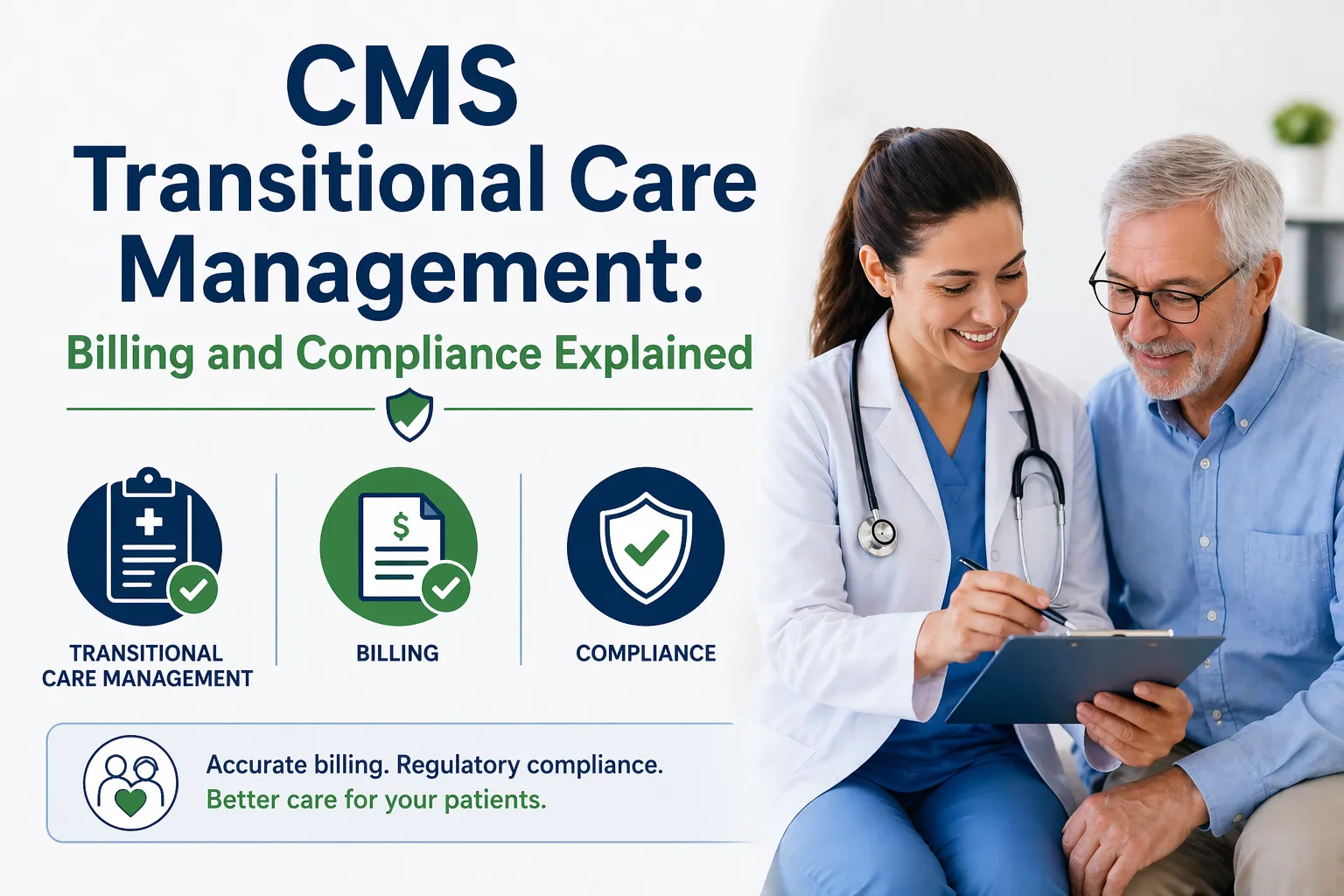
In today’s healthcare landscape, the transition from hospital to home or another care setting is a critical period for many patients, especially those with complex or chronic conditions. To improve patient outcomes and reduce hospital readmissions, the Centers for Medicare & Medicaid Services (CMS) introduced Transitional Care Management (TCM) services. Understanding CMS transitional care management, including its requirements, billing guidelines, and best practices, is essential for healthcare providers seeking to optimize patient care and maximize reimbursement.
What is CMS Transitional Care Management?
CMS transitional care management refers to the process of managing a patient’s transition from an inpatient hospital setting, skilled nursing facility, or certain outpatient observation settings, back to their community or home. TCM services cover the crucial first 30 days after discharge, focusing on preventing complications, medication errors, and readmissions.
These comprehensive services include communication with the patient or caregiver, medication reconciliation, coordination with other healthcare professionals, and ensuring that the patient receives necessary follow-up care. By offering CMS transitional care management, providers can support patients during this vulnerable period and help them achieve better health outcomes.
CMS Transitional Care Management Requirements
To bill for CMS transitional care management, certain requirements must be met. Here’s what providers need to know:
Eligible Settings and Patients
- TCM services are intended for patients transitioning from an inpatient hospital, acute care facility, skilled nursing facility, or certain outpatient settings.
- The patient must require moderate or high complexity medical decision-making.
Key Components of TCM
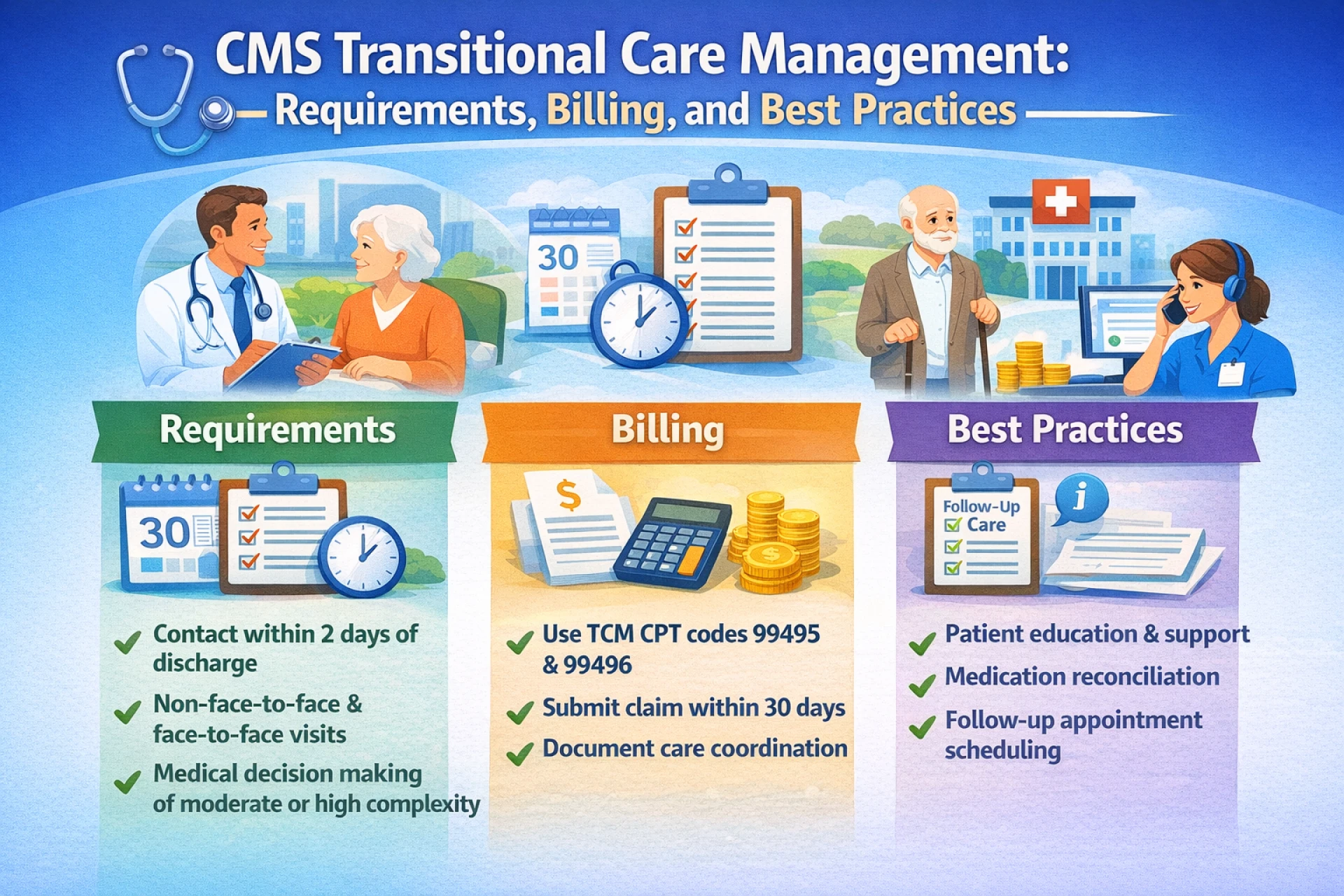
- Interactive Contact: The provider or clinical staff must make an initial interactive contact (via phone, email, or face-to-face) with the patient or caregiver within two business days of discharge.
- Non-Face-to-Face Services: These include reviewing discharge information, following up on diagnostic tests, and coordinating with community resources or other providers.
- Face-to-Face Visit: The patient must have a face-to-face visit with the provider within 7 days (for high complexity) or 14 days (for moderate complexity) after discharge.
Documentation Requirements
- Date of discharge
- Date of interactive contact and face-to-face visit
- Complexity of medical decision-making
- All care coordination activities performed
Billing Guidelines for CMS Transitional Care Management
Correct billing is crucial for providers to receive appropriate reimbursement for CMS transitional care management services. Here’s how to ensure successful billing:
CPT Codes for TCM
- 99495: TCM with moderate complexity medical decision-making, requiring a face-to-face visit within 14 days of discharge.
- 99496: TCM with high complexity medical decision-making, requiring a face-to-face visit within 7 days of discharge.
Billing Tips
- Only one provider can bill for CMS transitional care management services per patient discharge.
- TCM services cannot be billed if the patient is readmitted within the 30-day TCM period.
- TCM cannot be reported during the same 30-day period as certain care management services, such as chronic care management (CCM).
- Use appropriate place of service codes (usually office or home) and ensure that documentation supports the level of complexity billed.
Common Billing Mistakes to Avoid
- Missing the deadline for the face-to-face visit
- Insufficient documentation of care coordination or interaction with the patient/caregiver
- Billing both TCM and other overlapping care management services
Best Practices for Effective CMS Transitional Care Management
Implementing effective CMS transitional care management can boost patient satisfaction, reduce readmissions, and improve overall care quality. Here are some best practices:
Develop a Structured TCM Workflow
- Assign responsibility: Designate a care coordinator or team member to oversee TCM processes and follow up with patients post-discharge.
- Standardize communication: Use checklists and protocols for timely patient contact and follow-up.
- Track deadlines: Utilize electronic health records (EHR) or TCM software to monitor deadlines for interactive contact and face-to-face visits.
Enhance Patient and Caregiver Engagement
- Provide clear discharge instructions: Ensure patients and caregivers understand medications, red flags, and when to seek help.
- Encourage questions: Create an environment where patients feel comfortable discussing concerns.
- Offer educational resources: Supply written materials or online resources to reinforce instructions.
Coordinate with Community Resources and Providers
- Establish relationships: Collaborate with primary care, specialists, home health, and community organizations to ensure seamless care.
- Share information: Communicate updates and care plans to all involved providers.
Utilize Technology for Better Tracking and Communication
- Leverage EHR systems: Document all TCM activities and set reminders for key milestones.
- Use patient portals: Enable secure messaging for questions and follow-up.
- Consider TCM management platforms: Specialized software can streamline workflows and improve compliance.
Monitor and Evaluate Outcomes
- Track readmissions and adverse events: Use data to identify areas for improvement.
- Solicit patient feedback: Regularly ask patients about their experience with transitional care.
- Adjust processes: Refine workflows based on outcomes and feedback.
Why CMS Transitional Care Management Matters
Focusing on CMS transitional care management is not just about compliance or reimbursement; it’s about delivering high-quality, patient-centered care. Effective TCM can:
- Reduce preventable hospital readmissions
- Improve medication adherence
- Enhance patient satisfaction and trust
- Increase care team efficiency
- Optimize revenue through proper billing
Final Thoughts
CMS transitional care management is a vital component of modern healthcare, addressing the unique needs of patients during one of their most vulnerable times. By understanding CMS requirements, following proper billing practices, and implementing best practices, providers can ensure their patients receive the support they need after leaving the hospital.
For healthcare organizations seeking to improve their TCM processes, leveraging technology, standardized workflows, and dedicated care coordinators can make a significant difference. Whether you are new to CMS transitional care management or looking to refine your current approach, focusing on these essentials will help you provide the best possible transitional care to your patients.
If you want to learn more about optimizing your CMS transitional care management services or explore digital solutions to streamline your workflow, reach out to healthcare technology experts like healtharc. Our expertise in care management platforms can empower your team to deliver seamless, compliant, and patient-focused transitional care.
Start elevating your CMS transitional care management today—your patients and your practice will reap the benefits.



























Sign in to leave a comment.