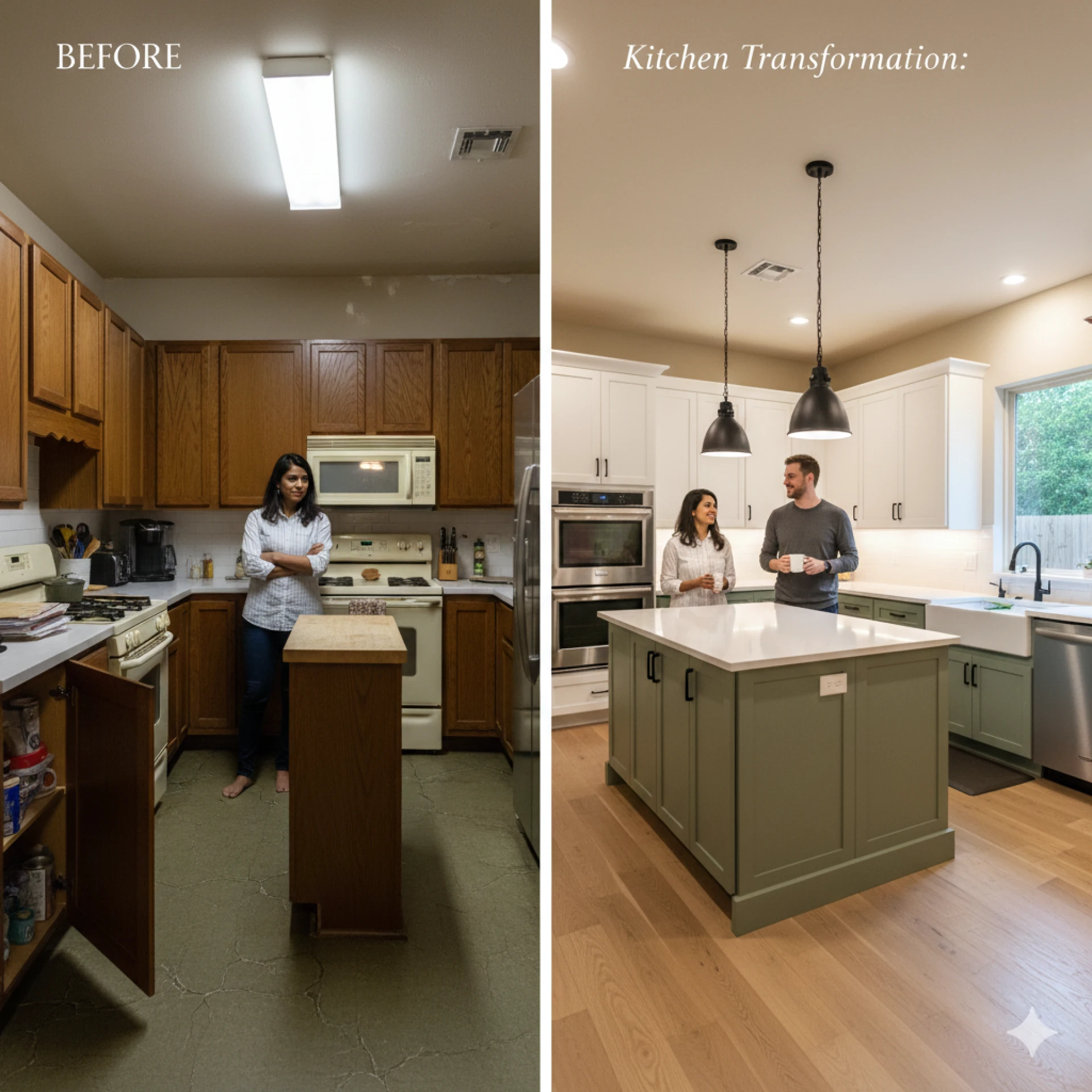

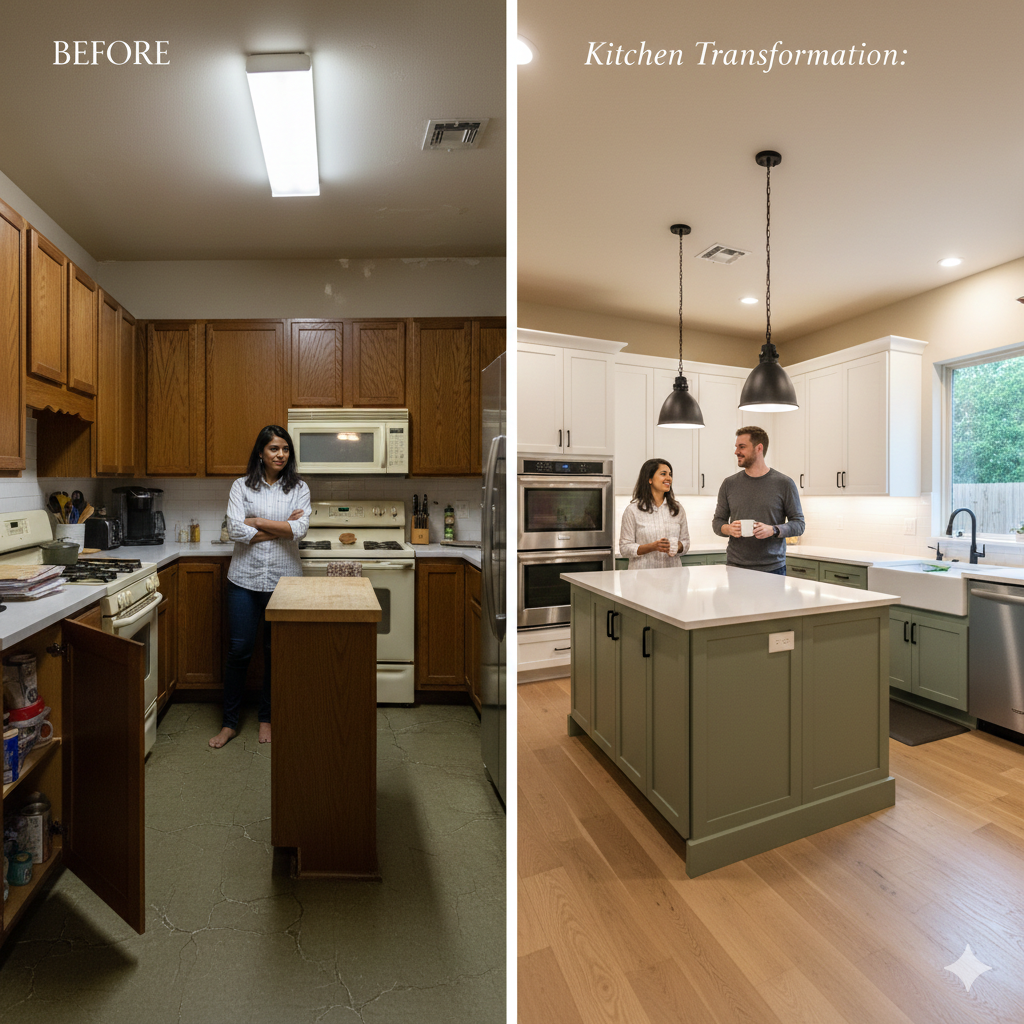
If you have ever stood in your kitchen and felt that it simply no longer works for you, you are not alone. The kitchen is the heartbeat of the home, yet many homeowners find themselves battling insufficient storage, awkward traffic flow, or dated finishes that bring down the entire mood of the house. You might have searched for a complete kitchen remodel solution, only to feel overwhelmed by conflicting advice and dizzying price tags. Here is the good news: a full transformation is within your reach when you break it down into manageable phases.
A complete kitchen remodel is far more than a fresh coat of paint or swapping out cabinet doors. It is a holistic reimagining of your space—from the floor plan to the fixtures, from the plumbing behind the walls to the pendant lights above the island. This guide walks you through every essential stage, ensuring you make confident decisions and avoid the costly pitfalls that catch so many homeowners off guard.
Whether you are planning to stay in your home for decades or preparing to sell, a well-executed remodel delivers daily joy and a strong return on investment. Let us dive into the blueprint for your dream kitchen.
Chapter 1: What Does a Complete Kitchen Remodel Actually Include?
Before you call a contractor or visit a showroom, you must understand the scope of the work. Many homeowners use the words “renovation” and “remodel” interchangeably, but they are distinctly different .
A cosmetic renovation focuses on surface-level updates. You might paint the walls, change the hardware, install a new backsplash, or swap out a faucet. The layout remains untouched, and no major structural or mechanical work occurs.
In contrast, a complete kitchen remodel goes far deeper. It involves reconfiguring the layout, often removing or adding walls to achieve an open-concept design. It includes upgrading electrical systems to support modern appliances and improved lighting. Plumbing may be relocated to accommodate a new sink placement or pot filler. Flooring is replaced throughout the entire space, not just patched. Custom cabinetry, new countertops, and integrated appliances complete the transformation .
Understanding this distinction is critical. It sets accurate expectations for your timeline, budget, and the professionals you will need to hire.
Chapter 2: Vision, Goals, and Lifestyle Planning
Every successful remodel begins not with a hammer, but with a notebook. Before you select a single tile, you must clarify how you actually live .
Start by walking through your current kitchen during your busiest time of day. Where do you prepare meals? Where do family members gather? What frustrates you most—lack of counter space, poor lighting, or the feeling of being isolated from guests while cooking? Write these observations down.
Next, create two distinct lists: absolute must-haves and nice-to-haves. Your must-haves might include a larger island with seating, a quiet dishwasher, or dedicated zones for baking and meal prep. Nice-to-haves could be a pot filler, a wine fridge, or smart home integration.
Consider your future needs as well. Are you planning to age in place? Do you expect your family to grow? A thoughtful complete kitchen remodel plans for tomorrow, not just today .
Finally, gather inspiration. Browse design portfolios, save images to a digital board, and note what specifically draws you to each photo. Is it the color palette, the hardware, the sense of openness? This visual library will be invaluable when you communicate with designers and contractors.
Chapter 3: Building a Realistic Budget
Money is often the most stressful aspect of remodeling, but a clear budget transforms anxiety into empowerment. Industry data suggests that cabinets typically consume 30 to 40 percent of the budget in a mid-range remodel, followed by labor and installation at 20 to 30 percent. Countertops account for 10 to 15 percent, while appliances, flooring, and lighting make up the remainder .
However, a complete kitchen remodel involves additional layers. Structural changes, electrical panel upgrades, and moving plumbing lines add cost. If you own an older home, you may discover outdated wiring, cast iron pipes, or asbestos flooring that must be remediated. This is why every expert insists on a contingency fund of at least 10 to 20 percent of your total budget .
Do not make the mistake of financing finishes first and construction second. Allocate your funds based on priority: structural integrity and functionality should never be sacrificed for premium faucets or luxury tiles. Remember, you can upgrade decorative elements later, but changing a floor plan after the drywall is hung is prohibitively expensive.
Chapter 4: Design, Layout, and the Modern Work Triangle
The magic of a great kitchen lies in how it moves. You should never feel like you are running a marathon while making dinner.
The classic kitchen work triangle—connecting the sink, stove, and refrigerator—remains a valuable guideline, but modern designers have evolved beyond rigid geometry. Today, we think in terms of zones. A well-planned complete kitchen remodel creates distinct areas for messy food prep, cleaning, cooking, and casual dining .
Traffic flow is equally important. If your kitchen serves as a main thoroughfare to the backyard or laundry room, your layout must accommodate foot traffic without disrupting the cook. Islands are immensely popular, but they must be positioned thoughtfully. You need at least 42 to 48 inches of clearance on all sides to allow cabinet doors and dishwasher racks to open fully while people walk behind.
Open-concept layouts continue to dominate, especially among families who value connection during meal preparation. However, some homeowners now prefer a slightly defined boundary to contain cooking odors and noise. Your layout should reflect your personal tolerance for openness versus separation .
Chapter 5: Cabinetry, Storage, and Countertops
Cabinets are the workhorses of your kitchen. They occupy the most visual real estate and determine how organized you can truly be.
During a complete kitchen remodel, you have several cabinetry paths. Custom cabinetry is built specifically for your space and offers unlimited design possibilities. Semi-custom allows you to modify size and finish within a manufacturer’s framework. Stock cabinets are pre-built in standard sizes and offer the most budget-friendly route .
Regardless of which route you choose, prioritize internal storage features. Deep drawers for pots and pans, pull-out shelves for baking sheets, vertical dividers for cutting boards, and corner solutions like lazy Susans or magic corners transform frustration into efficiency.
Countertops must balance beauty with brawn. Quartz remains a favorite for its durability, stain resistance, and zero maintenance. Granite offers natural variation and heat resistance. Butcher block brings warmth but requires regular oiling. Laminate has improved dramatically and suits tight budgets .
Your countertop selection should also consider your cooking habits. An avid baker may prefer cool marble for pastry work, while a busy parent may prioritize quartz’s ability to withstand spilled juice and tomato sauce.
Chapter 6: Appliances, Lighting, and Technology
Appliances are no longer purchased at the end of the project. In a true complete kitchen remodel, you select appliances early because their dimensions dictate cabinet sizes and utility rough-ins .
Energy efficiency should be a primary consideration. Modern refrigerators, dishwashers, and induction cooktops use significantly less electricity and water than models manufactured even five years ago. The savings accumulate over time, and many utility companies offer rebates for ENERGY STAR certified products.
Lighting is the most underestimated element in kitchen design. A single overhead fixture creates shadows and flatness. Layered lighting combines ambient ceiling fixtures, task lighting under cabinets, and accent lighting inside glass-front cabinets or above decorative trim. Pendant lights above an island serve both function and style, but ensure they are hung at the correct height—typically 30 to 36 inches above the counter surface .
Smart home integration is increasingly mainstream. Programmable lighting scenes, voice-controlled faucets, and refrigerators with interior cameras are no longer futuristic novelties. Consider which technologies genuinely improve your daily routine versus which are merely impressive at dinner parties.
Chapter 7: Hiring Professionals Versus DIY
The question of DIY versus professional help deserves honest examination. While social media is filled with successful DIY transformations, it rarely shows the months of delayed dinners, the multiple trips to the hardware store, or the costly mistake that required a professional rescue anyway .
Certain tasks are well-suited for capable homeowners. Painting, installing hardware, removing old trim, and even tiling a backsplash are achievable with patience and proper research. However, a complete kitchen remodel almost always requires licensed professionals for electrical work, plumbing, gas line connections, and structural modifications. These trades involve safety, building codes, and permit requirements .
A qualified general contractor or specialized kitchen remodeling company provides immense value beyond their labor. They coordinate the sequence of trades, order materials at the right time, troubleshoot unexpected site conditions, and guarantee the final product. When you interview potential contractors, ask for references, verify licenses and insurance, and request a detailed written scope of work.
Do not automatically choose the lowest bid. Scrutinize what each bid includes and excludes. Sometimes a higher price reflects better materials, more experienced craftsmen, or a more realistic timeline.
Chapter 8: The Phases of Construction and What to Expect
Realistic expectations preserve your sanity during construction. A complete kitchen remodel typically requires six to twelve weeks, depending on scope, product availability, and the size of your team .
The demolition phase is fast and violent. Your old kitchen will be reduced to studs and subfloor in a day or two. It is messy and noisy, but it is also exhilarating—this is the moment your new kitchen begins.
Next comes rough-in work. Electricians run new wiring, plumbers move supply and drain lines, and HVAC technicians adjust ductwork if necessary. This phase is invisible behind the walls, but it is the technical backbone of your remodel.
Once inspections pass, insulation and drywall go up. The space begins to feel like a room again. Cabinet installation follows, transforming the space dramatically. Countertop templating occurs after cabinets are set, and you will wait approximately one to two weeks for fabrication.
Finally, the finishing phase: backsplash tile, lighting fixtures, sink and faucet installation, appliance delivery, and final touch-ups. This is when your vision fully materializes .
Throughout this process, protect the rest of your home from dust. Contractors should seal doorways with plastic sheeting and use floor protection. Establish a temporary kitchen in another room with a microwave, coffee maker, and mini fridge to maintain some normalcy.
Chapter 9: Common Mistakes and How to Avoid Them
Even well-intentioned homeowners fall into predictable traps. Awareness is your best defense.
One of the most frequent errors is underestimating storage needs. Homeowners focus on beautiful cabinet exteriors while neglecting interior organization. Incorporate pull-out shelves, drawer dividers, and vertical storage from the beginning .
Another common pitfall is inadequate ventilation. A powerful range hood vented to the exterior is not optional if you cook frequently. Recirculating hoods that simply filter and blow air back into the kitchen are far less effective at removing grease, smoke, and moisture.
Lighting is often planned too late. By the time the ceiling is closed, you lose the opportunity to add can lights or pre-wire for pendants. Plan your lighting layout during the design phase, not during construction.
Finally, avoid design choices driven solely by short-term trends. A kitchen remodel should last fifteen to twenty years. While you can incorporate trendy accents through easily changeable elements like hardware or textiles, your major investments—cabinetry, countertops, flooring—should lean timeless .
Chapter 10: The Finish Line and Living in Your New Kitchen
The day your complete kitchen remodel is finished is profoundly satisfying. You open drawers that glide silently. You run your hand along smooth countertops. You flip a switch, and the room glows warmly.
Before you write the final check, conduct a thorough walk-through with your contractor. Test every appliance, run water in every sink, open and close all windows and doors, and inspect finishes under natural and artificial light. Create a punch list of minor touch-ups and agree on a timeline for completion.
Once you move back in, give yourself time to adjust. Your new kitchen may function differently than your old one. Mugs are now in a different cabinet; the trash pull-out is on the left instead of the right. Within a few weeks, the new arrangement will feel intuitive.
Maintain your investment properly. Seal natural stone countertops as recommended. Clean range hood filters regularly. Avoid abrasive cleaners on specialty surfaces. Address minor issues promptly before they become major repairs .
Conclusion
A complete kitchen remodel is a journey of patience, investment, and decision-making. Yet the destination is worth every moment of disruption. You will cook more joyfully, entertain more confidently, and feel a genuine sense of pride every time you walk through the door.
The key is to move methodically: clarify your vision, build a realistic budget, assemble the right team, and trust the process. Whether you hire professionals for every trade or roll up your sleeves for select tasks, the goal remains the same—a kitchen that serves your life beautifully.
Now is the time to take the first step. Start your notebook. Book that design consultation. Your dream kitchen is waiting.



























Sign in to leave a comment.