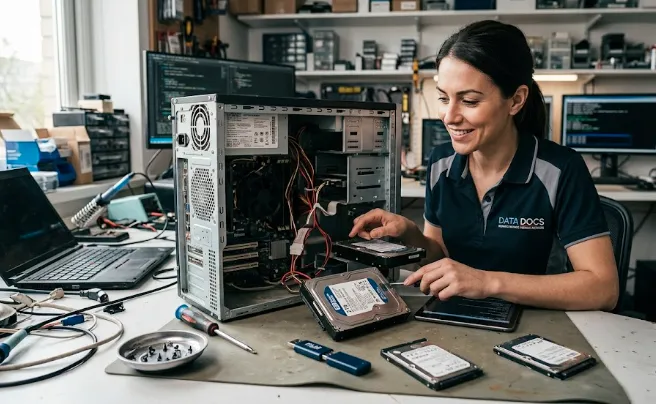

Imagine waking up one day, opening your laptop, and finding that your most important files: work documents, family photos, tax records are simply gone. No warning. No backup. Just an empty folder where your life used to be.
This happens more often than people think. And in many cases, it is not a hardware failure that causes the damage. It is a software repair mistake. The kind of mistake that seems small at the moment but ends up wiping out years of data in seconds.
Whether you tried to fix a slow computer on your own, downloaded a free repair tool from the internet, or let someone unqualified handle your device, certain software repair errors carry serious consequences. Knowing what these mistakes are and how to avoid them can save you from a disaster you never see coming.
Why Software Repairs Go Wrong More Often Than You Think
Most people assume software problems are easy to fix. After all, if it is not a broken screen or a damaged port, how complicated can it be?
The truth is, software repairs touch the core of how your computer works. Your operating system, file system, registry, and storage drives are all deeply connected. A wrong move in one area can trigger a chain reaction that corrupts files, deletes partitions, or makes your system completely unbootable.
A 2023 report by Kroll found that data loss events caused by improper system changes and failed software updates were among the top five reasons businesses lost critical files. Home users face the same risks, often with less technical knowledge and no IT support to fall back on.
The Biggest Computer Software Repair Mistakes People Make
Skipping a Backup Before Doing Anything
This is the number one mistake. Before running any repair tool, updating your operating system, or changing system settings, you need a full backup of your data.
Many people skip this step because they think the repair will be quick or non-destructive. But software repairs are unpredictable. A registry cleaner can remove entries your programs depend on. A failed Windows Update can corrupt system files. A partition repair tool can accidentally overwrite the wrong drive.
If you had a backup, none of this would matter. Without one, you are gambling with everything stored on your device.
Using Unverified Third-Party Repair Tools
Search for "free PC repair tool" and you will find thousands of results. Most of them are either useless or dangerous. Some are outright malware disguised as cleanup software.
These tools often promise to fix errors, remove junk files, and speed up your system. What they actually do is make aggressive changes to your file system without your full understanding. Some delete files flagged as duplicates that are actually critical system components. Others modify startup configurations in ways that prevent your computer from booting at all.
Stick to tools from well-known, verified developers. If you are not sure whether a tool is safe, do not install it.
Forcing a System Restore Without Understanding the Consequences
System Restore is a useful feature, but it is widely misunderstood. Many users run a System Restore hoping it will fix a software issue, not realising that it can roll back important program changes, remove recently saved files in certain configurations, or cause conflicts with newer drivers.
System Restore does not affect personal files in most cases, but if it is combined with other repair actions such as a disk cleanup or a registry wipe the combined effect can result in data loss that is very difficult to reverse.
Attempting OS Reinstallation Without Proper Guidance
Reinstalling your operating system is sometimes necessary. But doing it incorrectly is one of the fastest ways to lose everything on your computer.
The difference between a repair install and a clean install matters enormously. A clean install formats your drive and removes all existing data. If you select the wrong option during setup, or if you misread the installation prompts, your files are gone before you even realise what happened.
This is one area where professional software repair services make a real difference. A qualified technician knows exactly which installation path preserves your data and which one does not.
Ignoring Failing Drive Warnings Before Running Repairs
Software repair tools can make things significantly worse if your storage drive is already failing. Drives give warning signs unusual clicking sounds, slow read speeds, frequent freezing that indicate physical or logical damage.
Running intensive repair scans on a failing drive can accelerate the failure. The added strain causes the drive to give up before the repair is complete, leaving your data in a partially recovered, often unreadable state.
If your computer is showing signs of drive trouble, stop using it immediately and consult a professional before attempting any repair.
Making Multiple Changes at the Same Time
When something goes wrong with a computer, there is a strong temptation to fix everything at once. Change the registry, run a virus scan, update the drivers, clean the startup items, and reinstall a problematic program all in one session.
This approach makes it nearly impossible to identify what worked and what caused additional problems. It also dramatically increases the chances of creating a conflict between system components.
Good software repair practice follows a single-change method. You make one change, observe the result, and move on. Patience here protects your data.
What Good Computer Software Repair Looks Like
| Step | What a Professional Does | What DIY Often Misses |
| Initial diagnosis | Identifies root cause before touching anything | Jumps straight to fixes |
| Data backup | Creates a full image backup first | Often skipped entirely |
| Tool selection | Uses verified, professional-grade software | Relies on free tools of unknown origin |
| OS repair | Chooses repair install over clean install when possible | Selects wrong option and loses data |
| Drive health check | Tests drive integrity before running scans | Ignores drive warnings |
| Documentation | Records every change made | No record, no rollback |
Computer Software Repair in Adelaide
If you are in Adelaide and dealing with a slow, crashing, or unresponsive computer, getting the right help matters. Adelaide has a growing number of repair services, but the quality varies significantly. When looking for computer software repair in Adelaide, you want someone who starts with a diagnosis, not assumptions.
Qualified technicians will check for malware infections, corrupted system files, driver conflicts, and storage health before recommending any action. They will also confirm whether your data is safe before beginning any repair work.
Expert laptop repair in Adelaide is available for same-day service in many cases, which means you do not have to leave your device overnight or go without it for days.
Software Repair Services in Adelaide: What to Expect
Good software repair services in Adelaide will cover a range of issues including virus and malware removal, operating system errors, slow performance, boot failures, software conflicts, and data recovery. They will also advise you on how to prevent the same issues from returning.
If you are a business owner managing multiple devices, company device repair services can handle repairs across your entire fleet, ensuring minimal downtime and consistent performance across your team.
When choosing a repair provider, look for transparent pricing, clear communication about what the repair involves, and a guarantee that your data will not be touched without your permission.
When to Stop DIY and Call a Professional
There are clear signs that a software problem has gone beyond what you should handle on your own.
Your computer will not turn on or gets stuck in a boot loop. You are seeing unusual error messages that reference system files or the registry. A repair attempt has already made things worse. Your drive is making sounds it did not make before. You cannot access files that were there yesterday.
In any of these situations, stop. Do not run more tools. Do not restart repeatedly hoping it fixes itself. Shut the device down and take it to someone qualified.
Every additional action you take on an unstable system increases the risk of permanent data loss.
Frequently Asked Questions
Q: Can a software repair delete my files?
A: Yes. Certain repair actions, including clean OS reinstalls, aggressive registry changes, and partition repairs, can delete or overwrite files if performed incorrectly.
Q: Is it safe to use free computer repair tools?
A: Some free tools from reputable developers are safe, but many are not. Always research a tool before installing it and avoid anything that asks for payment to fix problems it "detected" during a scan.
Q: How do I know if my data is at risk during a repair?
A: Before any repair begins, a qualified technician should confirm your data is backed up or safe. If they do not ask about this, that is a warning sign.
Q: What is the safest first step when my computer has a software problem?
A: Back up your data first. Even if the backup is partial, getting your most important files onto an external drive or cloud storage before attempting any repair is always the right move.
Q: Does restarting a computer fix software errors?
A: Sometimes a restart resolves minor errors, but it is not a fix for deeper software issues. Repeated forced restarts on an unstable system can actually make certain problems worse.
Protect Your Files Before It Is Too Late
Software repair mistakes are responsible for a significant number of data loss cases every year. The good news is that most of them are completely avoidable with the right knowledge, the right tools, and the right help.
The safest approach is always to back up your data first, avoid unverified tools, make one change at a time, and call a professional when the situation is beyond your comfort level.
If you are in Adelaide and need reliable, honest software repair support, Sam Phone Repair offers professional computer and device repair services with a focus on keeping your data safe throughout the entire process.
Your files are worth more than the cost of getting the repair done right.





























Sign in to leave a comment.