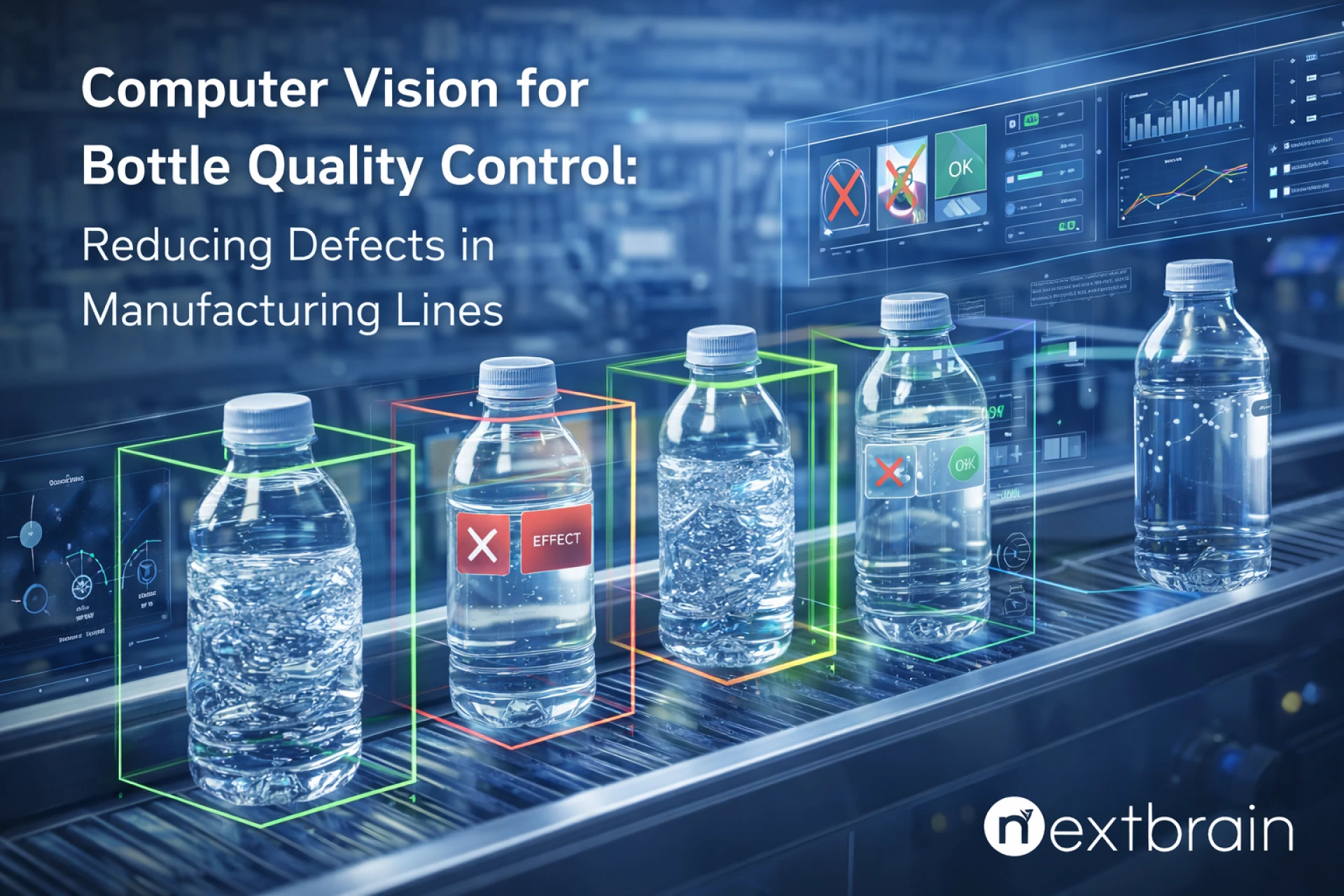

In high-speed manufacturing environments, even the smallest defect can lead to product recalls, brand damage, and financial losses. Industries such as beverages, pharmaceuticals, cosmetics, and FMCG rely heavily on precision packaging. Bottle defects, including cracks, improper caps, incorrect fill levels, and labeling errors, can disrupt supply chains and reduce customer trust.
This is where Computer Vision for Bottle Quality Control is transforming modern production lines. By leveraging artificial intelligence (AI) and real-time image processing, manufacturers can detect defects instantly, reduce waste, and improve overall operational efficiency.
The Growing Challenge of Bottle Quality Inspection
Traditional bottle inspection methods depend largely on manual visual checks or basic sensor-based systems. However, these methods present several limitations:
- Human error due to fatigue
- Inconsistent inspection standards
- Inability to keep up with high-speed production
- Limited defect detection capabilities
- Higher labor costs
In large-scale bottling plants, thousands of units pass through the production line every hour. Manual inspection simply cannot maintain the accuracy and speed required in today’s competitive environment.
Computer vision technology solves this problem by automating quality control with precision and consistency.
What is Computer Vision in Bottle Quality Control?
Computer vision uses high-resolution cameras combined with AI algorithms to inspect bottles in real time. The system captures images or video streams and analyzes them using machine learning models trained to detect defects.
It can identify:
- Surface cracks and scratches
- Improper bottle shape or deformation
- Incorrect fill levels
- Cap misalignment or missing caps
- Label placement errors
- Seal integrity issues
Unlike traditional systems, AI-powered inspection improves over time as models learn from new data, increasing detection accuracy continuously.
Key Bottle Defects Detected Using AI
1. Crack and Structural Damage Detection
Glass and plastic bottles are prone to micro-cracks and structural weaknesses. AI vision systems can detect even minute imperfections that may be invisible to the human eye.
This reduces the risk of breakage during transport and protects brand reputation.
2. Fill Level Verification
Underfilled or overfilled bottles can lead to regulatory violations and customer dissatisfaction. Computer vision systems accurately measure liquid levels at high speeds, ensuring consistency across batches.
3. Cap and Seal Inspection
Missing, loose, or misaligned caps can compromise product safety. AI systems verify:
- Proper cap placement
- Seal integrity
- Tamper-evident packaging compliance
This is especially critical in pharmaceutical and beverage industries.
4. Label Accuracy & Positioning
Incorrect or misaligned labels affect brand image and compliance. Computer vision ensures:
- Correct label placement
- Accurate barcode readability
- Absence of printing defects
This reduces packaging waste and improves shelf presentation.
Benefits of Computer Vision in Manufacturing Lines
Improved Accuracy
AI systems operate with consistent precision, eliminating variability associated with human inspectors.
Increased Production Speed
Automated inspection keeps pace with high-speed bottling lines without slowing production.
Reduced Waste and Recalls
Early defect detection prevents faulty products from reaching distribution channels.
Lower Operational Costs
Reducing manual labor and minimizing product recalls significantly lowers long-term expenses.
Data-Driven Insights
Computer vision systems generate analytics that help manufacturers identify recurring defect patterns and optimize processes.
Real-Time Monitoring and Smart Manufacturing
In Industry 4.0 environments, computer vision integrates with:
- PLC systems
- MES (Manufacturing Execution Systems)
- ERP platforms
- IoT-enabled sensors
This creates a fully connected smart manufacturing ecosystem.
When defects exceed acceptable thresholds, systems can automatically trigger alerts or stop production lines to prevent large-scale losses.
Industry Applications
Beverage Manufacturing
Ensures bottle integrity, accurate fill levels, and proper sealing in water, soft drink, and alcohol bottling plants.
Pharmaceutical Industry
Maintains compliance by verifying seals, labels, and packaging standards.
Cosmetics & FMCG
Ensures visual quality, aesthetic consistency, and branding accuracy.
The ROI of AI-Based Bottle Inspection
Investing in computer vision technology provides measurable returns:
- Reduced rejection rates
- Lower recall risks
- Increased production throughput
- Enhanced compliance standards
- Improved brand reliability
Manufacturers adopting AI-driven quality control often see ROI within the first year of implementation due to operational efficiency improvements.
How Nextbrain Delivers Advanced Bottle Quality Control Solutions
Nextbrain specializes in developing intelligent computer vision solutions tailored for manufacturing and industrial environments. As a leading AI development company, Nextbrain combines advanced artificial intelligence expertise with deep industry knowledge to build scalable and reliable inspection systems.
By combining AI engineering expertise with real-world manufacturing understanding, Nextbrain helps organizations implement:
- Real-time bottle defect detection systems
- High-speed inspection solutions for production lines
- AI-driven fill level and cap verification
- Custom machine learning models for industry-specific defects
- Seamless integration with existing manufacturing systems
Nextbrain’s scalable and customizable solutions empower manufacturers to reduce defects, improve compliance, and modernize quality control operations.
Whether for beverage bottling, pharmaceutical packaging, or FMCG production lines, Nextbrain delivers advanced AI-powered inspection systems that drive measurable and long-term operational results.
Conclusion
As manufacturing lines continue to increase in speed and complexity, traditional inspection methods are no longer sufficient. Computer Vision for Bottle Quality Control offers a smarter, faster, and more reliable way to detect defects before they impact customers.
By automating inspection processes, manufacturers can:
- Improve product quality
- Reduce waste
- Enhance regulatory compliance
- Lower operational costs
- Strengthen brand trust
The future of manufacturing quality assurance is intelligent, automated, and data-driven.
Contact Nextbrain today to implement advanced computer vision solutions that transform your bottle quality control process and elevate your manufacturing efficiency.
Frequently Asked Questions (FAQs)
1. What is computer vision in bottle quality control?
Computer vision uses AI-powered cameras and algorithms to inspect bottles in real time and detect defects such as cracks, fill level errors, cap misalignment, and labeling issues.
2. Can computer vision handle high-speed production lines?
Yes, AI-based systems are designed to inspect thousands of bottles per hour without slowing down production.
3. Is computer vision suitable for pharmaceutical bottle inspection?
Absolutely. It ensures seal integrity, label accuracy, and compliance with regulatory standards.
4. How accurate is AI-based bottle defect detection?
Modern AI systems achieve extremely high accuracy rates and continuously improve as they process more data.
5. What is the ROI of implementing computer vision for bottle inspection?
ROI typically comes from reduced defect rates, lower recalls, improved efficiency, and decreased labor costs.





















Sign in to leave a comment.