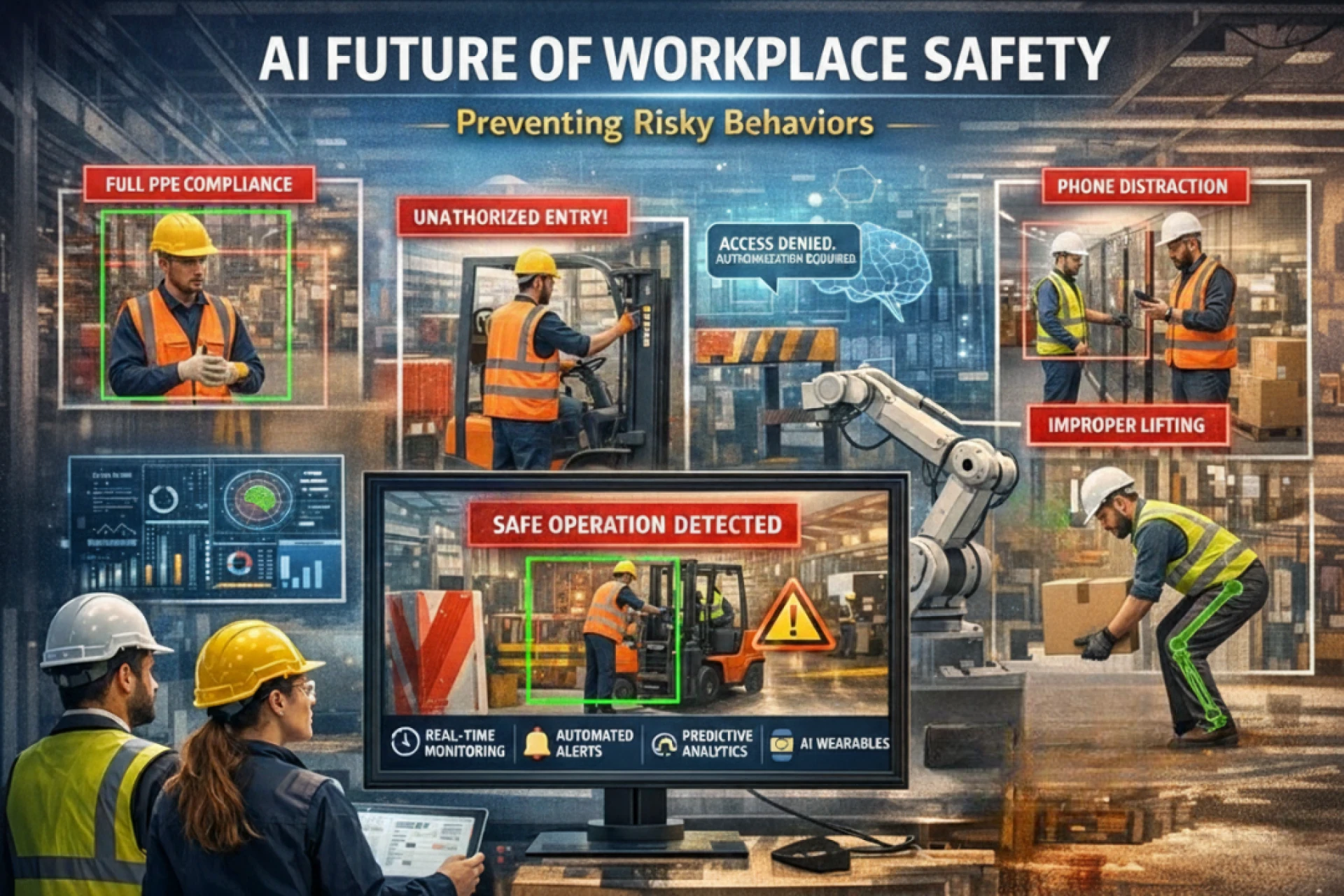

Workplace accidents remain one of the biggest challenges across industries such as manufacturing, construction, logistics, mining, and energy. Despite strict safety protocols, employee training programs, and compliance regulations, incidents still occur due to human error, fatigue, distraction, and unsafe behavior.
Traditional safety methods rely heavily on supervision, periodic inspections, and manual reporting. These approaches are reactive, they identify problems after an incident occurs. The future of workplace safety, however, is shifting toward prevention rather than reaction, and this transformation is driven by computer vision for workplace safety, which enables organizations to detect risks instantly instead of documenting them later.
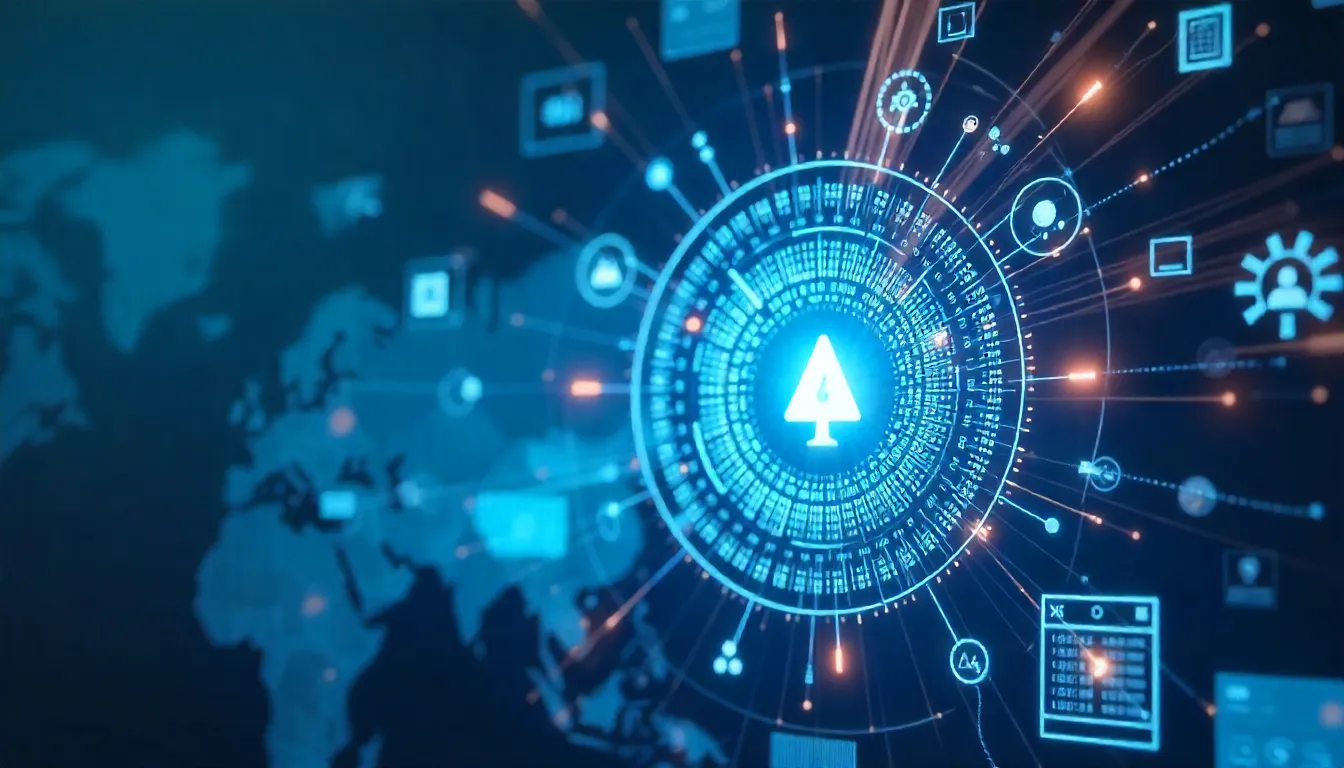
This is where computer vision powered by Artificial Intelligence (AI) is transforming industrial environments. Instead of waiting for accidents to happen, intelligent systems now detect risky behavior in real time and intervene before injuries occur.
Why Human Errors Cause Most Workplace Accidents
Studies across industrial sectors consistently show that the majority of workplace incidents are caused not by equipment failure but by unsafe actions. These include:
- Not wearing personal protective equipment (PPE)
- Entering restricted zones
- Improper lifting posture
- Worker fatigue or distraction
- Unsafe interaction with machinery
- Ignoring safety procedures
Even experienced employees make mistakes, especially in repetitive or high-pressure environments. Supervisors cannot monitor every worker at all times, and CCTV cameras alone only record events — they do not prevent them.
Computer vision changes this completely by turning cameras into intelligent safety observers.
What is Computer Vision in Workplace Safety?
Computer vision is an AI technology that enables machines to interpret and understand visual information from cameras. In safety applications, AI analyzes video feeds continuously and identifies unsafe situations instantly.
Unlike traditional surveillance systems, AI does not simply record footage. It understands context.
For example, it can recognize:
- A worker without a helmet
- A person standing too close to heavy machinery
- A forklift moving dangerously near pedestrians
- A worker collapsing due to fatigue
- Unauthorized access to hazardous areas
The moment the system detects risk, it triggers alerts to prevent accidents.
From Reactive Safety to Predictive Safety
Traditional safety approach:
- Accident happens
- Investigation begins
- Policies updated
AI-powered safety approach:
- Risk detected
- Alert generated
- Accident prevented
This shift from reactive to predictive safety is the biggest revolution in industrial risk management.
Computer vision systems continuously learn patterns of safe and unsafe behavior. Over time, they identify trends and predict future hazards before they occur. Organizations can then modify workflows, redesign layouts, and improve training programs proactively.
Key Use Cases of Computer Vision in Accident Prevention
1. PPE Compliance Monitoring
The system automatically checks whether workers wear helmets, gloves, vests, or masks. If a violation occurs, alerts are triggered instantly.
This eliminates manual safety audits and ensures 24/7 compliance monitoring.
2. Restricted Area Intrusion Detection
High-risk zones such as chemical storage, heavy equipment areas, or high-temperature environments can be monitored automatically. If an unauthorized worker enters, supervisors are alerted immediately.
3. Human-Machine Interaction Safety
Factories often involve workers operating close to robotic arms, conveyor belts, or forklifts. AI detects unsafe proximity and prevents collisions or crush injuries.
4. Slip, Trip, and Fall Detection
Falls are one of the most common workplace injuries. Computer vision identifies sudden posture changes, collapse patterns, or unusual movement and notifies response teams instantly.
5. Fatigue and Behavior Monitoring
AI identifies signs of drowsiness, distraction, or unsafe posture — common precursors to accidents. Preventive action can be taken before incidents occur.
6. Fire and Smoke Detection
Vision systems detect early signs of smoke or sparks much faster than traditional sensors, enabling rapid evacuation and response.
Benefits of AI-Powered Workplace Safety Systems
1. Prevents Accidents Before They Happen
Real-time detection stops risky behavior instantly, drastically reducing injuries.
2. Continuous Monitoring
Unlike supervisors, AI never sleeps. It monitors every camera simultaneously.
3. Improves Compliance
Automated safety enforcement ensures adherence to regulatory standards.
4. Reduces Operational Costs
Fewer accidents mean lower compensation claims, downtime, and insurance premiums.
5. Creates Data-Driven Safety Policies
AI generates analytics reports highlighting recurring risks and unsafe practices.
6. Enhances Worker Confidence
Employees feel safer knowing hazards are actively monitored and prevented.
The Role of Nextbrain in Intelligent Workplace Safety
Nextbrain is an experienced ai development company that develops advanced AI-powered computer vision solutions designed specifically for industrial safety environments.
Their systems are capable of:
- Real-time unsafe behavior detection
- PPE compliance monitoring
- Worker tracking and restricted zone alerts
- Forklift and machinery collision prevention
- Fall detection and emergency alerts
- Fire and smoke detection
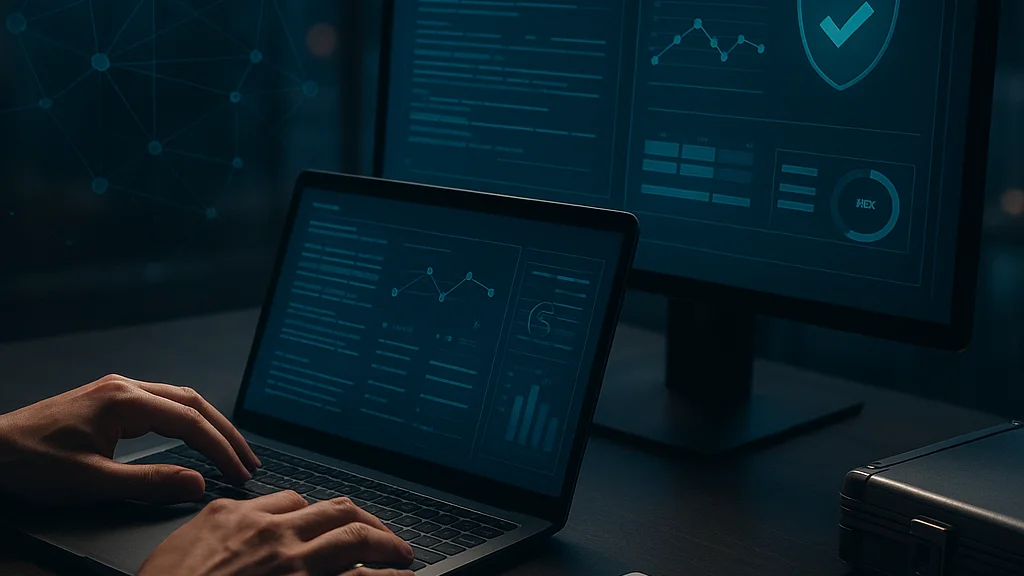
- Custom safety analytics dashboards
Nextbrain solutions integrate seamlessly with existing CCTV infrastructure, allowing organizations to upgrade safety without replacing hardware.
By combining deep learning models with industry-specific customization, Nextbrain helps businesses move toward a zero-accident workplace strategy.
The Future: Autonomous Safety Ecosystems
The next generation of workplace safety will not rely solely on alerts but on automation.
Future AI safety systems will:
- Stop machines automatically when humans enter danger zones
- Adjust robot speeds based on human proximity
- Predict worker fatigue based on behavior patterns
- Optimize shift planning to reduce human error
- Integrate with IoT sensors and wearable devices
Workplaces will evolve into self-aware environments where hazards are corrected instantly without human intervention.
This marks the transition from safety management to safety automation.
Conclusion
Workplace safety is no longer limited to helmets, warning signs, and periodic inspections. The modern industrial environment demands intelligent, proactive, and continuous monitoring systems.
Computer vision is transforming safety by detecting human errors before they lead to accidents. By identifying risks in real time, organizations can prevent injuries, reduce costs, improve compliance, and protect their workforce.
Companies adopting AI-based safety today are not only reducing incidents but also building smarter and more responsible workplaces.
Contact Nextbrain today to implement intelligent workplace safety solutions and move toward a zero-accident future.
FAQs
1. Can computer vision replace safety supervisors?
No, it assists them. AI acts as a continuous monitoring partner that enhances human supervision and improves response speed.
2. Does AI workplace monitoring invade employee privacy?
Modern systems focus on safety behavior detection rather than personal identity. They are designed to improve protection, not surveillance.
3. Can existing CCTV cameras be used?
Yes. Most AI safety systems integrate with current camera infrastructure, minimizing investment.
4. Which industries benefit the most?
Manufacturing, construction, warehouses, logistics, mining, oil & gas, and large commercial facilities see the highest impact.
5. How quickly can companies see ROI?
Organizations typically see measurable reductions in incidents and compliance violations within the first few months of deployment.
























Sign in to leave a comment.