
Market Overview:
The contact lenses market is experiencing rapid growth, driven by rising prevalence of vision disorders, technological advancements in lens materials and growing demand for cosmetic and colored lenses. According to IMARC Group's latest research publication, "Contact Lenses Market Size, Share, Trends and Forecast by Material, Design, Usage, Application, Distribution Channel, and Region, 2025-2033", The global contact lenses market size was valued at USD 9.00 Billion in 2024. The market is projected to reach USD 14.62 Billion by 2033, exhibiting a CAGR of 4.98% from 2025-2033.
This detailed analysis primarily encompasses industry size, business trends, market share, key growth factors, and regional forecasts. The report offers a comprehensive overview and integrates research findings, market assessments, and data from different sources. It also includes pivotal market dynamics like drivers and challenges, while also highlighting growth opportunities, financial insights, technological improvements, emerging trends, and innovations. Besides this, the report provides regional market evaluation, along with a competitive landscape analysis.
Grab a sample PDF of this report: https://www.imarcgroup.com/contact-lenses-market/requestsample
Our report includes:
- Market Dynamics
- Market Trends and Market Outlook
- Competitive Analysis
- Industry Segmentation
- Strategic Recommendations
Growth Factors in the Contact Lenses Market
- Rising Prevalence of Vision Disorders:
- The escalating prevalence of vision disorders, specifically myopia, hyperopia, astigmatism, and presbyopia, is the key driver behind the contact lenses market. An increasing number of the population (mostly children and young adults) are experiencing refractive errors due to increased screen time and changing lifestyles, therefore the demand for corrective lenses is rapidly increasing. The World Health Organization has estimated that over 2.2 billion people worldwide suffer from a vision impairment and a large proportion of these require correction to see clearly. This has particularly risen in urban areas or developed regions where the population is using a high amount of digital devices. This is also the reason companies such as Johnson & Johnson Vision Care are creating lenses specifically for the use of digital eye strain, which is aiding in growth for the market.
- Technological Advancements in Lens Materials:
- The launch of contact lens material innovations including silicone hydrogel has enhanced overall comfort and wearability driving market growth. These materials enable higher oxygen permeability and therefore typically diminish or eliminate eye irritation to allow for longer wear times. For example, Bausch + Lomb’s silicone hydrogel contact lenses have been adopted by consumers because of their oxygen permeability and hydration, appealing to individuals with a need for comfort lenses. Developments, including moisture-retaining hydrogel lenses for dry eye users were also a response to growing awareness that dry eye disease was emerging as a concern, especially with added environmental exposure and screen time. The user experience and improvements in existing materials create demand for present and future new users, positively responding to market demand growth.
- Growing Demand for Cosmetic and Colored Lenses:
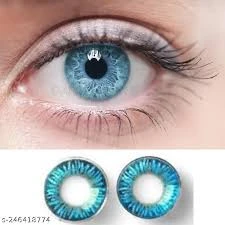
- The increasing popularity (due to aesthetic reasons) of cosmetic and colored contact lenses is one of the main drivers to growth. - Younger consumers influenced by young social media users and celebrity endorsements are increasingly leveraging cosmetic colored and special effect lenses to enhance their appearance or adopt a new persona, etc. In the Asia-Pacific segment of colored contact lenses, companies such as SEED Co., Ltd. have garnered attention to vibrant colored lenses providing functionality to fashion backs (specific market orientation). This trend is leveraged further by the entertainment industry where lenses are utilized for theatrical or dramatic makeup. Also, with the availably of more designs and lenses that are more comfortable but also for longer periods of wear, lenses continue to drive the region's growth in the contact lenses market.
Key Trends in the Contact Lenses Market
- Shift Toward Daily Disposable Lenses:
- Daily disposable contact lenses are gaining traction due to their convenience and hygiene benefits. Unlike traditional lenses, daily disposables eliminate the need for cleaning, reducing the risk of eye infections like keratitis. This trend is particularly strong in North America, where over 40% of users prefer daily disposables for their ease of use, as seen with Alcon’s Dailies TOTAL1 lenses. The growing awareness of eye health, coupled with busy lifestyles, drives this shift. Manufacturers are responding by expanding their daily disposable portfolios, incorporating advanced materials to enhance comfort, making this a dominant trend in the market.
- Emergence of Smart Contact Lenses:
- Smart contact lenses, integrating technologies like augmented reality (AR) and health monitoring, represent a transformative trend. These lenses offer functionalities beyond vision correction, such as monitoring intraocular pressure for glaucoma patients or providing AR experiences. For example, BVS Insight is developing soft contact lenses for glaucoma monitoring, combining biocompatibility with advanced sensors. Such innovations appeal to tech-savvy consumers and healthcare professionals, creating new market opportunities. As companies invest in R&D to refine these technologies, smart lenses are poised to redefine the contact lenses market, blending vision correction with cutting-edge applications.
- Expansion of Online Retail and Subscription Models:
- The rise of e-commerce and subscription-based lens delivery services is reshaping how consumers purchase contact lenses. Online platforms offer convenience, competitive pricing, and access to a wide range of products, driving their popularity. For instance, CooperVision’s subscription model for MyDay Energys lenses has gained traction in the U.S., catering to consumers seeking hassle-free access. This trend is particularly strong in urban areas with high internet penetration, where over 30% of lens sales occur online. As digital retail continues to grow, companies are leveraging digital marketing and AI-driven fitting tools to enhance customer experience, boosting market accessibility and growth.
We explore the factors driving the growth of the market, including technological advancements, consumer behaviors, and regulatory changes, along with emerging contact lenses market trends.
Leading Companies Operating in the Global Contact Lenses Industry:
- Alton Vision LLC
- Bausch & Lomb Incorporated
- Carl Zeiss AG
- Contamac Holdings Limited
- EssilorLuxottica SA
- Hoya Corporation
- Johnson & Johnson Services, Inc.
- Menicon Co. Limited
- SEED Co. Limited
- SynergEyes Inc.
- Cooper Companies Inc.
Contact Lenses Market Report Segmentation:
By Material:
- Gas Permeable
- Silicone Hydrogel
- Hybrid
- Others
In 2024, silicone hydrogel lenses dominate the market with 87.8% share due to superior oxygen permeability, comfort, biocompatibility, and compatibility with various prescriptions.
By Design:
- Spherical
- Toric
- Multifocal
- Others
Spherical lenses lead the design segment with 60.5% market share in 2024, favored for their effectiveness in correcting common refractive errors and ease of availability.
By Usage:
- Daily Disposable
- Disposable
- Frequently Replacement
- Traditional
Daily disposable lenses account for 33.2% of the market in 2024, driven by consumer demand for hygiene, convenience, and lower complication rates.
By Application:
- Corrective
- Therapeutic
- Cosmetic
- Prosthetic
- Lifestyle-oriented
Corrective lenses dominate with 45.0% market share in 2024, addressing the rising prevalence of refractive errors and enhancing vision correction options.
By Distribution Channel:
- E-Commerce
- Eye Care Practitioners
- Retail Stores
Retail stores lead with a 45.8% share in 2024, benefiting from consumer trust in personalized services and immediate product availability.
Regional Insights:
- North America (United States, Canada)
- Asia Pacific (China, Japan, India, South Korea, Australia, Indonesia, Others)
- Europe (Germany, France, United Kingdom, Italy, Spain, Russia, Others)
- Latin America (Brazil, Mexico, Others)
- Middle East and Africa
North America leads the contact lenses market in 2024 with a 38.0% share, supported by advanced healthcare, high vision care awareness, easy access to optometric services, and a large population needing corrective lenses.
Research Methodology:
The report employs a comprehensive research methodology, combining primary and secondary data sources to validate findings. It includes market assessments, surveys, expert opinions, and data triangulation techniques to ensure accuracy and reliability.
Note: If you require specific details, data, or insights that are not currently included in the scope of this report, we are happy to accommodate your request. As part of our customization service, we will gather and provide the additional information you need, tailored to your specific requirements. Please let us know your exact needs, and we will ensure the report is updated accordingly to meet your expectations.
About Us:
IMARC Group is a global management consulting firm that helps the world’s most ambitious changemakers to create a lasting impact. The company provide a comprehensive suite of market entry and expansion services. IMARC offerings include thorough market assessment, feasibility studies, company incorporation assistance, factory setup support, regulatory approvals and licensing navigation, branding, marketing and sales strategies, competitive landscape and benchmarking analyses, pricing and cost research, and procurement research.
Contact Us:
IMARC Group
134 N 4th St. Brooklyn, NY 11249, USA
Email: [email protected]
Tel No:(D) +91 120 433 0800
United States: +1-631-791-1145
























Sign in to leave a comment.