
Choosing the right partner for corporate insurance can feel like navigating a maze. In India, the insurance landscape is governed by the Insurance Regulatory and Development Authority of India (IRDAI), which has created specific structures to ensure transparency and professionalism.
When a business or an entrepreneur looks for insurance coverage, they often encounter three distinct entities: the Corporate Insurance Agent, the Insurance Marketing Firm (IMF), and the Insurance Broker. While they all help you get insured, their legal standing, the range of products they offer, and who they actually represent are vastly different.
This guide breaks down these three pillars to help you understand which one fits your specific needs.
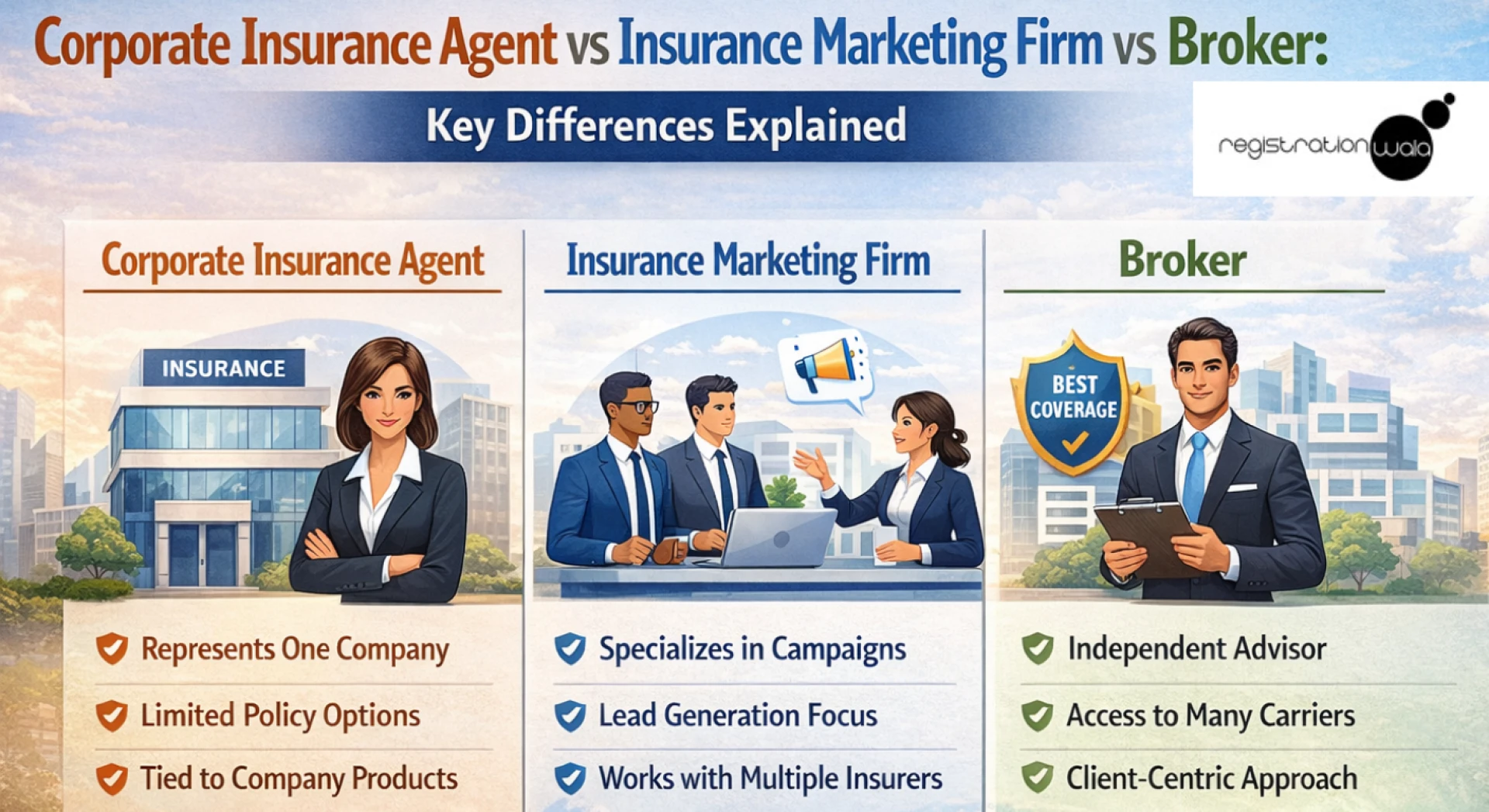
1. The Corporate Insurance Agent: The Dedicated Representative
A Corporate Insurance Agent is an entity (like a private limited company or a partnership firm) licensed by a specific insurance company to sell its products.
How it Works:
Think of a Corporate Agent as a dedicated salesperson for a particular brand. They are tied to one or more insurance companies but operate under a "Composite" license if they want to sell both Life and General insurance. However, they cannot sell products from every company in the market.
- Primary Loyalty: They represent the Insurance Company.
- Product Range: Limited. They can only offer products from the insurers they are tied up with (usually restricted to a maximum of three insurers in each category like Life, General, and Health).
- Remuneration: They earn commissions directly from the insurance company for the policies they sell.
Best For: Small businesses or individuals who already have a trusted relationship with a specific insurance brand and want a streamlined, direct experience.
2. Insurance Marketing Firm (IMF): The Modern Distribution Hub
The Insurance Marketing Firm is a relatively newer concept introduced by the IRDAI to increase insurance penetration. An IMF is more than just an agency; it acts as a distribution setup that can sell insurance as well as other financial products.
How it Works:
An IMF has a broader scope than a traditional agent. While they are still "tied" to insurers, they have the flexibility to offer products from multiple companies. More importantly, they can also distribute mutual funds, pension products, and banking products.
- Primary Loyalty: They are distributors who aim to provide a basket of financial services.
- Product Range: Moderate. They can tie up with up to six insurers (two Life, two General, and two Health).
- Additional Services: Unlike agents or brokers, IMFs can also provide financial goal planning and sell non-insurance financial products.
Best For: Individuals or startups looking for a "one-stop-shop" where they can manage their insurance alongside their mutual funds or other investment portfolios.
3. Insurance Broker: The Independent Client Advocate
An Insurance Broker is perhaps the most sophisticated player in this trio. Unlike agents, brokers are required to have higher capital requirements and more stringent licensing because they represent the client, not the insurance company.
How it Works:
A broker’s job is to scan the entire market. They aren't tied to any specific brand. They analyze your risk, look at the offerings from all 50+ insurance companies in India, and negotiate the best terms on your behalf.
- Primary Loyalty: They represent the Customer (You).
- Product Range: Unlimited. They have access to every insurer in the market.
- Responsibility: They are legally bound to provide "unbiased advice." They also play a massive role in the claims process, acting as your advocate if a dispute arises with the insurer.
Best For: Mid-to-large corporations, complex industries (like manufacturing or tech), or anyone who wants a professional risk assessment and the lowest possible premium through market competition.
Key Differences at a Glance
To make this easier to digest, here is a comparison based on the most critical factors:
| Feature | Corporate Agent | Insurance Marketing Firm (IMF) | Insurance Broker |
| Who do they represent? | The Insurance Company | The Insurance Company | The Customer |
| Market Access | Very Limited (Max 3 per category) | Limited (Max 2 per category) | Full Market Access |
| Legal Liability | The Insurer is responsible for the agent's acts. | The IMF is responsible for its own conduct. | The Broker carries Professional Indemnity Insurance for errors. |
| Services | Sales and basic service. | Sales + Other financial products (Mutual funds, etc.). | Risk Inspection, Portfolio Management, & Claims Advocacy. |
| Licensing Authority | IRDAI | IRDAI | IRDAI (Stricter norms) |
Why the Distinction Matters for Your Business
Understanding these differences isn't just about technicalities; it impacts your bottom line and your protection.
The Question of Choice
If you go to a Corporate Agent, you will only see what their partner company offers. If that company doesn't have a specific "Cyber Insurance" policy that fits your startup, the agent might try to sell you a generic policy that isn't quite right.
A Broker, on the other hand, will tell you, "Company A has a great price, but Company B has a better claim settlement record for your industry."
The Claims Experience
This is where the difference becomes "real." If a claim occurs:
- An Agent helps you fill out the forms but is ultimately an extension of the company that has to pay the money.
- A Broker acts as your consultant. They argue your case, ensure the documentation is airtight, and push the insurer to settle the claim fairly and quickly.
Professional Expertise
Brokers and IMFs usually employ "Principal Officers" who have passed rigorous exams. While agents are also trained, the level of "Risk Audit" you get from a brokerage firm is usually much deeper, involving technical inspections of your office, factory, or digital assets.
Which One Should You Choose?
- Choose a Corporate Agent if: You want a simple, direct link to a big-name insurer you already trust, and your insurance needs are very standard (like basic fire insurance or group health for 5 employees).
- Choose an IMF if: You are an individual or a small business owner who wants a single person to handle your insurance, your SIPs, and your retirement planning under one roof.
- Choose a Broker if: You want the best price in the market through competitive bidding, you have complex risks to cover, or you want an expert who will stand by you during a difficult claim.
Final Thoughts
In the Indian regulatory environment, the move is toward more transparency. Whether you choose an Corporate Insurance Agent and an Insurance Marketing Firm, always ensure their license is valid and active on the IRDAI portal. Insurance is not just a tax-saving tool or a checkbox for compliance; it is the safety net that keeps your business running when things go wrong. Choosing the right partner to build that net is the first step toward long-term security.





























Sign in to leave a comment.