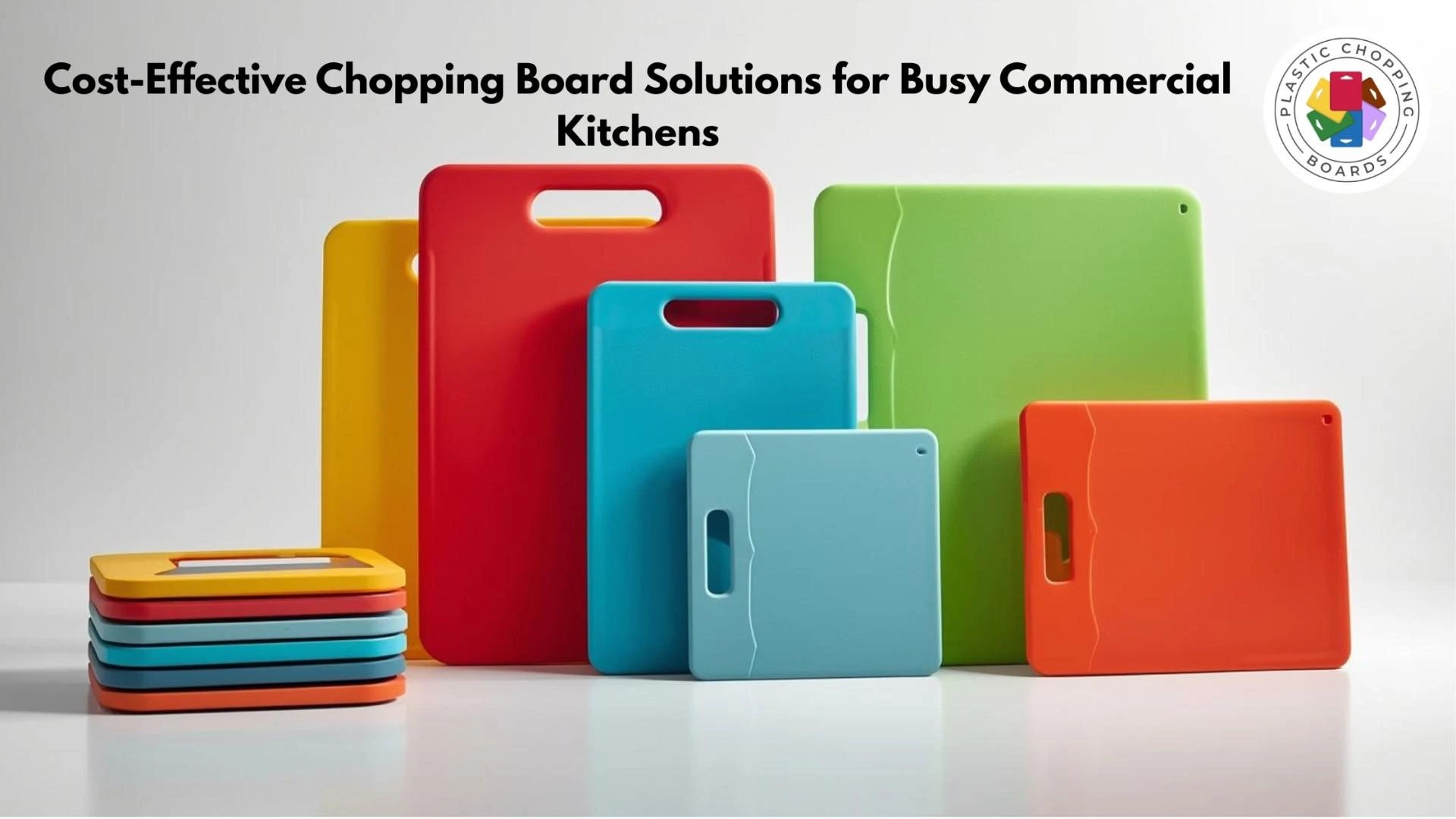
In every commercially successful kitchen that operates on a tight schedule, the use of plastic and other commercial chopping boards is essential to maintain safety, order, and efficiency in food preparation. Due to high pressure, heavy workloads, and strict hygiene standards, selecting appropriate chopping boards is crucial for both performance and cost management. Hard-working kitchens frequently face equipment wear and tear, sanitation requirements, and replacement cycles, which, in turn, make cost-effective solutions more important than ever. This article discusses how proper board selection can lead to better durability, hygiene, and, eventually, better value.
Why Choosing the Right Chopping Board Matters
Food safety is the core of a professional kitchen. The material and quality of chopping boards directly influence hygiene levels and adherence to food-handling standards. The right board makes it less likely that bacteria will accumulate, thereby making daily sanitisation more effective.
Additionally, the exact board specification serves as a measure against cross-contamination. Colour-coded systems, especially for plastic or commercial chopping boards, benefit employees by enabling quick identification of separate surfaces for meat, fish, dairy, vegetables, and cooked foods. With less confusion and a faster workflow, chefs have time and confidence to execute other tasks during service hours.
Types of Chopping Boards for Commercial Kitchens
Plastic Chopping Boards
They are still the number one choice for high-volume kitchens. The boards are lightweight, non-absorbent, and easy to clean, and therefore can be used in a fast-paced environment without warping or cracking. Most of them are available in complete colour-coded sets, which is an excellent way to strengthen hygiene.
They are positioned well in terms of price, but they may need to be rotated or replaced on a schedule, depending on usage. For kitchens prioritising value and hygiene, plastic chopping boards offer an excellent balance of cost-effectiveness and durability.
Wooden Boards
The members of the wooden boards family have long been the preferred choice for cutting specific types of food. Unlike wood, boards made from it are susceptible to damage, so they need to be dried thoroughly to prevent mould and treated regularly to prevent cracking. In commercial kitchens, wooden cutting boards are the best for low-humidity or speciality prep stations. Often, their replacement cycle is shorter due to heavy wear.
Composite & Other Materials
Advanced cutting boards made of composite, rubber, and high-density materials are becoming increasingly popular with users. These boards minimise damage from deep knife cuts, do not lose their shape during intense cutting, and are highly resistant to staining. Most of the higher starting price is offset in heavily used kitchens that require durable cutting boards for chefs, while they also want to control their long-term operating expenses.
Cost-Effective Strategies
Bulk purchasing is one of the easiest ways to reduce the cost of commercial chopping boards, especially when outfitting an entire team or multiple prep stations.
Material choices that can withstand daily use, such as plastic or composite, will help reduce the number of times the board needs to be replaced. Establishing colour-coded systems reduces cross-contamination and the number of boards discarded due to misuse.
Good upkeep, which includes regular sanitising and, when needed, surface reshaping, is key to the board's longevity, reducing the yearly budget for affordable chopping boards.
Maintenance and Hygiene Tips
Washing boards with thorough disinfectant solutions is part of the daily routine, supporting hygiene and keeping boards fresh and odour-free. Deep cuts on the boards' surface should be checked regularly to make a timely replacement decision.
Chefs must not use unnecessarily violent cutting methods that cause board surfaces to wear out most rapidly. If the boards are stored upright and/or in specially designed racks, they dry quickly and circulate without warping.
Recommended Products and Brands
The most significant benefits will be kitchens derived from plastic chopping boards which are basically meant for commercial use, those with non-slip edges, colour-coded sets, and high-density materials. They are affordable chopping boards that do not compromise on hygiene or longevity, making them perfect for service-heavy environments.
Some brands, which are quality-price-balancing specialists, provide solutions that are long-lasting and, additionally, efficient. They offer products that are durable enough to meet the daily needs of chefs without increasing total operational expenditure.
Conclusion
Besides being hygienic and cost-effective, plastic chopping boards are durable, making them the best choice for a kitchen operating on a tight schedule and handling high food volumes.
Choose Plastic Chopping Boards to achieve strength, cost-effective solutions that elevate every commercial kitchen.
























Sign in to leave a comment.