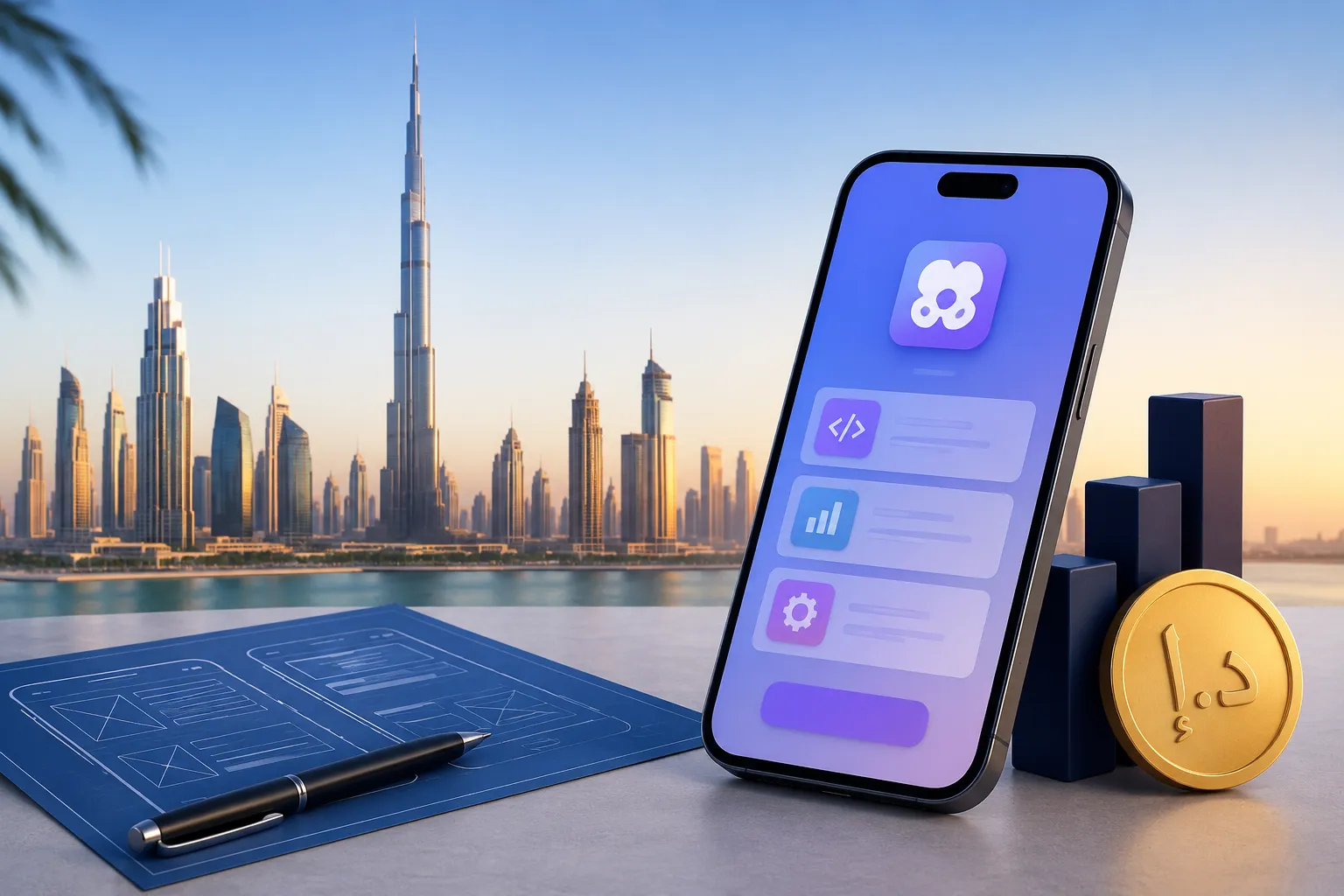

How Much Does It Cost to Develop a Mobile App in Dubai?
The cost of developing a mobile app in Dubai depends on several factors, including the app's features, design, platform, and overall complexity. A simple app with basic functionality will cost much less than an enterprise-grade solution with advanced features such as artificial intelligence, real-time analytics, and third-party integrations.
On average, mobile app development costs in Dubai can range from AED 30,000 to AED 500,000+, depending on the project's requirements. Let's break down the costs based on the complexity of the app.
Basic Mobile App Development Cost
Basic mobile apps are designed with simple features and straightforward functionality. These apps usually include user registration, profiles, push notifications, and basic content management.
Examples of basic apps include:
- Calculator apps
- To-do list apps
- News apps
- Simple business apps
- Event apps
Estimated cost: AED 30,000–80,000
Development time: 2–4 months
Since these apps require fewer resources and less development time, they are the most affordable option for startups and small businesses.
Medium-Complexity App Development Cost
Medium-complexity apps come with more advanced features and integrations. They often include payment gateways, real-time chat, geolocation, social media integration, and custom dashboards.
Examples of medium-complexity apps include:
- Food delivery apps
- E-commerce apps
- Fitness apps
- Booking and reservation apps
- Educational apps
Estimated cost: AED 80,000–250,000
Development time: 4–8 months
These apps require a larger development team and more testing, which increases both the cost and the timeline.
Enterprise-Grade App Development Cost
Enterprise-grade apps are large-scale applications built for organizations and businesses that need high performance, advanced security, and the ability to support thousands of users.
These apps often include:
- Artificial intelligence and machine learning
- Advanced data analytics
- Cloud infrastructure
- Enterprise resource planning (ERP) integration
- Multi-user management
- High-level security features
Examples include:
- Banking and fintech applications
- Healthcare platforms
- Enterprise management systems
- Logistics and supply chain apps
- Large-scale marketplaces
Estimated cost: AED 250,000–500,000+
Development time: 8–12 months or longer
Because of their complexity and security requirements, enterprise apps require experienced developers, designers, and quality assurance teams, making them the most expensive category of mobile applications.
Mobile App Development Cost Breakdown in Dubai
The total cost of mobile app development in Dubai is divided into several stages, from designing the app to launching and maintaining it. Understanding these costs can help businesses plan their budget and avoid unexpected expenses.
UI/UX Design Costs
UI (User Interface) and UX (User Experience) design focus on how your app looks and how users interact with it. This stage includes wireframes, prototypes, visual elements, and user journey planning.
A well-designed app improves user engagement and customer satisfaction.
Estimated cost: AED 10,000–50,000
What's included:
- Wireframing and prototyping
- User journey mapping
- Custom screens and layouts
- Icons and visual elements
- Interactive design
Front-End Development Costs
Front-end development involves building the part of the app that users see and interact with. This includes buttons, menus, animations, and other visual components.
The cost depends on the number of screens, features, and the platform (iOS, Android, or cross-platform).
Estimated cost: AED 30,000–150,000
What's included:
- Mobile app interface development
- User authentication
- Navigation and animations
- Push notifications
- API integration
Back-End Development Costs
Back-end development powers the app behind the scenes. It manages databases, servers, APIs, and business logic to ensure the app runs smoothly.
Apps with real-time features, payment gateways, or large amounts of data usually require more complex back-end systems.
Estimated cost: AED 20,000–200,000
What's included:
- Server setup and management
- Database development
- API development and integration
- User data management
- Security and authentication
Quality Assurance and Testing Costs
Testing ensures that the app works properly on different devices and operating systems. This stage helps identify bugs, improve performance, and provide a smooth user experience.
Estimated cost: AED 10,000–50,000
What's included:
- Functional testing
- Performance testing
- Security testing
- Device compatibility testing
- Bug fixing and optimization
Deployment and Launch Costs
Once development and testing are complete, the app is deployed to app stores such as Google Play and the Apple App Store.
The launch process also includes final checks, store optimization, and configuration.
Estimated cost: AED 5,000–20,000
What's included:
- App store submission
- App store optimization (ASO)
- Server configuration
- Final deployment and monitoring
- Launch support
Maintenance and Support Costs
Mobile apps require regular updates and maintenance after launch to fix bugs, improve performance, and add new features.
Most businesses spend around 15–20% of the initial development cost per year on maintenance and support.
Estimated annual cost: AED 10,000–100,000+
What's included:
- Bug fixes and updates
- Security patches
- Performance improvements
- Feature enhancements
- Technical support and monitoring
Proper maintenance helps keep your app secure, compatible with new devices, and ready to meet changing customer needs.
Factors That Affect Mobile App Development Costs in Dubai
The cost of mobile app development in Dubai depends on multiple factors, including the app's complexity, technology, and the team involved in the project. Understanding these factors can help businesses estimate their budget more accurately.
App Complexity and Features
The complexity of your app is one of the biggest factors that affects development costs. Apps with basic features cost less, while apps with advanced functionality require more time and resources.
Basic features include:
- User registration and login
- User profiles
- Push notifications
- Basic dashboards
Advanced features include:
- Real-time chat and messaging
- Artificial intelligence (AI)
- GPS and location tracking
- Video streaming
- Payment gateways
- Analytics and reporting
The more features you add, the higher the development cost will be.
Platform Selection (iOS, Android, or Cross-Platform)
The platform you choose also affects the overall cost.
- iOS development: Focuses only on Apple devices.
- Android development: Supports a wide range of Android smartphones and tablets.
- Cross-platform development: Uses a single codebase to build apps for both iOS and Android.
Cross-platform frameworks like Flutter and React Native can reduce development costs and speed up the development process, making them a popular choice for startups and small businesses.
Technology Stack
The technology stack includes programming languages, frameworks, databases, and cloud services used to build the app.
Some commonly used technologies include:
- Flutter
- React Native
- Swift
- Kotlin
- Node.js
- Laravel
- AWS
- Firebase
Choosing modern and scalable technologies may increase the initial cost but can reduce maintenance expenses in the long run.
Third-Party Integrations
Many mobile apps rely on third-party services to provide additional functionality.
Common integrations include:
- Payment gateways
- Social media logins
- Google Maps
- Chat systems
- Analytics tools
- CRM and ERP platforms
Each integration requires additional development and testing, which can increase the overall project cost.
Security and Compliance Requirements
Security is especially important for industries such as healthcare, finance, and e-commerce.
Additional security measures may include:
- Data encryption
- Multi-factor authentication
- Secure payment processing
- GDPR compliance
- UAE data protection requirements
Apps with strict security and compliance requirements generally cost more to develop.
Development Team Size and Location
The size and location of the development team can significantly impact the budget.
A typical mobile app team may include:
- Project manager
- UI/UX designer
- Front-end developer
- Back-end developer
- QA engineer
- DevOps engineer
Larger teams and highly experienced developers usually charge higher rates, but they can also deliver complex projects more efficiently.
Mobile App Development Cost by App Type
Different types of mobile apps have different requirements, features, and development timelines. Below are the estimated costs for some of the most popular app categories in Dubai.
E-commerce Apps
E-commerce apps allow users to browse products, make purchases, and track orders.
Common features:
- Product catalog
- Shopping cart
- Secure payments
- Order tracking
- Customer reviews
Estimated cost: AED 80,000–300,000
Food Delivery Apps
Food delivery apps connect customers with restaurants and delivery partners.
Common features:
- Restaurant listings
- Real-time order tracking
- Payment integration
- Ratings and reviews
- Delivery management
Estimated cost: AED 100,000–350,000
FinTech Apps
FinTech applications require advanced security and compliance features to handle financial transactions.
Common features:
- Digital payments
- Banking integrations
- Transaction history
- Fraud detection
- Data encryption
Estimated cost: AED 150,000–500,000+
Healthcare Apps
Healthcare apps help patients connect with doctors, book appointments, and manage medical records.
Common features:
- Appointment scheduling
- Video consultations
- Electronic health records
- Prescription management
- Notifications
Estimated cost: AED 120,000–400,000
Real Estate Apps
Real estate apps allow users to search properties, view listings, and contact agents.
Common features:
- Property listings
- Interactive maps
- Virtual tours
- Search filters
- Agent profiles
Estimated cost: AED 80,000–250,000
On-Demand Service Apps
On-demand apps connect users with service providers, such as taxi drivers, cleaners, and home maintenance professionals.
Common features:
- User profiles
- Booking management
- GPS tracking
- In-app payments
- Ratings and reviews
Estimated cost: AED 100,000–350,000
The final cost of any mobile app depends on its features, design, technology stack, and business requirements. Starting with a minimum viable product (MVP) can help businesses launch faster and reduce initial development costs.
Mobile App Development Cost in Dubai by Development Approach
The development approach you choose plays a major role in determining the overall cost of your mobile app. Businesses in Dubai usually choose between native, cross-platform, and hybrid app development based on their budget and requirements.
Native App Development
Native app development involves building separate applications for iOS and Android using platform-specific technologies, such as Swift for iOS and Kotlin for Android.
Advantages:
- Better performance
- High security
- Smooth user experience
- Access to device-specific features
Estimated cost: AED 100,000–500,000+
Native development is ideal for businesses that need high-performance applications, but it is generally more expensive because two separate apps need to be developed.
Cross-Platform App Development
Cross-platform development uses a single codebase to create apps for both iOS and Android. Popular frameworks include Flutter and React Native.
Advantages:
- Lower development costs
- Faster development time
- Easier maintenance
- Wider audience reach
Estimated cost: AED 60,000–300,000
Cross-platform development is a cost-effective option for startups and businesses looking to launch their app quickly.
Hybrid App Development
Hybrid apps combine web technologies with native components. They are developed using frameworks such as Ionic and Cordova.
Advantages:
- Lower initial investment
- Faster development
- Easy updates
Estimated cost: AED 40,000–200,000
Hybrid apps are suitable for simple projects that do not require advanced performance or complex features.
Mobile App Development Timeline and Cost Estimates
The timeline for mobile app development depends on the project's complexity and the features required. Below is a general estimate for each stage of development.
| Development Stage | Estimated Time |
|---|---|
| Planning and Research | 2–4 weeks |
| UI/UX Design | 3–6 weeks |
| Development | 3–8 months |
| Testing | 2–4 weeks |
| Launch | 1–2 weeks |
A basic app can take around three to four months to complete, while a complex enterprise application may take more than a year.
Hidden Costs of Mobile App Development in Dubai
Many businesses focus only on development costs and forget about additional expenses that arise after the app is launched.
App Store Fees
Publishing an app on the Apple App Store and Google Play Store involves registration and subscription fees.
Common costs include:
- Apple Developer Program fees
- Google Play registration fees
- App store commissions
Cloud Hosting Costs
Most mobile apps require cloud infrastructure to store data and manage user activity.
Examples include:
- Cloud servers
- Database storage
- Content delivery networks (CDNs)
- Backup services
Cloud hosting costs can range from a few hundred to thousands of dirhams per month, depending on the number of users.
Third-Party APIs
Many apps use third-party services to add extra functionality.
Examples include:
- Payment gateways
- Google Maps
- SMS and email services
- Analytics platforms
- Chat integrations
These services often charge monthly or usage-based fees.
Marketing and User Acquisition
Building an app is only the first step. Businesses also need to invest in marketing to attract users.
Marketing costs may include:
- Social media advertising
- Search engine optimization (SEO)
- App Store Optimization (ASO)
- Influencer campaigns
- Paid advertisements
Ongoing Maintenance
Regular maintenance keeps the app secure and compatible with new operating systems and devices.
Maintenance services usually include:
- Bug fixes
- Security updates
- Performance improvements
- Feature enhancements
Businesses typically spend 15–20% of the initial development cost per year on maintenance.
How to Reduce Mobile App Development Costs Without Compromising Quality
Reducing costs does not mean sacrificing quality. The following strategies can help businesses save money while building a successful app.
Start with an MVP
An MVP (Minimum Viable Product) includes only the essential features needed to launch the app.
Benefits of an MVP include:
- Lower development costs
- Faster launch
- Early customer feedback
- Reduced risk
Once the MVP proves successful, additional features can be added later.
Choose Cross-Platform Development
Cross-platform technologies like Flutter and React Native allow developers to build apps for both iOS and Android using a single codebase.
This approach can reduce both development time and costs.
Prioritize Core Features
Focus on the features that provide the most value to your users.
For example, instead of adding dozens of features at launch, start with:
- User registration
- Search functionality
- Payment integration
- Push notifications
Additional features can be introduced in future updates.
Outsource to an Experienced Team
Working with an experienced mobile app development company in Dubai can help reduce costly mistakes and speed up the development process.
An experienced team can also recommend the right technologies and optimize your budget.
Why Choose a Dubai-Based Mobile App Development Company?
Partnering with a Dubai-based development company offers several advantages, especially for businesses targeting the UAE market.
Understanding of the UAE Market
Local developers understand customer behavior, business trends, and market demands in Dubai and the UAE.
This helps businesses create apps that better meet user expectations.
Local Compliance and Regulations
Dubai-based companies are familiar with local regulations related to:
- Data privacy
- Financial compliance
- Healthcare standards
- E-commerce regulations
This knowledge helps businesses avoid legal and compliance issues.
Faster Communication and Support
Working with a local team offers:
- Faster communication
- Better project collaboration
- Easy access to support
- Convenient time-zone alignment
For businesses operating in the UAE, local support can be a significant advantage.
Frequently Asked Questions
How much does it cost to develop an app in Dubai?
The cost of developing a mobile app in Dubai can range from AED 30,000 to AED 500,000 or more, depending on the app's complexity, features, and development approach.
How long does app development take?
A simple app may take three to four months, while a complex enterprise application can take eight to twelve months or longer.
Is cross-platform development cheaper than native development?
Yes, cross-platform development is generally more affordable because developers use a single codebase for both iOS and Android apps.
What are the ongoing maintenance costs?
Businesses usually spend 15–20% of the original development cost per year on maintenance, updates, and security improvements.
How much does an MVP cost in Dubai?
The cost of an MVP in Dubai typically ranges from AED 30,000 to AED 100,000, depending on the features and technology used.
Final Thoughts
The cost of developing a mobile app in Dubai depends on several factors, including app complexity, features, technology stack, and development approach. Whether you choose native, cross-platform, or hybrid development, understanding these factors will help you plan your budget more effectively.
For startups and small businesses, starting with an MVP is often the best option because it reduces costs and speeds up the launch process. As your business grows, you can gradually add more features and scale your application.
If you are looking for accurate estimates, partnering with an experienced mobile app development company in Dubai can help you build a high-quality app that meets your business goals while staying within budget.
Frequently Asked Questions
What is the average cost of developing a mobile app in Dubai?
The average cost of mobile app development in Dubai ranges from AED 30,000 to AED 500,000+, depending on factors like app complexity, features, and the technology stack used. Simple apps cost less, while enterprise-grade applications with advanced functionalities can be quite expensive.
How long does it take to develop a mobile app in Dubai?
The development timeline for a mobile app in Dubai varies based on its complexity. A basic app typically takes around 2 to 4 months to develop, while more complex apps can take between 8 to 12 months or longer, especially for enterprise solutions.
What are the main factors that affect mobile app development costs?
Mobile app development costs are influenced by several factors, including app complexity, platform selection (iOS, Android, or cross-platform), technology stack, and the size and experience of the development team. Additional features and third-party integrations can also increase costs.
Can I reduce the costs of mobile app development without sacrificing quality?
Yes, you can reduce costs by starting with a Minimum Viable Product (MVP) that includes only essential features, opting for cross-platform development to save time and resources, and prioritizing core functionalities. Outsourcing to experienced developers can also minimize costly errors.
What are the hidden costs of mobile app development in Dubai?
Hidden costs can include app store fees, cloud hosting expenses, third-party API charges, and ongoing maintenance costs. Businesses should budget for these additional expenses to avoid unexpected financial burdens after launch.
What types of mobile apps are the most expensive to develop?
Enterprise-grade apps are generally the most expensive to develop due to their advanced features, high-performance requirements, and strong security measures. Apps in sectors like finance, healthcare, and logistics often fall into this category and can cost AED 250,000 or more.
What is the difference between native, cross-platform, and hybrid app development?
Native app development involves creating separate apps for iOS and Android, which offers better performance but at a higher cost. Cross-platform development uses a single codebase for both platforms, making it more cost-effective. Hybrid apps combine web technologies with native components for easier updates but may not provide the same performance as native apps.


























Sign in to leave a comment.