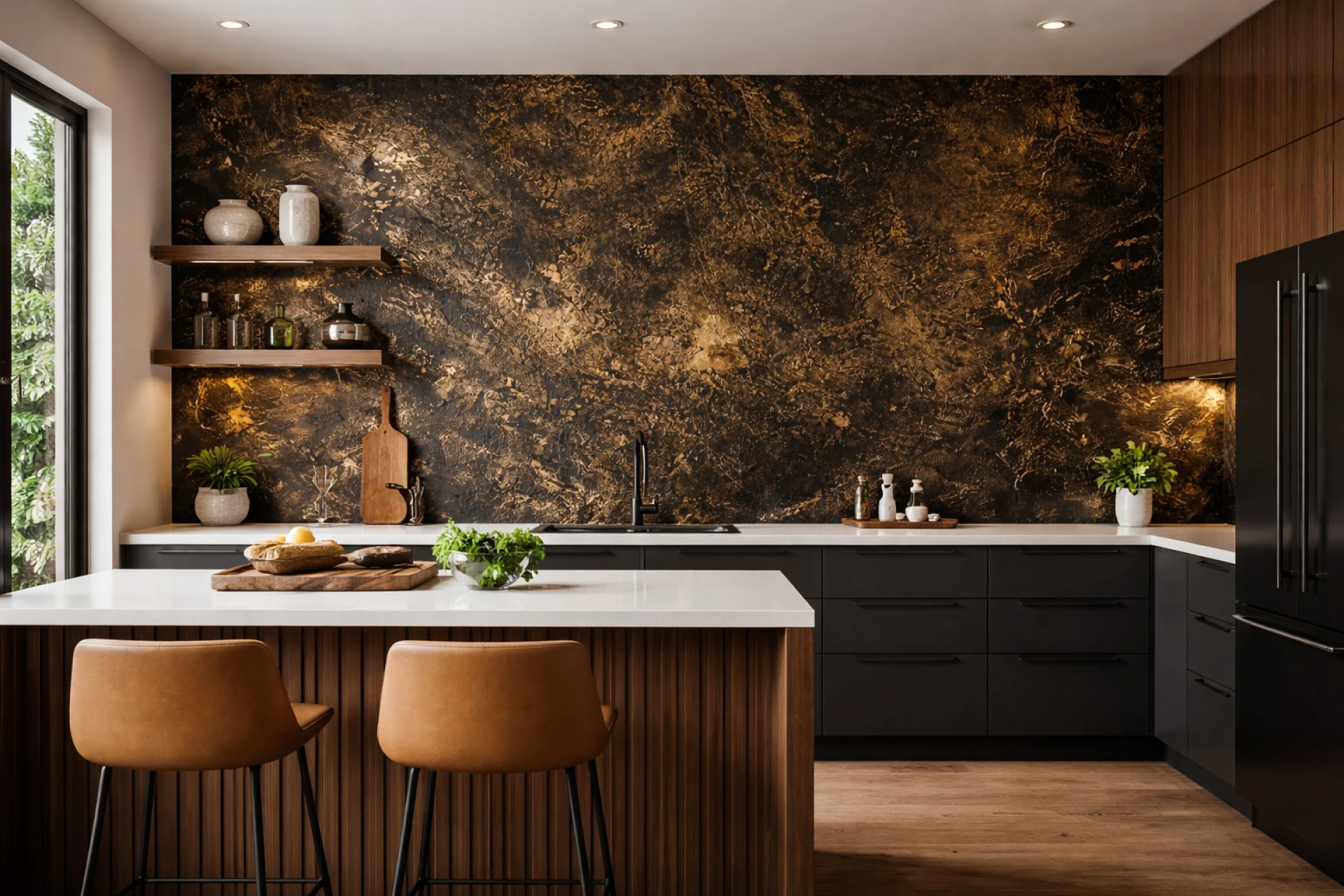

When people think of home updates, they usually focus on the four main vertical surfaces of a room. However, modern interior design encourages a more versatile approach to decor. High-quality kitchen wallpaper is no longer restricted to traditional applications; its durability and variety make it an excellent material for enhancing other elements within the culinary hub. By thinking beyond the walls, you can introduce color, pattern, and texture to unexpected places like the backs of cabinets, drawer liners, or even the ceiling. This creative strategy allows for a more personalized and layered look that makes your kitchen feel like a custom-designed space without the need for a major renovation.
Lining Shelves and Organizing the Pantry
One of the most effective ways to introduce a hidden pop of style is within your storage areas. Applying a specialized pantry wallpaper to the back of open shelving or inside a walk-in larder adds immediate depth and interest. This technique turns a purely functional storage zone into a curated display. Because pantries are often smaller and more contained, they are the perfect place to experiment with bold designs that you might be hesitant to use on a larger scale. The paper also provides a protective barrier for the shelves, helping to prevent scratches from jars and containers while making the interior much easier to clean.
Refreshing Furniture with Food-Focused Motifs
If you have an old hutch, a kitchen island, or a set of wooden bar stools that feel dated, you can give them a new identity using patterned accents. Incorporating a vibrant fruits wallpaper into the recessed panels of a cabinet or along the sides of a kitchen cart adds a fresh, organic energy. Designs featuring citrus slices or orchard harvests are particularly appropriate for furniture used in food preparation areas. This approach allows you to coordinate your freestanding furniture with the rest of your decor, creating a sense of intentionality and flow. It is a cost-effective way to update individual pieces while maintaining a professional aesthetic.
Creating a Faux Backsplash with Mosaic Patterns
Traditional tile work can be expensive and time-consuming to install, but you can achieve a similar architectural look with a high-end tile wallpaper. Applying this material to the space between your countertops and upper cabinets—or even to the front of a kitchen island—provides the structured look of ceramic or Moroccan tiles. Because modern wall coverings are designed to be moisture-resistant and wipeable, they serve as a practical and stylish alternative to masonry. The repetitive geometric patterns help to ground the room’s design, offering a clean and polished finish that complements both modern and traditional cabinetry.
Adding Sophistication to Countertops and Table Tops
For a high-end look that mimics natural stone, you can apply protective, self-adhesive materials to flat surfaces like the tops of dining tables or small workspaces. Utilizing a marble look wallpaper allows you to introduce the elegant veining of stone into your kitchen without the weight or maintenance requirements of the real material. This technique is especially useful for updating a worn-out tabletop or creating a dedicated "baking station" that looks expensive and polished. The realistic depth of the marble print provides a substantial visual weight, making the furniture feel more like a permanent architectural feature of the room.
Softening Hard Surfaces with Botanical Accents
Kitchens are naturally filled with hard materials like stainless steel, stone, and glass. To balance these elements, many designers use a modern floral wall design in unexpected locations, such as lining the bottom of drawers or as a border along the top of a window. These botanical motifs introduce a layer of softness and warmth that makes the room feel more like a lived-in part of the home. Whether you choose a subtle monochrome print or a more colorful garden scene, floral elements provide a gentle visual rest and connect the indoor cooking space with the natural world. This small-scale application of pattern adds a level of detail that is often missing from minimalist designs.
Exploring the Fifth Wall and Cabinet Interiors
The ceiling and the interiors of glass-front cabinets are often the most neglected areas of a kitchen, yet they offer significant design potential. Applying a subtle pattern to the ceiling can draw the eye upward, making the room feel more spacious and finished. Similarly, lining the inside of a glass cabinet with a textured paper provides a beautiful backdrop for your glassware and ceramics. This layered approach to decorating ensures that every part of the kitchen is considered, resulting in a space that feels cohesive and professional. It is these small, unexpected details that define a truly high-end interior.
Final Thoughts on Creative Kitchen Styling
Refreshing your kitchen is about looking for opportunities to add personality in every corner. By utilizing modern, durable wall coverings beyond the four main walls, you create a home that is as unique as your own personality. Whether you choose the structural logic of a tile pattern or the organic beauty of a floral print, the right application defines the character of your space. Taking the time for proper preparation—ensuring all surfaces are clean and smooth—will result in a professional finish that stands the test of time. These creative paths allow you to experiment with trends and create a kitchen that is both beautiful and functional.
























Sign in to leave a comment.