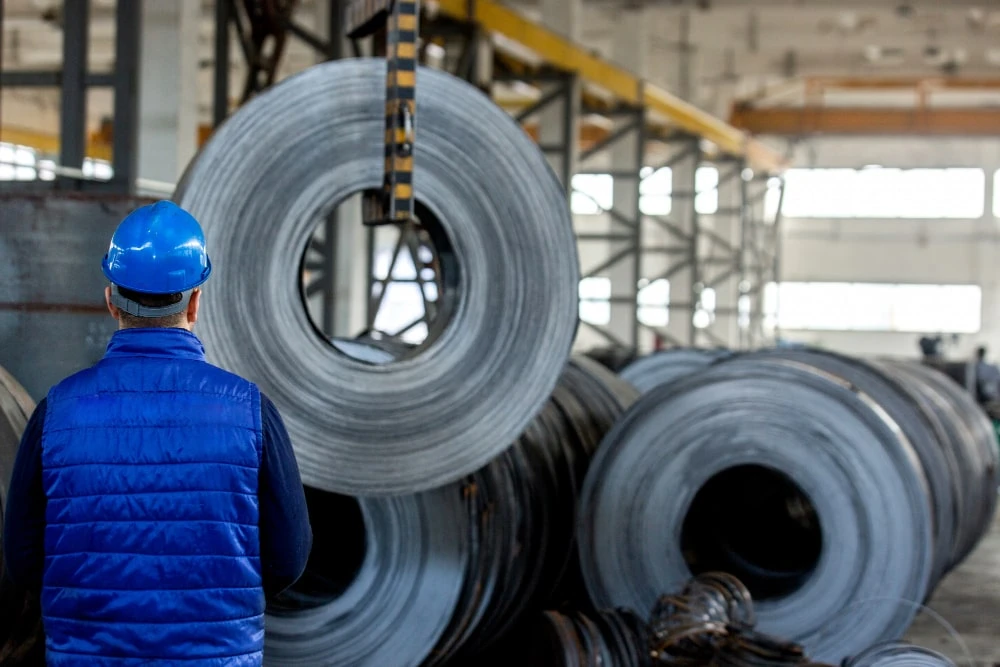

The metal commodities market is a complex and dynamic landscape, influenced by various factors, including supply and demand dynamics, geopolitical events, and macroeconomic trends. Among the many tools available to participants in this market, futures contracts play a crucial role in risk management and price discovery. Specifically, CME HRC futures have become essential instruments for traders, producers, and consumers in the steel industry. This blog will explore the role of CME HRC futures in metal commodities, explaining their importance, functionality, and impact on the market.
Understanding CME HRC Futures
What Are CME HRC Futures?
CME HRC futures are futures contracts based on the price of hot-rolled coil (HRC) steel. These contracts are traded on the Chicago Mercantile Exchange (CME), one of the largest and most diverse derivatives marketplaces in the world. Hot-rolled coil steel is a fundamental product in the steel industry, used in various applications such as automotive manufacturing, construction, and machinery. CME HRC futures provide market participants with a standardized and regulated platform to hedge against price fluctuations and manage their exposure to the volatile steel market.
The Basics of Futures Contracts
Futures contracts are standardized agreements to buy or sell a specific quantity of a commodity at a predetermined price on a future date. These contracts are traded on exchanges like the CME, which provides a transparent and regulated environment for trading. Futures contracts are used for various purposes, including hedging, speculation, and arbitrage. In the case of CME HRC futures, the underlying asset is hot-rolled coil steel, and the contract specifications include details such as the contract size, delivery terms, and settlement procedures.
The Importance of HRC Steel in the Metal Commodities Market
Hot-rolled coil steel is a crucial product in the metal commodities market due to its widespread use in various industries. It serves as a raw material for manufacturing numerous steel products, including pipes, tubes, and structural components. The price of HRC steel significantly influences the overall steel market, making it an important benchmark for pricing and trading steel products. As such, CME HRC futures provide a valuable tool for market participants to manage their exposure to HRC steel price fluctuations and achieve better price stability.
The Role of CME HRC Futures in Price Discovery
What Is Price Discovery?
Price discovery is the process through which the market determines the price of a commodity based on supply and demand dynamics. In a well-functioning market, prices reflect all available information and provide signals to producers and consumers about the relative scarcity or abundance of a commodity. Futures markets play a crucial role in price discovery by providing a transparent and regulated platform for trading, where prices are determined by the collective actions of market participants.
Enhancing Transparency and Efficiency
CME HRC futures enhance price discovery in the steel market by increasing transparency and market efficiency. The standardized nature of futures contracts, along with the centralized trading platform provided by the CME, ensures that all participants have access to the same information and can trade on equal terms. This transparency helps eliminate information asymmetry and reduces the potential for market manipulation, leading to more accurate and reliable price signals.
Providing Forward-Looking Price Information
Futures markets provide forward-looking price information by reflecting the market's expectations of future price movements. CME HRC futures contracts, with their specified delivery dates, offer insights into market participants' views on future HRC steel prices. This forward-looking information is valuable for producers, consumers, and traders, enabling them to make informed decisions about production, procurement, and inventory management.
Hedging and Risk Management with CME HRC Futures
Understanding Hedging
Hedging is a risk management strategy used by market participants to protect against adverse price movements. In the context of the metal commodities market, hedging involves taking a position in futures contracts to offset potential losses in the physical market. By using CME HRC futures, producers and consumers of HRC steel can lock in prices and reduce their exposure to price volatility.
Hedging for Producers
Producers of HRC steel can use CME HRC futures to hedge against price declines. By selling futures contracts, producers can lock in a selling price for their steel, ensuring revenue stability even if market prices fall. This strategy provides a financial buffer against adverse price movements, allowing producers to plan their operations and investments with greater certainty.
Hedging for Consumers
Consumers of HRC steel, such as manufacturers and construction companies, can use CME HRC futures to hedge against price increases. By buying futures contracts, consumers can lock in a purchase price for their steel, protecting themselves from rising costs. This strategy helps consumers manage their production costs and maintain profitability, even in a volatile market environment.
Speculation and Arbitrage
In addition to hedging, CME HRC futures are used for speculation and arbitrage. Speculators aim to profit from price movements by taking long or short positions in futures contracts. Arbitrageurs exploit price discrepancies between the futures market and the physical market to achieve risk-free profits. Both activities contribute to market liquidity and price discovery, enhancing the overall efficiency of the futures market.
The Impact of CME HRC Futures on the Steel Market
Stabilizing Prices
CME HRC futures help stabilize prices in the steel market by providing a mechanism for managing price risk. The ability to hedge against price fluctuations reduces the volatility of HRC steel prices, leading to more predictable and stable market conditions. This stability benefits all market participants, from producers to consumers, by enabling better planning and decision-making.
Encouraging Investment
The availability of CME HRC futures encourages investment in the steel industry by reducing the risk associated with price volatility. Producers and consumers can make long-term investments in production capacity, infrastructure, and technology with greater confidence, knowing they can hedge against adverse price movements. This increased investment supports the growth and development of the steel industry, contributing to economic prosperity.
Enhancing Market Liquidity
CME HRC futures enhance market liquidity by attracting a diverse range of participants, including producers, consumers, speculators, and arbitrageurs. The increased trading activity in the futures market provides more opportunities for market participants to enter and exit positions, reducing transaction costs and improving market efficiency. High liquidity ensures that futures contracts can be bought and sold quickly and at competitive prices, benefiting all market participants.
Facilitating Global Trade
CME HRC futures facilitate global trade in HRC steel by providing a standardized and widely recognized pricing benchmark. International buyers and sellers can use CME HRC futures prices as a reference for negotiating contracts and setting prices. This standardization reduces the complexity and uncertainty of cross-border transactions, promoting greater trade flows and market integration.
Factors Influencing CME HRC Futures Prices
Supply and Demand Dynamics
The prices of CME HRC futures are influenced by the supply and demand dynamics of the HRC steel market. Changes in production levels, inventory levels, and consumption patterns can impact futures prices. For example, an increase in steel production or a decrease in demand can lead to lower futures prices, while a decrease in production or an increase in demand can drive prices higher.
Geopolitical Events
Geopolitical events, such as trade disputes, tariffs, and political instability, can have significant effects on CME HRC futures prices. Trade policies that restrict or promote steel imports and exports can impact the supply and demand balance, influencing futures prices. Political developments in major steel-producing or consuming countries can also create uncertainty and volatility in the market.
Macroeconomic Indicators
Macroeconomic indicators, such as GDP growth, industrial production, and interest rates, influence CME HRC futures prices by affecting the overall steel demand. Strong economic growth and industrial activity typically boost steel demand, leading to higher futures prices. Conversely, economic slowdowns and lower industrial output can reduce demand and pressure prices downward.
Technological Advancements
Technological advancements in steel production and consumption can impact CME HRC futures prices. Innovations that increase production efficiency or reduce production costs can lead to lower futures prices. Similarly, technological developments that drive demand for steel products, such as advancements in construction materials or automotive manufacturing, can influence prices.
Conclusion
CME HRC futures play a critical role in the metal commodities market by enhancing price discovery, providing a tool for hedging and risk management, stabilizing prices, encouraging investment, enhancing market liquidity, and facilitating global trade. These futures contracts offer valuable insights into market expectations and help market participants manage their exposure to price volatility. By understanding the importance and functionality of CME HRC futures, traders, producers, and consumers can navigate the complex landscape of the steel market with greater confidence and efficiency.
FAQs
1. What are CME HRC futures and why are they important?
CME HRC futures are futures contracts based on the price of hot-rolled coil (HRC) steel, traded on the Chicago Mercantile Exchange (CME). They are important because they provide a standardized and regulated platform for hedging against price fluctuations and managing exposure to the volatile steel market. CME HRC futures enhance price discovery, increase market transparency, and offer forward-looking price information.
2. How do CME HRC futures help in risk management?
CME HRC futures help in risk management by allowing producers and consumers of HRC steel to hedge against adverse price movements. Producers can sell futures contracts to lock in selling prices, protecting themselves from price declines. Consumers can buy futures contracts to lock in purchase prices, protecting themselves from price increases. This hedging strategy reduces exposure to price volatility and provides financial stability.
3. What factors influence the prices of CME HRC futures?
The prices of CME HRC futures are influenced by various factors, including supply and demand dynamics, geopolitical events, macroeconomic indicators, and technological advancements. Changes in production levels, inventory levels, consumption patterns, trade policies, economic growth, industrial production, and technological developments can all impact futures prices. Understanding these factors is crucial for accurate price predictions and effective risk management.



























Sign in to leave a comment.