
Introduction
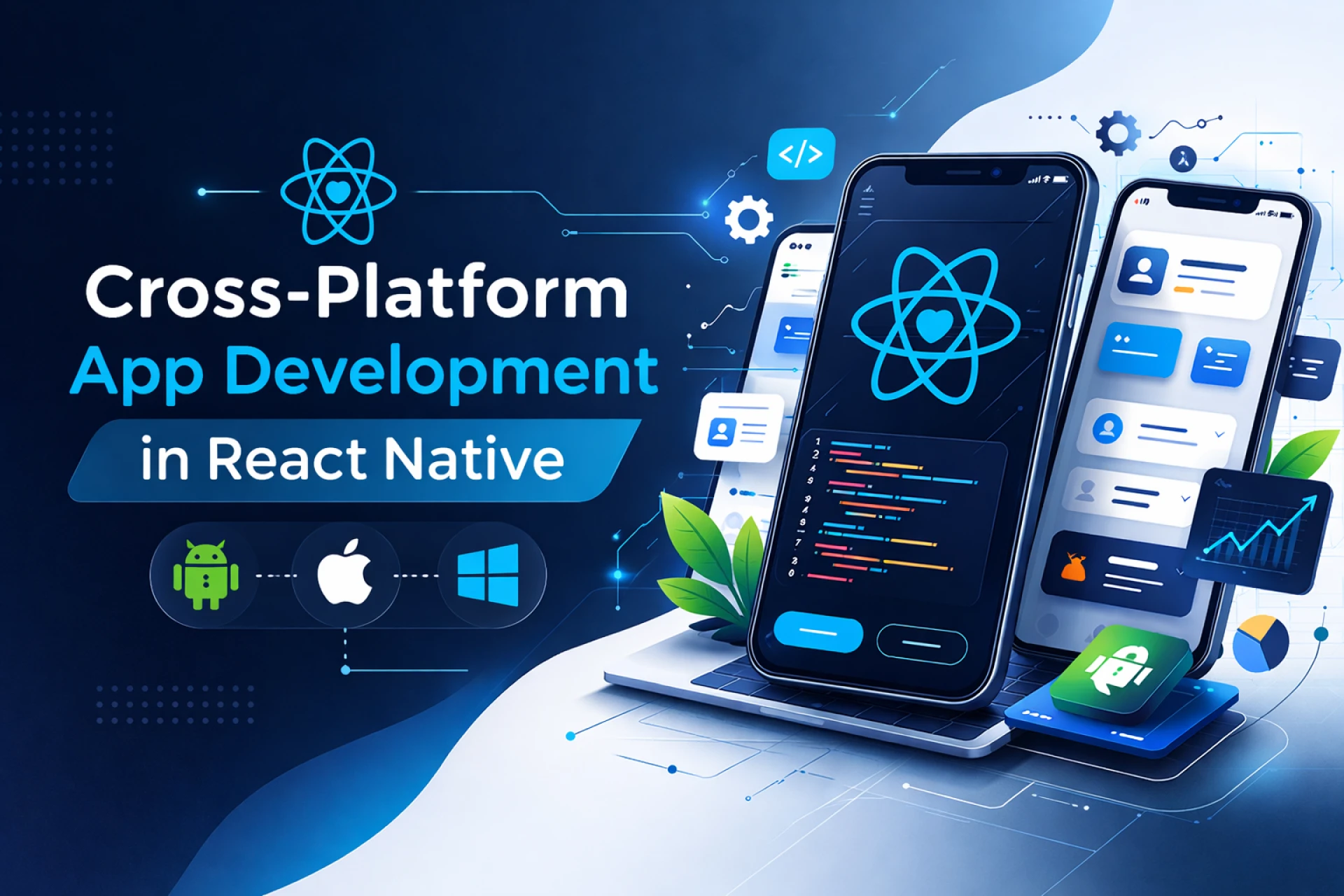
Cross-platform app development in React Native enables businesses to build mobile applications for both Android and iOS using a single codebase. Instead of maintaining separate native teams, companies can reduce development time, control costs, and accelerate product launches with a unified framework.
React Native, powered by JavaScript and React, has become one of the most popular technologies for building scalable mobile apps across industries.
Businesses planning cross-platform projects often choose to hire React Native developers to accelerate delivery and ensure scalable architecture. Experienced developers understand performance optimization, native integrations, and modern React Native architecture, helping companies launch reliable applications across Android and iOS with a single codebase.
What Is Cross-Platform Development?
Cross-platform development allows developers to write code once and deploy it on multiple platforms. In the context of React Native, a shared JavaScript codebase renders native components for Android and iOS.
This approach offers near-native performance while maintaining development efficiency.
Why Choose React Native for Cross-Platform App Development?
React Native combines flexibility, performance, and a strong ecosystem.
Key advantages include:
- Single codebase for Android and iOS
- Faster development cycles
- Reusable components
- Large developer community
- Strong third-party library support
- Cost efficiency compared to native development
- Hot reloading for rapid testing
Businesses can reach broader audiences without doubling development efforts. Partnering with a specialized React Native app development agency can further streamline the development process. Agencies provide structured workflows, UI and UX expertise, testing frameworks, and scalable backend integration, making them ideal for startups and enterprises looking to reduce risk and speed up time to market.
How React Native Works
React Native uses a JavaScript bridge to communicate between JavaScript code and native modules. It renders native UI components rather than web views, ensuring better performance compared to hybrid frameworks.
Modern architecture improvements, such as Fabric and TurboModule,s enhance performance and reduce bridge overhead.
Benefits of Cross-Platform App Development in React Native
1. Reduced Development Cost
One team can build applications for multiple platforms.
2. Faster Time to Market
Shared code accelerates development and updates.
3. Easier Maintenance
Bug fixes and feature updates apply to both platforms simultaneously.
4. Consistent User Experience
Shared UI components maintain brand consistency.
5. Access to Native Features
React Native allows integration with device APIs such as camera, GPS, and push notifications.
Key Features You Can Build with React Native
React Native supports a wide range of functionalities.
- Authentication systems
- Real-time chat
- E-commerce platforms
- Video streaming
- Payment integration
- Push notifications
- Offline support
- Geolocation tracking
- Analytics dashboards
It is suitable for startups and enterprises alike.
React Native Development Process
1. Requirement Analysis
Define target audience, business goals, and technical scope.
2. UI and UX Design
Design intuitive interfaces aligned with platform guidelines.
3. Architecture Planning
Choose state management and backend integration strategies.
4. Development
Build components and integrate APIs.
5. Testing
Conduct functional, performance, and cross-device testing.
6. Deployment
Publish apps on Google Play and App Store.
7. Maintenance
Release updates and monitor performance.
React Native vs Native Development
Native Development
- Maximum performance
- Platform-specific coding
- Higher cost
- Separate teams required
React Native
- Faster development
- Lower cost
- Code reuse
- Near-native performance
For most business apps, React Native offers an optimal balance.
Technology Stack in React Native Projects
- JavaScript or TypeScript
- React Native CLI or Expo
- Redux or Context API for state management
- REST or GraphQL APIs
- Cloud services
- Firebase or similar services
- CI/CD pipelines
Choosing the right stack improves scalability.
Performance Optimization in React Native
To ensure smooth performance:
- Minimize heavy re-renders
- Optimize images and assets
- Use FlatList efficiently
- Avoid unnecessary bridge calls
- Profile performance regularly
- Leverage native modules when required
Security Best Practices
Security is critical for mobile applications.
- Implement secure authentication
- Encrypt sensitive data
- Use secure APIs
- Protect local storage
- Apply code obfuscation
- Conduct regular audits
Industries Using React Native
React Native supports multiple sectors:
- Ecommerce
- FinTech
- Healthcare
- Education
- Logistics
- Social media
- On-demand services
Its flexibility makes it suitable for diverse use cases.
Challenges in React Native Development
While powerful, React Native presents challenges:
- Dependency management
- Native module integration
- Performance tuning for heavy animations
- Upgrading between versions
Experienced developers mitigate these through best practices.
Future of Cross-Platform App Development in React Native
React Native continues to evolve with performance improvements and architectural upgrades. With growing adoption and ecosystem maturity, it remains a strong choice for scalable mobile app development.
Final Thoughts
Cross-platform app development in React Native offers businesses a cost-effective and scalable solution for launching high-quality mobile applications. By combining shared code, native rendering, and strong community support, React Native enables faster innovation without sacrificing performance.




























Sign in to leave a comment.