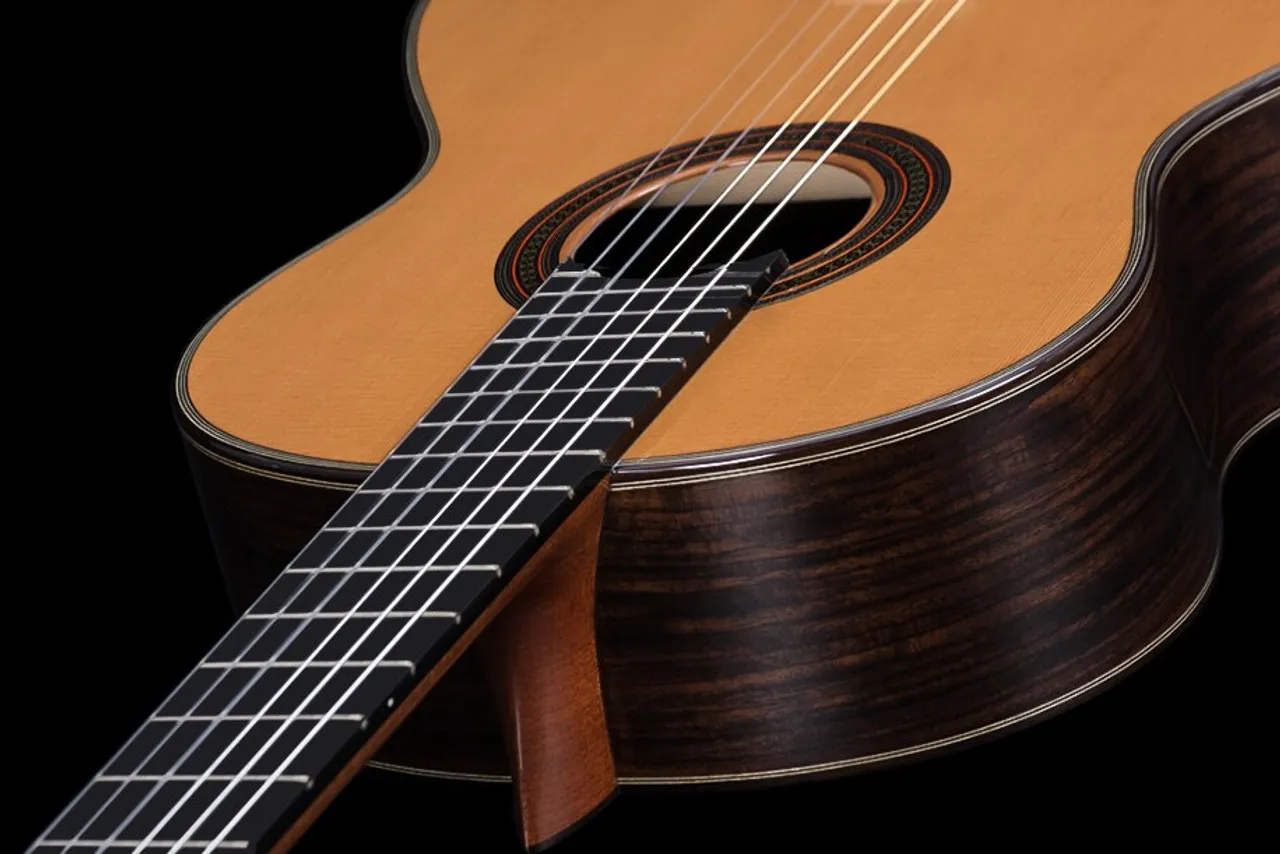

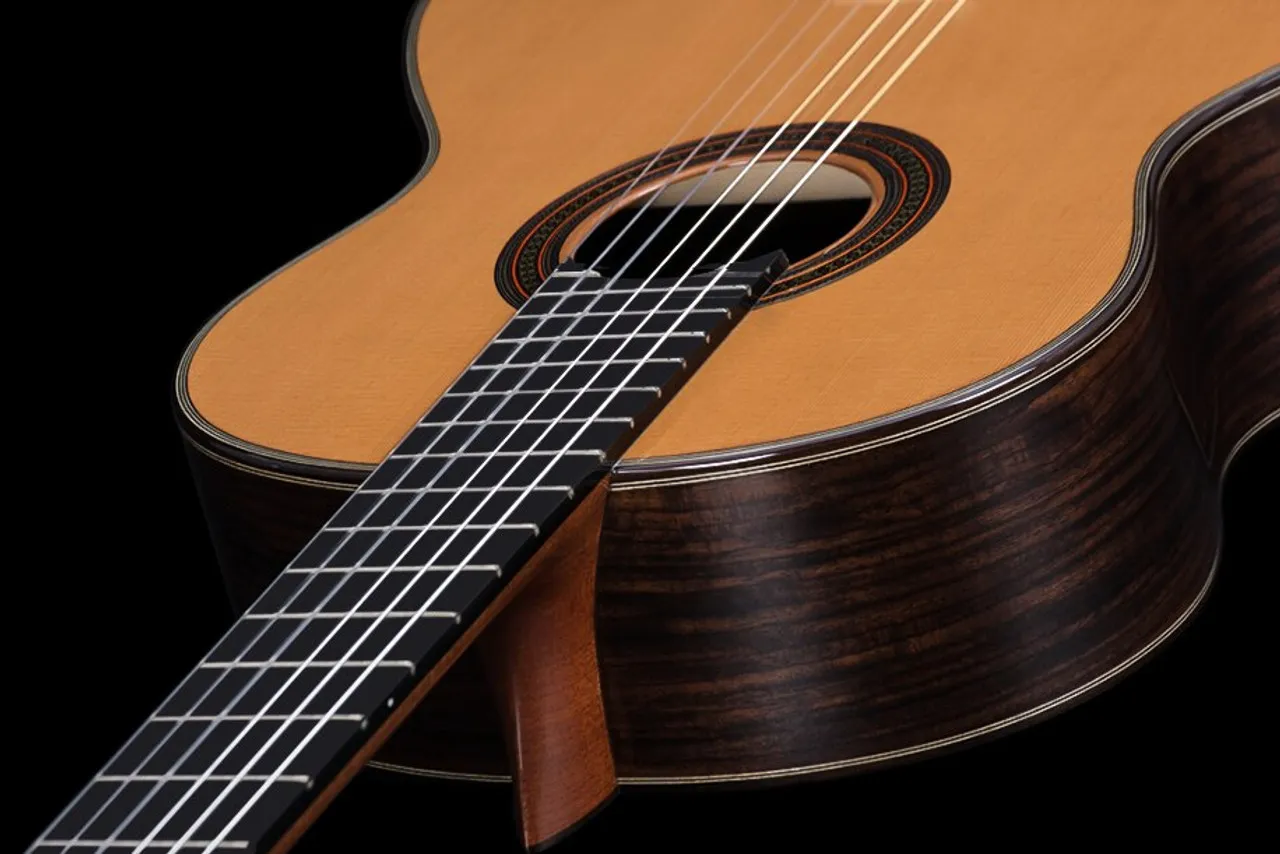
Why Does This Guitar Even Exist?
I want to start with a simple thought we all quietly have but rarely say out loud.
“Why does a crossover nylon string guitar feel neither fully classical nor fully acoustic?”
You might have picked one up, or maybe just read about it, and thought… Wait, what am I even holding here?
That confusion is actually the beginning of understanding.
Because a crossover nylon string guitar was never meant to confuse us. It was made for that exact middle space where the heart wants nylon warmth, but the hands want steel-string comfort.
And yes, that tension is real.
The Feeling of Switching Guitars… and Not Quite Fitting In
Let’s imagine something.
You move from a steel-string guitar to a classical nylon acoustic guitar. Your right hand feels relaxed… almost too relaxed. Your left hand thinks, why is everything so wide?
Now go the other way.
From classical to steel-string. Suddenly your fingers feel like they are squeezing into a narrow doorway.
And here is where we pause and think…Is there something that feels like both, without forcing us to choose?
That is where crossover nylon guitars quietly step in.
What Exactly Is a Crossover Nylon String Guitar?
A crossover nylon string guitar is built to blend two worlds.
Not to replace them. Not to imitate them poorly. But to balance them.
It usually carries:
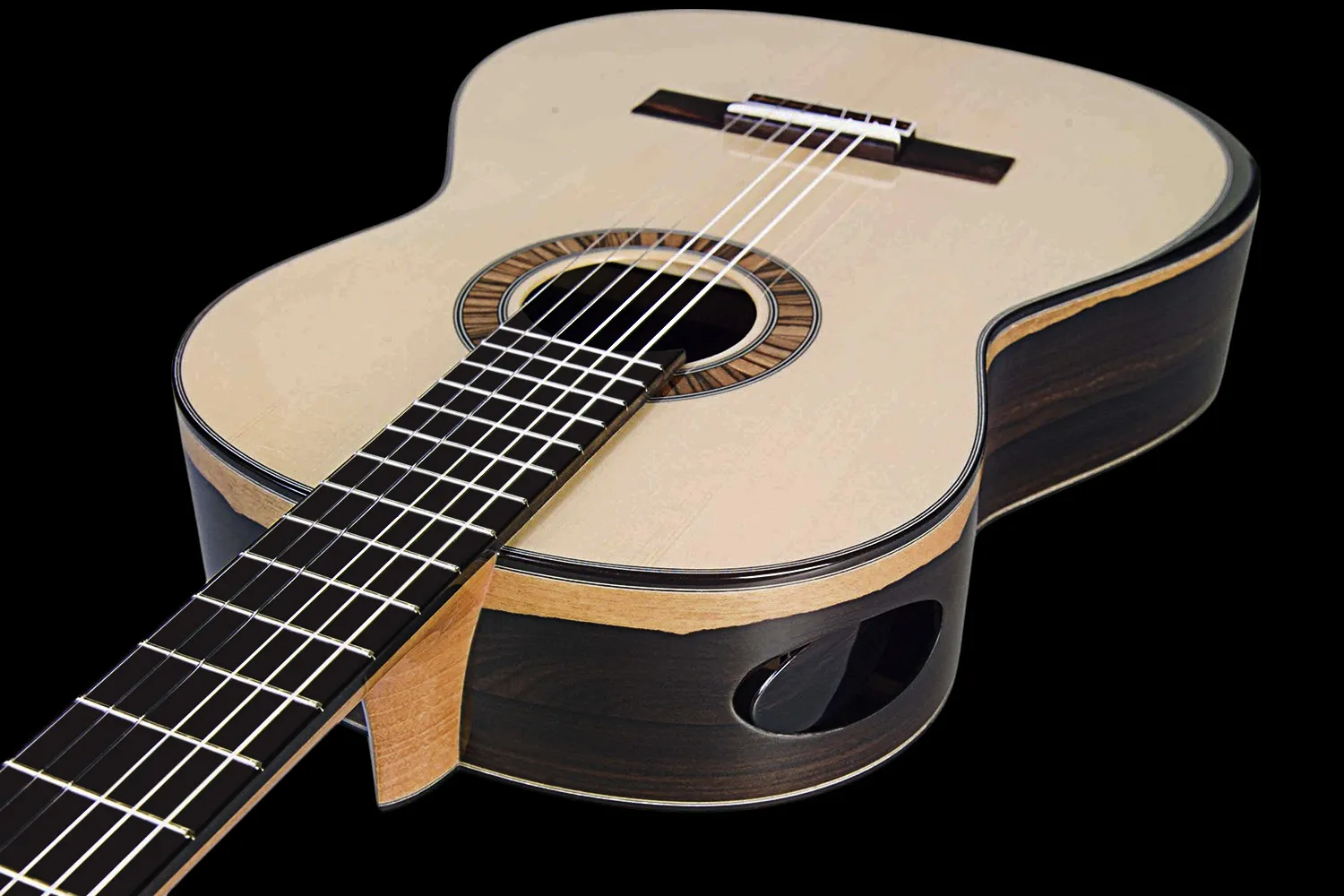
- A slimmer neck compared to traditional classical guitars
- A radiused fingerboard (so it doesn’t feel completely flat under your fingers)
- Nylon strings that still give that warm, soft voice
- Often built-in electronics for stage or recording use
So when we talk about crossover nylon guitars, we are really talking about comfort meeting tradition halfway.
And honestly, isn’t that what many of us want in music too? Something familiar, but not limiting.
Who Is Actually Thinking, “This Might Be for Me”?
Now,let’s slow down here.
Because I feel this is the real question you might be holding.
“Do I even need a crossover nylon string guitar?”
Let’s break it in a very real way.
You might connect with it if:
- You love nylon tone but struggle with wide classical necks
- You come from acoustic steel-string and want a softer sound
- You play live and need built-in pickup flexibility
- You want a nylon acoustic guitar that doesn’t feel “old-school heavy” in handling
- You switch between genres and need something adaptable
And maybe you are thinking… “Okay, but will it still feel like a real classical guitar?”
Good question.
The honest answer is: it feels like a conversation between both worlds, not a replica of one.
The Emotional Side Nobody Talks About
Let’s pause for a second.
Because guitars are not just specifications. They are relationships.
A full classical guitar can feel like sitting in a quiet room with no distractions. Pure, deep, traditional.
A steel-string can feel like standing near an open window, loud, bright, expressive.
But crossover nylon string guitars… they feel like standing somewhere in between. Not too closed, not too open. Just balanced air.
And sometimes, that balance is exactly what a player needs when they are evolving.
Crossover Classical Guitars vs Traditional Ones
Now here is where confusion usually peaks.
A lot of players ask:
“Are crossover classical guitars less authentic?”
Not really.
They are just designed for a different kind of comfort and usage.
Traditional classical guitars prioritize:
- Maximum acoustic purity
- Wider spacing for fingerstyle precision
- A very unprocessed tone
Crossover classical guitars prioritize:
- Playability for mixed-background players
- Stage friendliness
- A slightly modern feel without losing nylon character
So, it is not about better or worse. It is about where you are in your playing journey.
When You Pick One Up… What Should You Listen For?
Here is something I always think about when trying a guitar like this.
Close your eyes and ask:
- Does my left hand feel relaxed or forced?
- Does the sound still feel warm, even if it is slightly modern?
- Do I stop thinking about “adjusting” and start thinking about playing?
Because the right guitar does not make you adapt to it. It quietly adapts to you.
A Small Truth We Often Ignore
We sometimes believe we must “choose a side” in guitars.
Classical or acoustic. Nylon or steel. Traditional or modern.
But music does not really live in choices like that.
It lives in movement.
And a crossover nylon string guitar exists exactly for that movement.
Not to replace your main guitar, but to become the one you reach for when you want both comfort and voice in the same breath.
Final Thought… Or Maybe a Quiet Realization
If you are standing at that point where nothing feels completely right, maybe it is not about finding a perfect guitar.
Maybe it is about finding one that doesn’t interrupt you while you are learning, exploring, or simply playing late at night when no one is listening.
And if that sounds like you… then you already know why these instruments exist.



























Sign in to leave a comment.