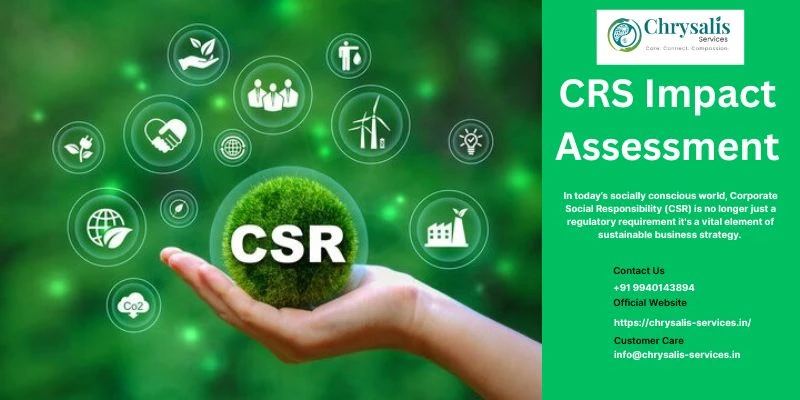

In today’s socially conscious world, Corporate Social Responsibility (CSR) is no longer just a regulatory requirement—it's a vital element of sustainable business strategy. Organizations are expected not only to operate profitably but also to create a measurable, positive impact on society. This is where CSR impact assessment becomes an essential tool.
What is CSR Impact Assessment?
CSR impact assessment is a structured evaluation process used to determine the social, environmental, and economic effects of an organization’s CSR initiatives. It goes beyond simply reporting the funds allocated to community projects; it focuses on the real-world outcomes and long-term changes brought about by these efforts.
This process helps businesses and stakeholders understand whether their CSR activities are truly making a difference. It involves collecting data, analyzing metrics, engaging with beneficiaries, and comparing outcomes against intended goals.
Why is CSR Impact Assessment Important?
CSR initiatives are investments in community development, environmental sustainability, and social equity. Without proper assessment, there’s no way to know if those investments are yielding the desired results. Here are some key reasons why CSR impact assessment is crucial:
1. Accountability and Transparency
Stakeholders—investors, customers, and the general public—want to see evidence that a company’s CSR claims are genuine. By publishing impact assessment reports, organizations demonstrate transparency and build credibility.
2. Regulatory Compliance
In countries like India, the Companies Act mandates CSR spending for certain organizations. Impact assessments help these companies comply with legal obligations and prepare accurate reports for regulators.
3. Improved Project Effectiveness
Impact assessments help identify which initiatives are working and which are not. This allows organizations to reallocate resources to projects with higher potential and improve overall effectiveness.
4. Strategic Decision Making
Insights from impact assessments enable companies to align their CSR strategies with business goals, stakeholder expectations, and community needs.
5. Enhanced Brand Image
Companies that showcase measurable positive impact attract greater public goodwill, employee engagement, and customer loyalty.
The CSR Impact Assessment Process
The impact assessment process can vary based on project size, scope, and sector, but typically includes the following stages:
1. Defining Objectives and Indicators
Every CSR project must start with clear objectives. For example, a skill development initiative might aim to improve employability in underprivileged youth. Corresponding indicators—such as employment rate post-training—must be defined to measure success.
2. Baseline Study
Before the project begins, a baseline study is conducted to understand the initial conditions. This sets the foundation for later comparison.
3. Data Collection
Throughout the project, both qualitative and quantitative data is collected. Surveys, interviews, focus groups, and monitoring tools are used to gather feedback from beneficiaries and partners.
4. Impact Measurement
Using predefined indicators, analysts assess the actual changes that occurred as a result of the CSR activity. This may include improvements in health, education, income levels, environmental quality, etc.
5. Reporting and Review
A comprehensive report is generated to present findings. Recommendations are made for improving future initiatives, ensuring continuous learning and growth.
Role of Experts in CSR Impact Assessment
Conducting a robust CSR impact assessment requires domain knowledge, research skills, and community engagement expertise. This is where organizations like Chrysalis Services come into the picture.
About Chrysalis Services
Chrysalis Services specializes in end-to-end CSR consulting, with a strong focus on impact assessment. Their expert team designs customized evaluation frameworks that capture both quantitative results and qualitative insights. Whether you're running an education campaign, a clean water project, or a women empowerment initiative, Chrysalis Services ensures that your CSR strategy is evidence-based and result-oriented.
They also help organizations prepare compliance-ready reports, engage stakeholders meaningfully, and align CSR outcomes with ESG (Environmental, Social, Governance) metrics for a more holistic business outlook.
Future Trends in CSR Impact Assessment
As CSR continues to evolve, so does the practice of assessing its impact. Here are some emerging trends:
- Use of Technology: Digital tools and AI-driven analytics are making data collection and interpretation faster and more accurate.
- Participatory Assessments: Involving community members in the assessment process ensures better insights and accountability.
- Focus on SDGs: CSR projects are increasingly being aligned with the United Nations Sustainable Development Goals (SDGs), and impact assessments are being tailored to reflect this global agenda.
Final Thoughts
In a world where businesses are judged not only by profits but also by purpose, CSR impact assessment has become a necessity. It bridges the gap between intention and outcome, enabling organizations to build lasting trust with their stakeholders.
Whether you're a corporate giant or a growing enterprise, partnering with experienced CSR consultants like Chrysalis Services ensures that your initiatives don’t just check boxes—they change lives.
Let your CSR efforts speak louder through measurable, meaningful impact. Let Chrysalis Services be your trusted partner in making that impact visible and valuable.


























Sign in to leave a comment.