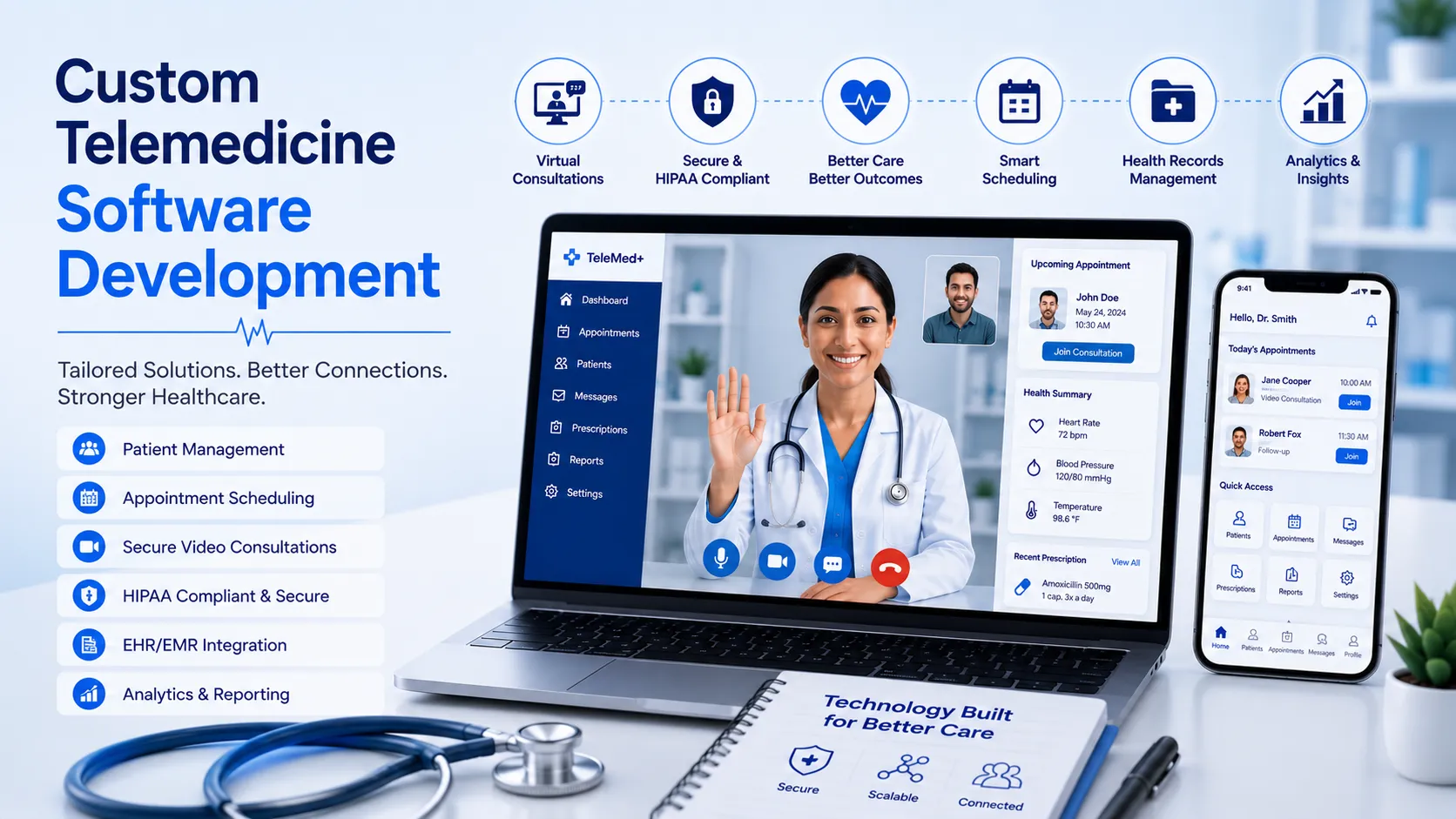

The healthcare industry has embraced digital transformation to improve patient care, increase operational efficiency, and make medical services more accessible. Patients today expect convenient healthcare experiences that allow them to consult doctors without unnecessary travel or long waiting times. At the same time, healthcare providers are looking for technology solutions that simplify clinical workflows while maintaining high standards of security and compliance. These changing expectations have made telemedicine one of the fastest-growing areas in healthcare technology.
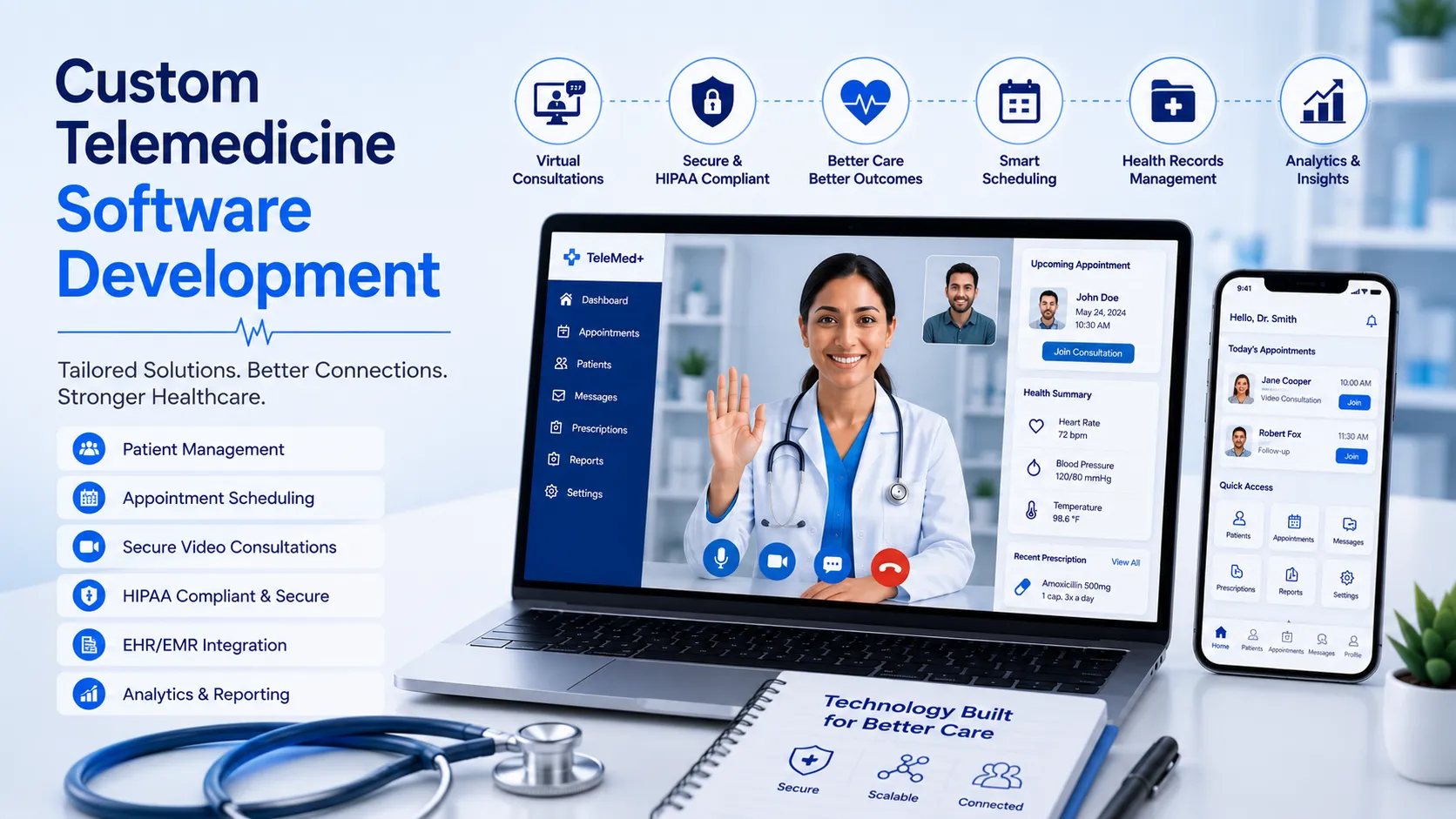
Telemedicine Software Development enables hospitals, clinics, and healthcare organizations to deliver secure virtual consultations, remote patient monitoring, appointment scheduling, electronic prescriptions, and integrated patient management through a centralized platform. Unlike generic telemedicine applications, custom solutions are designed specifically around the operational requirements of healthcare providers, making them more efficient, scalable, and easier to integrate with existing healthcare systems.
Custom telemedicine platforms provide greater flexibility because every feature is developed according to the organization's workflows. Whether the goal is improving patient engagement, expanding virtual care services, or integrating with Electronic Health Records (EHR), customized software helps healthcare providers deliver seamless digital healthcare experiences.
Why Healthcare Providers Choose Custom Telemedicine Solutions
Every healthcare organization has unique workflows, specialties, patient volumes, and operational challenges. A small clinic has different requirements than a multi-specialty hospital or a large healthcare network. Generic telemedicine applications often include standard features that may not fully support these individual needs.
Custom software allows healthcare providers to build a platform that aligns perfectly with their business goals while improving patient care and operational efficiency.
Software Built Around Healthcare Workflows
Custom Telemedicine Software Development focuses on understanding how a healthcare organization operates before development begins. Appointment scheduling, consultation management, billing, patient records, and communication tools are designed according to existing workflows instead of forcing providers to adapt to predefined software structures.
This personalized approach improves productivity while reducing unnecessary administrative work.
Greater Flexibility for Future Growth
Healthcare organizations continue expanding by adding specialties, increasing patient capacity, opening new locations, and introducing new digital healthcare services. Custom software provides the flexibility needed to support future growth without replacing existing systems.
Scalable development protects long-term technology investments while allowing continuous improvement as organizational requirements evolve.
Delivering Secure Virtual Consultations
Virtual consultations form the foundation of every telemedicine platform. Patients expect smooth communication with healthcare providers, while doctors require secure access to patient information throughout every consultation. A reliable telemedicine solution must provide high-quality communication without compromising patient privacy.
Custom development enables healthcare organizations to deliver secure, user-friendly virtual consultation experiences that meet both clinical and regulatory requirements.
High-Quality Video Communication
Professional Telemedicine Software Development includes HD video conferencing, secure audio communication, instant messaging, screen sharing, and file exchange to support productive virtual consultations. Doctors can review reports, discuss treatment plans, and answer patient questions without requiring physical appointments.
Reliable communication improves consultation quality while increasing patient satisfaction.
Protecting Patient Privacy
Healthcare providers manage confidential medical information that requires strong security measures. Modern telemedicine platforms include encrypted communication, secure authentication, role-based access controls, and protected cloud infrastructure to safeguard patient records.
Strong security architecture helps organizations maintain patient trust while supporting healthcare compliance requirements.
Simplifying Appointment Scheduling
Efficient appointment management is one of the most valuable features of a telemedicine platform. Patients want convenient scheduling options, while healthcare providers need better visibility into physician availability and consultation calendars.
Digital scheduling simplifies administration while creating a better patient experience.
Easy Online Appointment Booking
Custom Telemedicine Software Development enables patients to schedule appointments online based on physician availability. The system automatically confirms appointments, updates provider calendars, and eliminates unnecessary phone calls.
Healthcare providers benefit from better schedule management while reducing administrative workloads.
Automated Notifications and Reminders
The software automatically sends reminders through SMS, email, or mobile notifications before scheduled consultations. These reminders reduce missed appointments while helping clinics optimize physician schedules and improve consultation attendance.
Patients also appreciate timely updates that keep them informed throughout the consultation process.
Integrating Electronic Health Records
Access to complete patient information is critical during virtual consultations. Physicians need immediate access to medical histories, allergies, prescriptions, laboratory reports, diagnostic images, and previous treatment records before making clinical decisions.
Integration with existing healthcare systems improves both efficiency and quality of care.
Centralized Patient Information
Modern Telemedicine Software Development integrates seamlessly with Electronic Health Records (EHR), Electronic Medical Records (EMR), Hospital Management Systems, and patient portals. Physicians can review complete patient information through one centralized interface during consultations.
Centralized records improve diagnosis while reducing duplicate documentation and administrative errors.
Supporting Better Continuity of Care
Every virtual consultation automatically updates patient records, allowing future healthcare providers to review the latest treatment information during follow-up visits. Patients receive more consistent healthcare because every provider works with accurate and up-to-date clinical information.
This continuity strengthens long-term patient care while improving communication between healthcare professionals.
Remote Patient Monitoring
Remote patient monitoring has become one of the most valuable extensions of telemedicine. Healthcare providers can continuously monitor patients with chronic conditions, post-surgical recovery, or long-term treatment plans without requiring frequent hospital visits.
Integrated monitoring improves healthcare accessibility while enabling proactive medical intervention when necessary.
Connected Medical Devices
Custom Telemedicine Software Development supports wearable devices that monitor heart rate, blood pressure, glucose levels, oxygen saturation, and other health indicators. Patient data is transmitted securely to healthcare providers for continuous evaluation.
Real-time monitoring allows physicians to identify health concerns earlier while improving treatment outcomes.
Improving Long-Term Patient Care
Remote monitoring helps doctors maintain continuous communication with patients between consultations. Healthcare professionals can adjust treatment plans, recommend follow-up appointments, and respond quickly when health indicators change.
This proactive approach reduces hospital readmissions while improving patient satisfaction.
Future Trends in Custom Telemedicine Software Development
The future of telemedicine is being shaped by technologies that make virtual healthcare more intelligent, connected, and personalized. Artificial Intelligence (AI), cloud computing, wearable medical devices, remote patient monitoring, and predictive analytics are becoming integral parts of modern telemedicine platforms. These innovations enable healthcare providers to deliver faster diagnoses, personalized treatment recommendations, and continuous patient care beyond traditional clinical settings.
As healthcare organizations continue investing in digital transformation, Telemedicine Software Development will focus on creating secure and scalable platforms that integrate seamlessly with Electronic Health Records (EHR), Hospital Management Systems, patient portals, pharmacies, laboratories, and insurance providers. AI-powered chatbots, multilingual virtual consultations, automated clinical documentation, and real-time health analytics will further improve operational efficiency and patient engagement. Future-ready telemedicine solutions will help healthcare providers deliver accessible, high-quality care while adapting to changing patient expectations and technological advancements.
Conclusion
Telemedicine has transformed the way healthcare providers deliver medical services by making consultations more accessible, convenient, and efficient. From secure video consultations and online appointment scheduling to integrated patient records, electronic prescriptions, and remote patient monitoring, modern telemedicine platforms simplify healthcare delivery while improving patient satisfaction. Custom solutions give healthcare organizations the flexibility to build platforms that align with their unique workflows, ensuring better performance, stronger security, and long-term scalability.
Investing in Telemedicine Software Development enables hospitals, clinics, and healthcare providers to strengthen patient engagement, improve operational efficiency, and expand access to quality healthcare services. As technologies such as Artificial Intelligence, cloud computing, wearable devices, and predictive analytics continue to evolve, custom telemedicine solutions will remain at the center of digital healthcare innovation. Healthcare organizations that adopt future-ready telemedicine platforms today will be well positioned to deliver better clinical outcomes, support sustainable growth, and meet the evolving needs of modern patients.




























Sign in to leave a comment.