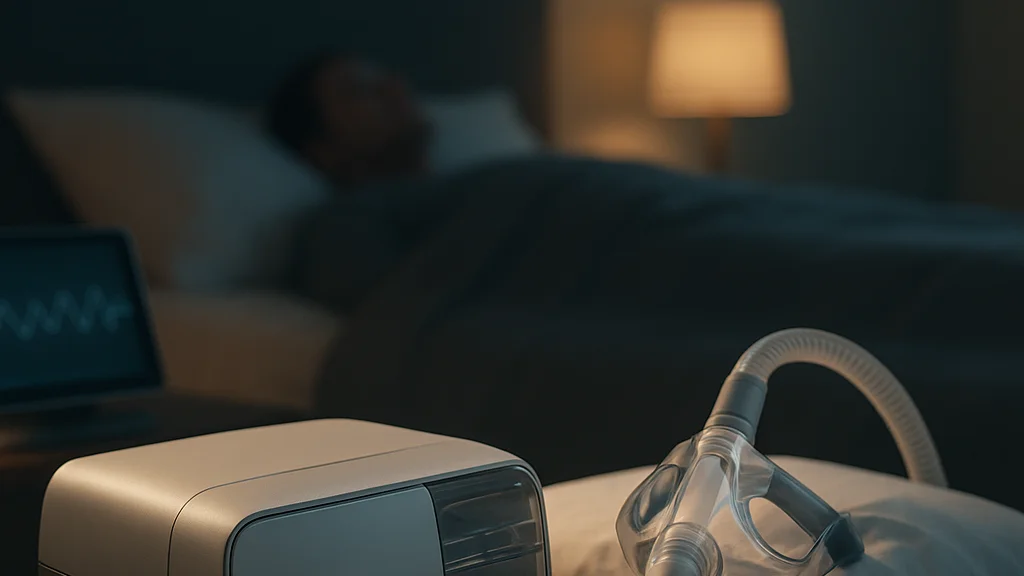

A disorder once hidden in the dark is now measurable in real time
For years, sleep apnea treatment was defined by one image: a bedside CPAP machine, a mask, a hose, and a frustrated patient trying to make peace with all three. That image is still familiar; it is no longer the whole story. Sleep medicine is being transformed by sensors, artificial intelligence, connected devices, precision diagnostics, and a broader understanding that breathing disorders during sleep are not isolated events but part of a larger metabolic and cardiovascular picture.
The scale of the problem explains why this shift matters. Obstructive sleep apnea, the most common form, is associated with repeated airway collapse during sleep; those interruptions can fragment rest, reduce oxygen levels, strain the heart, and worsen blood pressure, insulin resistance, mood, and daytime function. Many people remain undiagnosed because symptoms are shrugged off as snoring, fatigue, or stress. In India, where urban weight gain, long commutes, irregular sleep, and underdiagnosis often coexist, the gap between disease burden and treatment remains significant. Pune’s growing sleep clinics and digital health startups are part of a wider correction; they are helping move care from occasional lab testing to continuous monitoring.
What makes 2026 different is not a single miracle device. It is the convergence of tools. Home sleep tests are improving; wearables are becoming more useful for screening and follow-up; cloud-connected CPAP systems now report adherence and mask leak data automatically; newer implantable therapies are more visible in public discussion; and anti-obesity medicines are changing the treatment conversation for patients whose apnea is tied closely to weight and metabolic dysfunction. If you are new to the subject, WriteUpCafe’s Beginners Guide to How Technology Is Reshaping Sleep Apnea Treatment in 2026 offers a helpful orientation. For readers already following the field, the bigger question is sharper: which technologies are genuinely improving outcomes, and which are simply generating more data without changing care?
Sleep apnea is no longer treated as a one-device problem; it is increasingly managed as a data-rich, patient-specific condition that intersects with cardiology, endocrinology, and digital health.
That distinction matters because better gadgets alone do not cure a chronic disorder. Better matching between patient, phenotype, and treatment does. Technology is finally making that matching more realistic.
Why the old model struggled; and why CPAP, while essential, was never enough
Continuous positive airway pressure remains the clinical benchmark for many patients with moderate to severe obstructive sleep apnea. It works by keeping the airway open with pressurized air; when used consistently, it can reduce apnea events dramatically. The problem has never been efficacy in a controlled sense. The problem has been real-life use. Masks can feel claustrophobic, pressure settings may be uncomfortable, noise and dryness can interfere with sleep, and some patients simply stop using the device after a few difficult weeks.
That adherence challenge has shaped the field for decades. A therapy can be excellent on paper and disappointing in the bedroom. Earlier care models often relied on a sleep study, a prescription, a machine handoff, and limited follow-up. If the patient struggled, the response was often slow or generic. There was less visibility into whether the issue was pressure intolerance, mouth leak, poor mask fit, nasal congestion, positional sleep, alcohol use, weight change, or an incorrect initial diagnosis. As many clinicians have long argued, sleep apnea management failed not because CPAP was obsolete, but because the care pathway around CPAP was thin.
The second weakness was diagnostic simplification. A single overnight test could label a patient as mild, moderate, or severe; yet apnea severity can fluctuate with sleep position, nasal obstruction, alcohol intake, congestion, medication use, and night-to-night variability. According to a Medical Xpress report carried by MSN, repeated monitoring suggests that single-night tests may misclassify some patients. That finding is important because treatment decisions, insurance approval, and patient motivation often depend on a number produced from one night.
There was also a cultural issue. Snoring has often been normalized, especially among middle-aged men, while women’s symptoms have been underrecognized because they may present with insomnia, fatigue, headaches, or mood changes rather than the stereotype of loud snoring. In Indian households, family members may notice breathing pauses for years before anyone seeks a sleep specialist. By then, hypertension or diabetes may already be established.
- Traditional bottlenecks included limited access to sleep labs, delayed diagnosis, and one-size-fits-all device setup.
- Adherence barriers commonly involved mask discomfort, pressure intolerance, dry mouth, aerophagia, and poor coaching.
- Clinical blind spots included night-to-night variability, underdiagnosis in women, and insufficient integration with weight and metabolic care.
The result was predictable: many patients either never entered treatment or abandoned it early. Technology’s most meaningful contribution has been to attack these bottlenecks one by one.
Diagnosis is moving from a one-night snapshot to a richer stream of signals
The first major transformation is diagnostic. Sleep apnea used to be identified mainly through in-lab polysomnography; this remains the most detailed option, especially for complex cases involving neurological disorders, parasomnias, or suspected central sleep apnea. But home sleep apnea testing has expanded access, lowered friction, and made evaluation more feasible for people who cannot spend a night in a lab. That matters in crowded urban centers and smaller cities alike.
What is changing now is the quality and interpretation of the data. Newer home systems can capture airflow, respiratory effort, oxygen saturation, heart rate, snoring, and body position with better usability than older setups. Some platforms combine these signals with algorithmic scoring to flag patterns that may warrant repeat testing or specialist review. According to Analytics Insight, AI and data analytics are increasingly being used to streamline sleep apnea diagnosis and treatment planning. The promise is not that algorithms replace clinicians; it is that they help identify patterns faster, reduce scoring burden, and support triage.
Wearables occupy a more complicated place. A smartwatch or ring is not a medical sleep study, and most consumer devices do not diagnose sleep apnea on their own. Still, they are influencing patient behavior in a useful way. People now arrive at clinics with months of pulse, oxygen, sleep duration, and restlessness trends. Those data can be noisy, but they often reveal enough recurring disturbance to prompt proper medical evaluation. For follow-up, wearables may help track whether treatment is improving sleep continuity, resting heart rate, or overnight oxygen patterns.
The deeper shift is conceptual. Clinicians are increasingly treating sleep apnea as a dynamic condition rather than a fixed label. Repeated monitoring, especially when symptoms and test results do not match, can prevent under-treatment or over-treatment. This is particularly relevant for patients whose condition worsens with weight gain, improves after weight loss, or varies strongly with position.
One night can reveal a problem; several nights can reveal its pattern. That difference is shaping how modern sleep medicine thinks about accuracy.
In practical terms, the new diagnostic stack looks like this:
- Consumer signals or family observations raise suspicion.
- Home testing provides a lower-friction first clinical assessment.
- AI-assisted analysis helps sort straightforward cases from ambiguous ones.
- Repeat monitoring or in-lab studies refine diagnosis when needed.
- Ongoing device and symptom data adjust treatment over time.
For patients, this can feel less dramatic than a “breakthrough,” but it is often more valuable. Better diagnosis is the foundation for everything that follows.
Smarter CPAP systems are turning treatment into an ongoing feedback loop
CPAP is still central; the difference is that it is becoming more connected, adaptive, and measurable. Modern machines do far more than blow air. They track usage hours, residual apnea events, mask leak, pressure patterns, humidification needs, and sometimes even remote troubleshooting indicators. Data can flow to clinicians, durable medical equipment providers, or patient apps, allowing interventions before frustration hardens into abandonment.
This is where technology is having an immediate clinical effect. In older models of care, a patient might struggle for weeks before a follow-up visit revealed poor adherence. Now, cloud-connected systems can show whether the patient is using the machine only two hours a night, removing the mask repeatedly, or experiencing major leakage. That changes the conversation from vague complaints to specific fixes. A different mask style, pressure ramp adjustment, humidification change, or treatment of nasal obstruction can make the difference between failure and long-term use.
Auto-adjusting PAP devices have also improved personalization. Rather than delivering one fixed pressure all night, these systems respond within a pressure range based on detected airway resistance and events. They are not appropriate for every case, but for many patients they reduce discomfort while maintaining control. Telemedicine follow-up has reinforced this shift; patients can review data with clinicians without waiting months for an in-person appointment.
The more sophisticated treatment model also recognizes that adherence is behavioral, not merely technical. Apps, coaching, reminders, and peer support all matter. A patient who understands why fragmented sleep worsens blood pressure and glucose control is more likely to persist through the awkward adaptation period. That educational layer is especially important in India, where multigenerational households may notice snoring but may not appreciate the cardiovascular risk behind it.
WriteUpCafe’s Technology Is Reshaping Sleep Apnea Treatment with Innovation and Precision explores this precision trend from another angle; the core takeaway is that data are useful only when they lead to timely adjustments. A dashboard without intervention is just decoration.
- Connected CPAP benefits: faster troubleshooting, objective adherence data, and more tailored pressure management.
- Patient benefits: fewer unnecessary clinic visits, better coaching, and clearer evidence of improvement.
- System benefits: scalable remote monitoring and better identification of patients at risk of dropping out.
There is, however, a caution. More data can create false reassurance if clinicians or patients focus only on machine-reported metrics while ignoring persistent sleepiness, insomnia, weight change, or cardiovascular symptoms. Technology should support clinical judgment; it cannot replace it.
Beyond the mask: implants, oral devices, and positional technology are broadening options
The second major treatment revolution is diversification. Patients who cannot tolerate CPAP are no longer left with a shrug and a warning. Alternative therapies are gaining visibility, and technology is helping match the right option to the right anatomy and disease pattern.
One of the most discussed developments is hypoglossal nerve stimulation, an implanted therapy designed to keep the airway open by stimulating tongue muscles during sleep. According to Yale Environment 360’s report on the future of sleep apnea treatment, interest in approaches beyond CPAP is accelerating as clinicians seek more durable solutions for selected patients. Implant therapy is not for everyone; candidacy depends on body habitus, severity, airway pattern, and prior evaluation. It is also expensive and requires surgery. But for carefully chosen patients who fail CPAP, it can be meaningful.
Mandibular advancement devices remain another important option, especially for milder obstructive sleep apnea or prominent snoring. These custom oral appliances move the jaw slightly forward to reduce airway collapse. Technology improves this space too; digital dental scanning, better fitting methods, and more structured follow-up are making outcomes more predictable. For some patients, an oral device is easier to accept than a mask, particularly when travel, work schedules, or claustrophobia interfere with PAP use.
Positional therapy has matured as well. Some people experience far worse apnea while sleeping on their back. Newer positional devices, including wearable vibratory prompts, aim to reduce supine sleep without the crude discomfort of old tennis-ball methods. Their effect can be substantial in selected positional apnea, especially when combined with weight management or oral appliances.
Other supportive technologies should not be dismissed. Heated humidification, better mask materials, quieter motors, and improved filtration are not glamorous, yet they are the difference between abandonment and routine use for many households. Even smartphone-enabled coaching has become a treatment technology in practice.
Mainstream media have also started reflecting this broader menu. An AOL overview of sleep apnea treatments highlighted that effective care can include medical devices, lifestyle changes, and non-CPAP strategies when clinically appropriate. That framing is useful because it moves the public discussion away from a false binary of “CPAP or nothing.”
From an Indian wellness perspective, this broader view is welcome. Sleep quality is influenced by body weight, alcohol timing, nasal health, stress, and late heavy dinners; traditional advice around meal timing, breathing comfort, and evening routine does not replace medical therapy, but it can support it. Technology works best when it is inserted into a realistic lifestyle plan rather than treated as a standalone fix.
Metabolic medicine is changing the sleep apnea conversation in 2026
The most consequential recent development may not come from sleep labs at all. It comes from obesity and metabolic medicine. A significant share of obstructive sleep apnea is linked to excess weight, especially central adiposity and fat deposition around the upper airway. As newer anti-obesity drugs have shown stronger weight-loss effects than older therapies, clinicians have begun asking a more ambitious question: if weight can be reduced meaningfully and sustained, how much apnea can be reduced with it?
That question has become more urgent in 2026 because public and clinical awareness has expanded rapidly. Reports, including an Okdiario article on tirzepatide and sleep apnea, have emphasized how metabolic treatment may alter nighttime breathing patterns and clinical interpretation. The key point is not that medication replaces all device-based therapy. It is that, for some patients, substantial weight reduction can lower apnea severity, improve blood pressure, and change the intensity of treatment required.
This matters enormously in India, where sleep apnea often travels with prediabetes, type 2 diabetes, fatty liver disease, and hypertension. A fragmented treatment model; one specialist for snoring, another for blood sugar, another for obesity; misses the interconnected biology. Technology is helping integrate these silos. Digital platforms can combine sleep metrics, weight trends, glucose data, and blood pressure logs, giving clinicians a more honest picture of what is changing and why.
Still, enthusiasm should be disciplined. Not every patient with sleep apnea has obesity; not every obese patient will respond the same way to medication; and weight loss, though powerful, does not guarantee cure. Airway anatomy, craniofacial structure, age, alcohol use, and neuromuscular factors still matter. Some patients will improve enough to reduce pressure settings; others will still require CPAP, oral appliances, or surgery despite major weight change.
The future of sleep apnea care may belong less to a single specialty and more to coordinated management of airway mechanics, body weight, cardiometabolic risk, and behavior.
That integrated perspective is one of the clearest signs that the field is maturing. Sleep apnea is no longer being treated only as a nighttime nuisance. It is being folded into the larger architecture of chronic disease management.
What patients, clinicians, and health systems should watch next
The next phase of innovation will be judged less by novelty and more by evidence. Several trends deserve close attention. First, repeated and longitudinal monitoring is likely to become standard for more patients, especially when symptoms conflict with a single-night result. Second, AI tools will keep expanding, but regulators and clinicians will demand clearer proof that these systems improve outcomes rather than merely automate scoring. Third, treatment pathways will become more phenotype-based; not every patient with the same apnea-hypopnea index has the same underlying problem or the same best therapy.
Health systems also need to think about equity. Connected devices, implantable therapies, and advanced metabolic drugs can widen gaps if they remain accessible only to affluent urban patients. In countries such as India, scalable home testing, teleconsultation, multilingual coaching, and lower-cost remote monitoring may produce more public health benefit than premium hardware alone. Pune’s mix of medical education, software talent, and practical healthcare entrepreneurship makes it a useful bellwether for such middle-path innovation.
For patients, the actionable lessons are straightforward:
- If snoring is loud, breathing pauses are observed, or daytime sleepiness persists, seek formal evaluation rather than relying on consumer sleep scores alone.
- If CPAP feels intolerable, ask why; mask fit, pressure settings, humidification, and nasal issues are often fixable.
- If weight, diabetes, or blood pressure are part of the picture, discuss integrated treatment rather than treating sleep apnea in isolation.
- If a test result seems inconsistent with symptoms, ask whether repeat monitoring is appropriate.
- If you want a wider overview of evolving options, WriteUpCafe’s What You Need to Know About Technology Reshaping Sleep Apnea Treatment adds useful context.
What should readers remember above all? Technology is not making sleep apnea simpler; it is making it more precise. That is a good trade. Precision means fewer patients forced into the wrong therapy, fewer undetected failures, and a better chance of connecting nighttime breathing to daytime health. After years in which the disorder was either ignored or reduced to a mask stereotype, sleep apnea treatment is finally entering a more intelligent era; one where data, empathy, and individualized care are beginning to work together.


























Sign in to leave a comment.