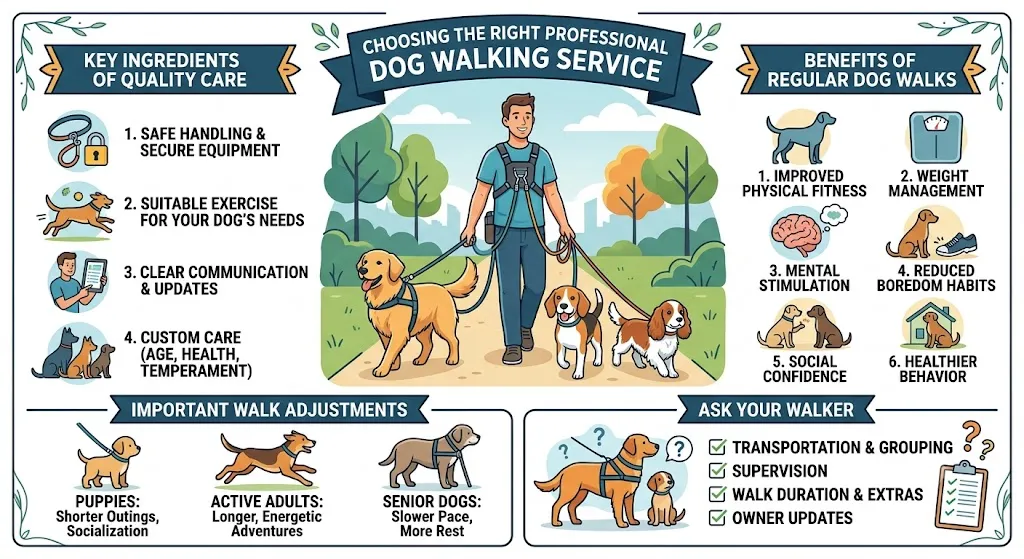

Professional dog walking should provide safe handling, suitable exercise, clear communication, and care that matches your dog’s age, health, energy level, and temperament. When choosing dog walking services, look for experienced walkers who manage groups carefully, use secure equipment, and adjust each outing to suit the dog rather than following one routine for every pet.
A dependable service should learn about your dog before the first walk. This helps the walker understand your pet’s behaviour, social confidence, medical needs, and preferred activity level.
Important details to discuss include:
- Age and general health
- Energy and fitness level
- Lead behaviour
- Recall ability
- Confidence around other dogs
- Fears or known triggers
- Medication or medical requirements
- Previous group walking experience
This information helps the walker decide whether your dog is suited to a group walk, individual session, slower outing, or more energetic adventure.
A professional service should also explain how dogs are transported, grouped, supervised, and returned home. Owners should know how long the session lasts and whether collection time is included in the total booking.
How do regular dog walks benefit my dog?
Regular walks benefit dogs by supporting physical fitness, mental stimulation, social confidence, and healthier behaviour. Dogs that receive enough exercise are often calmer at home and less likely to develop boredom-related habits such as excessive barking, chewing, digging, or restlessness.
Common benefits include:
- Improved physical fitness.
- Better weight management.
- Increased confidence outdoors.
- More mental stimulation.
- Healthier social behaviour.
- A consistent daily routine.
- Reduced loneliness and boredom.
The right type of walk depends on the individual dog. Puppies may need shorter outings and carefully managed social experiences. Active adult dogs may enjoy longer walks, while senior dogs often require a slower pace and more rest.
A skilled walker should understand canine body language and recognise signs of stress, fear, fatigue, or overstimulation. They should be willing to adjust the route, pace, group, or duration when a dog appears uncomfortable.
Owners should also receive an update after the walk. This may include where the dog went, how they behaved, whether they interacted with other dogs, and whether anything unusual happened.
Frequently Asked Questions
Are professional walks suitable for nervous dogs?
Yes. Nervous dogs may benefit from individual walks, gradual introductions, quiet routes, and a calm handler who understands confidence building.
How often should I book a dog walking service?
The right frequency depends on your dog’s breed, age, health, energy level, and home routine. Many dogs benefit from several scheduled walks each week.
























Sign in to leave a comment.