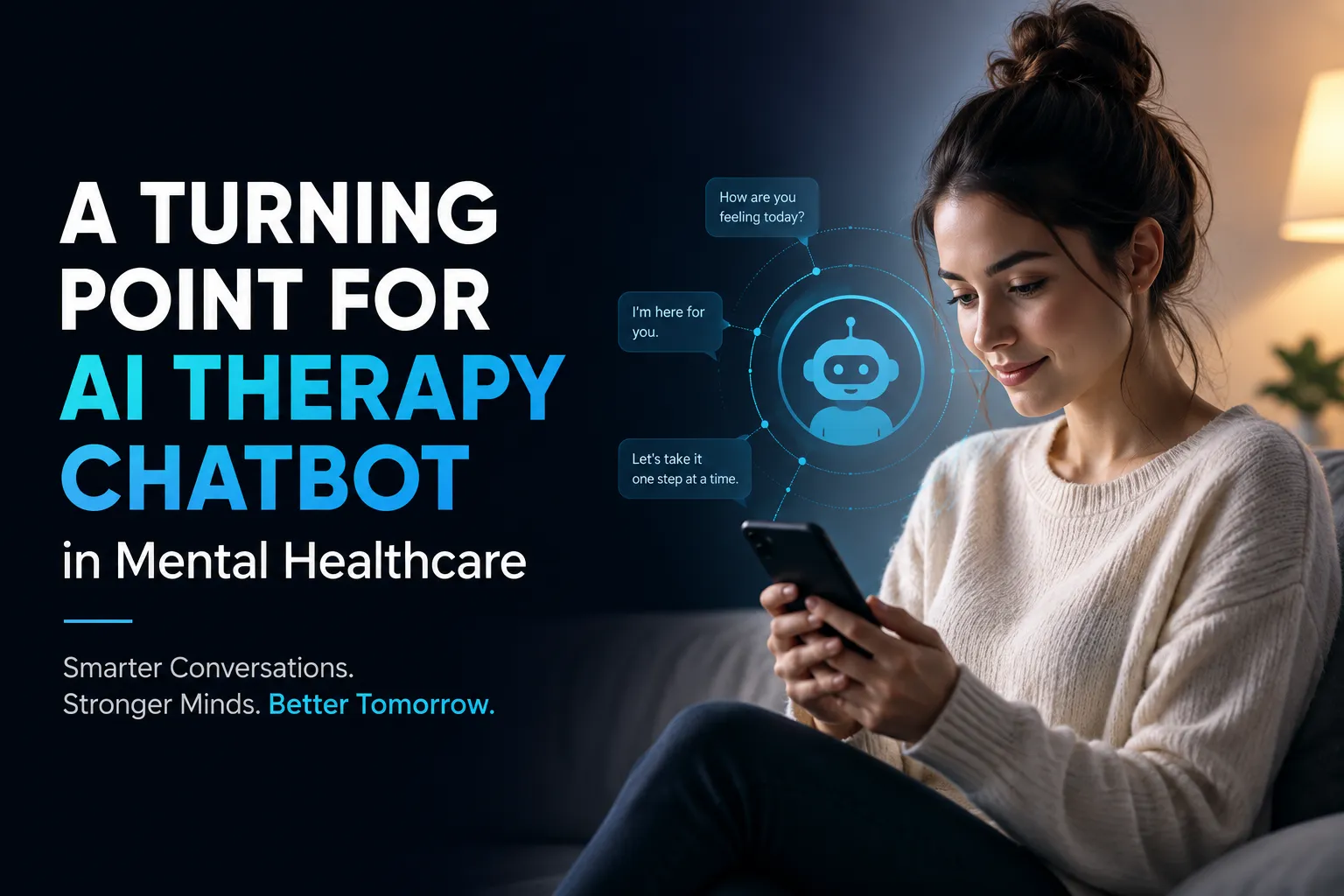

Mental healthcare is undergoing one of its biggest transformations in decades. Rising cases of anxiety, depression, burnout, and emotional stress are increasing the demand for accessible care, while healthcare systems continue to face shortages of qualified professionals. As organizations search for practical ways to expand mental health services, artificial intelligence has moved beyond experimentation and into real-world clinical and wellness applications.
This shift has placed AI therapy chatbot development at the center of digital mental healthcare strategies. From hospitals and telemedicine providers to employee wellness platforms and health startups, organizations are investing in intelligent conversational systems that provide continuous engagement, early emotional support, and personalized wellness experiences. Rather than replacing therapists, these AI-powered assistants help extend care, reduce operational pressure, and make mental health resources available whenever users need them.
Mental Healthcare Is Reaching a Critical Crossroads
Traditional mental healthcare models are becoming increasingly difficult to sustain. Growing patient demand, limited therapist availability, and higher operational costs have created challenges for both healthcare providers and the people seeking support.
Patients often wait weeks before speaking with a professional, while clinicians manage heavy workloads that limit the amount of personalized attention they can provide. At the same time, users expect healthcare services to be as accessible and responsive as the digital platforms they use every day.
This changing landscape has encouraged organizations to rethink how mental health support is delivered. AI-powered conversational platforms are emerging as an effective way to improve accessibility, maintain continuous communication, and support professionals without compromising the quality of care. As digital healthcare continues to evolve, AI is becoming an essential component of long-term mental wellness strategies rather than a temporary technology trend.
From Support Tool to Strategic Healthcare Investment
A few years ago, AI chatbots were primarily viewed as simple virtual assistants capable of answering common questions. Today, they have evolved into intelligent healthcare solutions that can support patient engagement, monitor emotional well-being, and automate routine interactions.
Businesses now see AI therapy chatbot development as an investment that creates measurable operational and clinical value. Instead of handling isolated conversations, modern AI platforms contribute to larger digital health ecosystems by improving accessibility, reducing administrative burdens, and helping users remain engaged between therapy sessions.
Several factors are driving this investment:
- Expanding demand for digital mental health services.
- Greater acceptance of AI-assisted healthcare experiences.
- Improvements in natural language processing and large language models.
- Increased adoption of remote and hybrid healthcare.
- Stronger focus on preventive mental wellness.
- Growing need for scalable patient engagement solutions.
As AI capabilities continue to improve, organizations are moving beyond pilot projects and incorporating conversational intelligence into their long-term healthcare strategies.
Where Traditional Mental Healthcare Faces the Biggest Gaps
The effectiveness of mental healthcare depends not only on clinical expertise but also on timely access and consistent engagement. Unfortunately, these areas remain difficult to achieve using traditional care models alone.
Many individuals delay seeking support because appointment availability is limited or mental health services are not easily accessible in their region. Others discontinue treatment due to long gaps between therapy sessions, leaving emotional challenges unaddressed until they become more serious.
Healthcare providers face their own operational pressures. Administrative responsibilities consume valuable clinical time, while increasing patient volumes make personalized follow-ups difficult to maintain. Expanding services often requires additional hiring, infrastructure, and operational investment that many organizations struggle to sustain.
These challenges have encouraged healthcare businesses to explore AI therapy chatbot development solutions that complement existing care models. By providing immediate conversations, wellness guidance, emotional check-ins, and automated follow-ups, AI enables organizations to improve continuity of care while allowing therapists to focus on situations requiring human expertise.
Business Models Seeing the Greatest Value from AI Therapy Chatbot Development
The adoption of AI therapy chatbots varies across industries, but the objective remains the same: delivering better mental healthcare experiences while improving operational efficiency.
Digital Mental Health Platforms
Mental health startups are building AI-first products that offer guided self-help programs, emotional wellness coaching, and personalized therapy journeys. Intelligent chatbots increase user engagement while creating subscription-based services that scale efficiently.
Hospitals Expanding Virtual Care
Hospitals increasingly use AI assistants to improve patient onboarding, answer frequently asked questions, conduct preliminary wellness assessments, and maintain communication after treatment. These capabilities enhance patient satisfaction while reducing administrative workload.
Employee Wellness Providers
Organizations are strengthening workplace wellness initiatives through confidential AI-powered mental health support. Employees can access stress management techniques, mindfulness exercises, and emotional wellness resources without waiting for scheduled counseling sessions.
Health Insurance Providers
Insurance companies are integrating conversational AI into preventive care strategies. Intelligent assistants educate members about available mental health benefits, recommend wellness programs, and encourage early intervention before conditions become more severe.
Healthcare SaaS Companies
Software providers serving healthcare organizations are embedding AI-powered therapy assistants into existing digital platforms. This creates added value for healthcare clients while improving user retention through personalized engagement.
Building an AI Therapy Chatbot That Users Can Trust
Technology alone does not determine the success of a mental healthcare platform. Users expect conversations that feel supportive, secure, and genuinely helpful, making trust one of the most important design principles during custom AI therapy chatbot development.
An effective therapy chatbot should communicate naturally while recognizing emotional context instead of relying on scripted replies. Personalization is equally important, allowing the platform to recommend wellness activities, coping techniques, and therapy exercises based on each user's history and preferences.
Privacy plays a central role in user adoption. Strong encryption, secure authentication, and responsible data management reassure users that sensitive conversations remain protected. Compliance with healthcare regulations further strengthens confidence among both patients and healthcare organizations.
Another essential capability is intelligent escalation. AI should recognize situations that require immediate human intervention and seamlessly connect users with qualified mental health professionals when conversations indicate emotional distress or potential risk.
Finally, successful platforms continue learning over time. User feedback, conversation analytics, and ongoing AI optimization help improve response quality while ensuring the chatbot remains aligned with evolving healthcare needs.
The Technology Decisions That Shape Long-Term Success
Behind every successful AI therapy chatbot development services project is a carefully planned technology foundation designed for reliability, scalability, and security.
Large language models provide conversational intelligence, enabling chatbots to understand context and generate meaningful responses. Natural language processing interprets user intent, while sentiment analysis and emotion recognition help identify changes in emotional state throughout ongoing conversations.
Cloud-native infrastructure allows platforms to support growing user bases without sacrificing performance. Secure APIs connect the chatbot with appointment systems, telemedicine platforms, electronic health records, and wellness applications, creating a unified digital healthcare experience.
Security remains equally important. Encryption, role-based access controls, multi-factor authentication, and compliance frameworks such as HIPAA or GDPR protect sensitive health information while supporting regulatory requirements across different regions.
Organizations that prioritize a flexible technology architecture are better prepared to integrate future AI models, expand platform capabilities, and respond quickly to changing user expectations.
Planning Development with Future Growth in Mind
Developing an AI therapy chatbot begins long before writing code. It starts with understanding the people the platform is intended to support and defining the outcomes the business wants to achieve. These early decisions influence everything from conversation design to AI model selection and compliance planning.
Once the product vision is established, designers create intuitive user experiences that encourage natural interactions while maintaining clinical responsibility. AI engineers train and refine language models using carefully selected datasets, ensuring responses remain accurate, empathetic, and aligned with evidence-based mental health practices.
The platform is then integrated with essential healthcare systems, tested extensively for performance and security, and optimized before deployment. After launch, continuous monitoring, user feedback, and regular AI updates become critical for improving conversational quality, introducing new capabilities, and ensuring the platform evolves alongside changing business goals and patient expectations.
Signs You've Found the Right AI Therapy Chatbot Development Partner
Choosing a technology partner is about more than development expertise. Mental healthcare platforms require technical excellence, regulatory understanding, and a strong focus on user safety.
When evaluating AI therapy chatbot development services, businesses should look for a partner that has experience delivering AI-driven healthcare applications and understands the complexities of handling sensitive medical information. Knowledge of HIPAA, GDPR, and other compliance standards is just as important as AI engineering capabilities.
It is also worth assessing whether the team can integrate with telemedicine platforms, electronic health records, wearable devices, and existing healthcare systems. Long-term support is another key consideration because conversational AI continuously improves through user feedback, model refinement, and performance monitoring.
A reliable development partner should demonstrate the ability to:
- Design secure and scalable AI architectures.
- Build clinically responsible conversational experiences.
- Customize AI models for different healthcare scenarios.
- Deliver seamless integrations with existing platforms.
- Support future upgrades as AI technologies evolve.
Selecting the right partner helps reduce technical risks while creating a foundation for sustainable product growth.
The Business Value Extends Beyond Better Conversations
The impact of AI therapy chatbot development solutions reaches far beyond providing automated responses. Organizations are using these platforms to improve operational efficiency, strengthen patient relationships, and expand access to care without proportionally increasing resources.
Healthcare providers benefit from fewer repetitive administrative tasks, allowing professionals to dedicate more time to complex patient cases. Patients receive immediate guidance, regular wellness check-ins, and personalized recommendations that encourage continuous engagement throughout their treatment journey.
For employers, AI-powered wellness assistants contribute to healthier workplaces by making mental health support more accessible and confidential. Digital health startups use conversational AI to differentiate their products while building scalable subscription-based services.
As these platforms mature, businesses also gain valuable insights from anonymized user interactions and engagement analytics, enabling continuous improvement of both clinical programs and digital experiences.
The Future Isn't About Replacing Therapists—It's About Expanding Care
Artificial intelligence is not replacing mental health professionals. Instead, it is helping them reach more people, respond more quickly, and provide consistent support outside traditional clinical settings.
The next generation of AI therapy platforms will become more context-aware, emotionally intelligent, and proactive. Instead of reacting only after users initiate conversations, future systems will identify behavioral trends, recommend preventive wellness activities, and personalize support based on long-term interaction patterns.
Several innovations are expected to shape the future of mental healthcare:
- Emotionally adaptive AI capable of adjusting conversations based on changing emotional states.
- Multimodal interactions combining text, voice, and visual communication.
- Integration with wearable devices for continuous wellness monitoring.
- Predictive analytics that identify potential mental health risks earlier.
- Agentic AI systems that coordinate personalized wellness journeys across multiple healthcare services.
- Greater adoption of digital therapeutics supported by clinically validated AI interventions.
Organizations investing today are building platforms that will be ready to adopt these innovations as they become mainstream.
Conclusion
Mental healthcare is entering a new phase where accessibility, personalization, and continuous engagement are becoming just as important as clinical expertise. As organizations respond to growing demand for mental wellness services, AI therapy chatbot development is emerging as a practical solution for extending care, improving operational efficiency, and creating better patient experiences.
Whether the goal is supporting virtual consultations, strengthening employee wellness programs, or launching a next-generation digital health platform, investing in custom AI therapy chatbot development enables businesses to deliver secure, intelligent, and scalable mental healthcare solutions. Those that combine responsible AI practices with human expertise will be best positioned to meet the evolving expectations of patients and healthcare providers alike.
Frequently Asked Questions
Which businesses should invest in AI therapy chatbot development?
Hospitals, telemedicine providers, healthcare SaaS companies, mental wellness startups, insurance providers, educational institutions, and organizations offering employee wellness programs can all benefit from AI-powered therapy solutions.
Can AI therapy chatbots replace therapists?
No. AI therapy chatbots are designed to assist therapists by providing continuous engagement, guided self-help, and routine support. Clinical diagnosis, crisis management, and treatment decisions should always remain under the supervision of qualified mental health professionals.
What technologies are commonly used in AI therapy chatbot development?
Modern solutions typically combine large language models (LLMs), natural language processing (NLP), machine learning, sentiment analysis, cloud computing, secure APIs, voice AI, and healthcare-compliant security frameworks to deliver reliable and personalized mental healthcare experiences.






























Sign in to leave a comment.