
Have you ever felt like your emotions are in control? Like you're trying to stay calm, but even small things throw you off. You're now no longer alone. When life feels too intense or overwhelming, it might be time to seek help.
Dialectical Behavior Therapy (DBT) offers a proven way to manage emotions, relationships, and daily stress. If you're considering DBT for yourself or a loved one, let’s look at what it involves and how to find the right options near you.
The Reason People Seek DBT
DBT was originally developed to treat borderline personality disorder, but it’s now widely used to support individuals struggling with anxiety, depression, trauma, self harm, and emotional dysregulation. What makes DBT different is that it doesn't just help you understand your emotions, it gives you skills to manage them.
DBT is practical, structured, and effective. If you feel overwhelmed often, or if relationships and emotional reactions are hard to manage, this might be the right path for you.
Types of DBT Treatment Options You Can Find Nearby
Not every DBT program looks the same. Depending on your location and needs, you might find different formats and levels of care. Here's a breakdown of what you might come across,
One on One DBT Therapy
One on one sessions with a DBT trained therapist are often the foundation of treatment. These are great if you're looking for personalized support and a private space to talk through what you’re dealing with.
DBT Group Skills Training
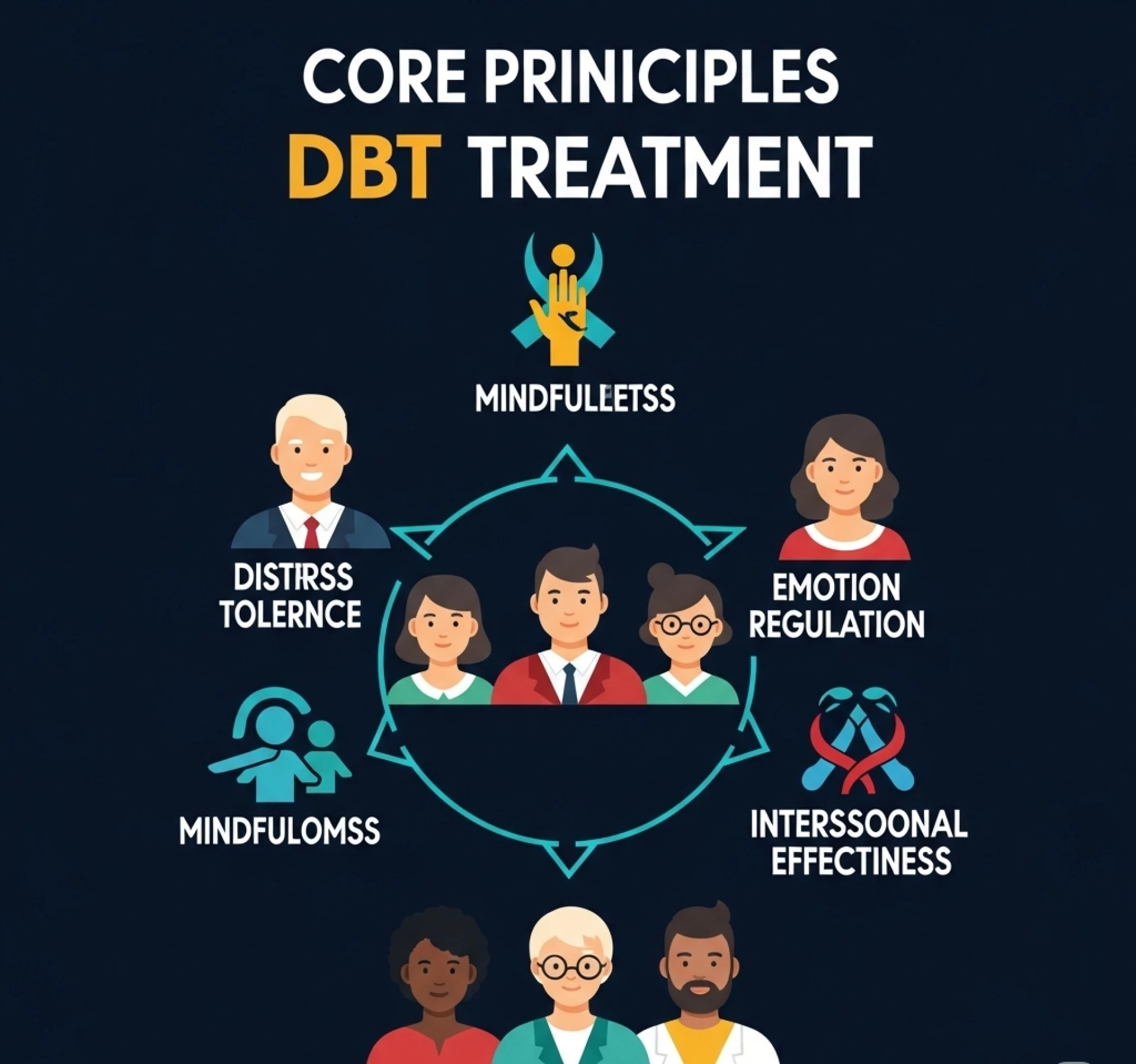
Group sessions typically focus on learning and practicing DBT skills like mindfulness, distress tolerance, emotion regulation, and interpersonal effectiveness. These are hands-on sessions where you'll apply what you learn in real time.
IOPs
If you need more support than a weekly session but not full time treatment, an IOP can be the right middle ground. These often include multiple sessions each week in both group and individual formats.
Residential or Inpatient DBT Programs
For those facing severe emotional or behavioral challenges, residential DBT treatment provides 24/7 support and a highly structured environment for deep healing. Many families explore DBT treatment centers like this one, which offers personalized therapy and full DBT programming tailored to complex needs.
How to Find a DBT Program That Fits You
Finding a program in your area can feel overwhelming at first, but there are a few reliable ways to begin,
- Search online using terms like DBT therapists near me or DBT treatment centers in your city
- Ask your primary care doctor or therapist for a referral
- Use trusted directories such as Psychology Today or GoodTherapy
- Ask your insurance company about in network coverage
If you need a more comprehensive approach, consider programs like the one linked above, where you’ll find structured DBT treatment in a therapeutic and supportive setting.
Questions to Ask When Evaluating Options
Not all DBT programs are created equally. To make sure you're getting evidence based treatment, here are a few things to ask,
- Is the therapist or staff formally trained in DBT
- Do they offer full DBT, including individual and group components
- What is progress and how is progress measured
DBT Works When You Work on It
DBT is not a quick fix, but it’s a powerful one. With commitment, support, and the right therapist or program, many people experience real, lasting changes in how they respond to stress and emotions.
According to the National Institute of Mental Health, therapies like DBT can lead to measurable improvements in mood regulation, behavior, and overall quality of life, especially when practiced consistently and under qualified guidance.
Conclusion
Looking into DBT is already a brave first step. You deserve support that’s structured, compassionate, and tailored to real life. Take your time, ask questions, and explore a DBT program near you, it could be the beginning of lasting emotional balance.































Sign in to leave a comment.