

Leaving rehab is one of the most hopeful moments in a person's life. It is also one of the most vulnerable. The structure you relied on during treatment is suddenly gone, and the real world does not wait for you to find your footing. That is exactly why recovery housing exists, and why so many people in Lancaster, Pennsylvania are turning to it as the bridge between treatment and lasting independence.
If you or someone you love has recently completed detox or an inpatient program, this guide will walk you through everything you need to know about recovery housing in Lancaster PA, from how it works and what it costs to the rules you can expect and how to apply.

What Is Recovery Housing and Why Does It Matter?
Recovery housing, sometimes called sober living, is a structured, substance-free residential environment designed for people who have completed formal treatment but are not yet ready to return to independent living. It is not a rehab facility. There are no doctors or clinical staff conducting therapy sessions. Instead, it is a community of peers who are all working toward the same goal: building a stable, sober life.
The gap between leaving treatment and returning to everyday life is where relapse most commonly occurs. Research has consistently shown that individuals who move directly from rehab back into unsupported environments face significantly higher relapse rates than those who spend time in a structured sober living home. Recovery housing fills that gap by providing accountability, routine, peer support, and a safe place to practice the skills learned during treatment.
In Lancaster County, recovery housing options range from basic shared accommodations to licensed, professionally managed residences that offer private rooms, wellness programming, and individualized coaching. Understanding what is available and what to look for makes all the difference.
The Difference Between a Recovery House, a Halfway House, and Rehab
These three terms are often used interchangeably, but they are not the same thing, and the distinction matters when you are making decisions about your next step.
Rehab, or inpatient treatment, is a clinical setting where individuals receive intensive medical and therapeutic care. It is the first line of intervention for addiction and typically involves detox, therapy, and medical supervision.
A halfway house traditionally refers to a transitional housing facility, often government-funded, that serves individuals coming out of incarceration or who are in court-mandated recovery programs. The level of structure and quality varies widely, and these facilities are sometimes overcrowded or underfunded.
A recovery house, or sober living home, is privately operated and purpose-built for individuals who have voluntarily completed treatment and want to continue their recovery in a supportive environment. Entry is typically based on willingness to participate rather than legal obligation. Quality recovery houses are licensed through the Pennsylvania Department of Drug and Alcohol Programs (DDAP) and adhere to standards set by organizations like the National Alliance of Recovery Residences (NARR) and the Pennsylvania Alliance of Recovery Residences (PARR).
When you are choosing between options, licensure matters. A DDAP-licensed home has been inspected and meets state standards for safety, programming, and accountability. An unlicensed home carries more risk.
What to Expect Inside a Recovery House in Lancaster PA
Every recovery house operates differently, but the best ones share a common foundation: structure, accountability, and community. Here is what life inside a quality recovery home typically looks like.
Daily Routine and Structure
Most recovery houses require residents to maintain a daily schedule. This usually includes attending house meetings, keeping shared spaces clean, participating in chores, and either working, attending school, or engaging in outpatient treatment during the day. The goal is to rebuild the habits and routines that support sobriety in real life.
Residents are generally expected to be home by a set curfew, particularly in the early weeks of their stay. As trust is established and progress is demonstrated, many homes offer increasing levels of independence through a phased program.
Peer Support and Community
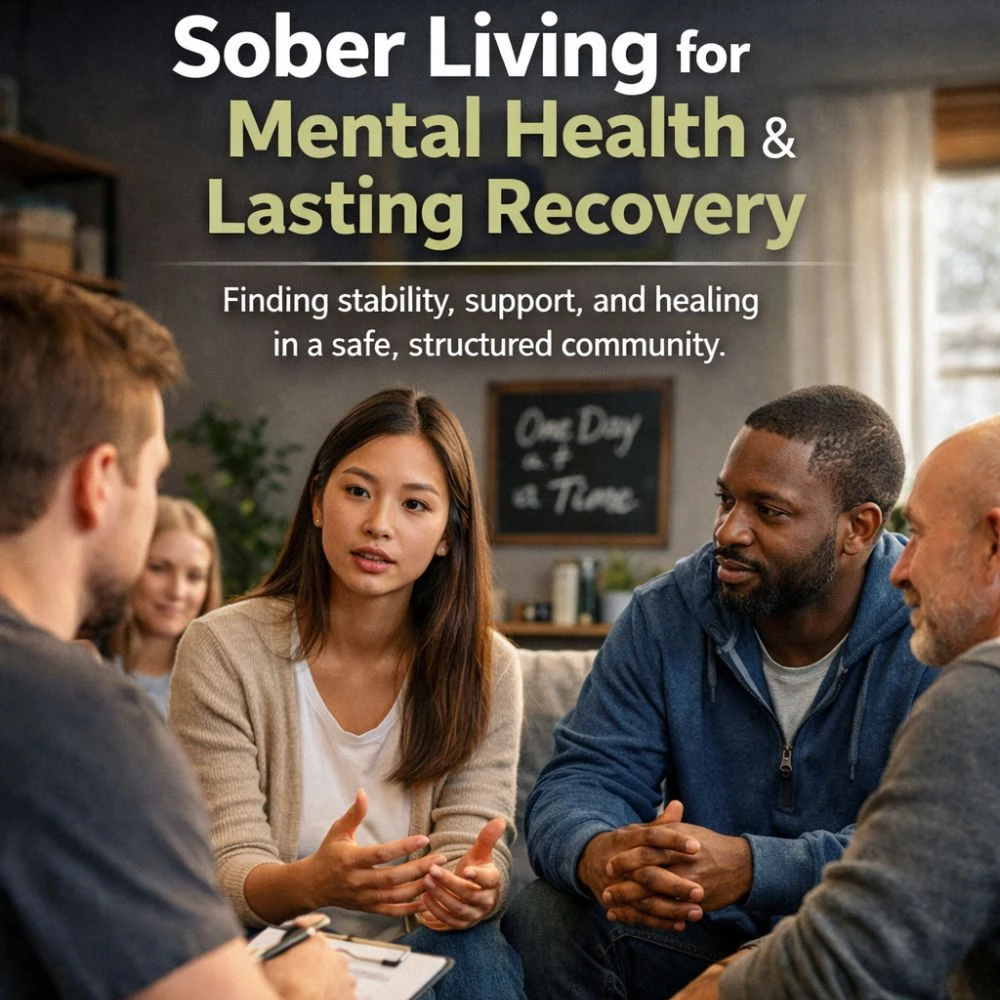
One of the most underestimated benefits of recovery housing is the community itself. Living alongside others who understand the challenges of addiction removes the isolation that so often drives relapse. Shared meals, group activities, and mutual accountability create bonds that many residents describe as some of the most meaningful relationships of their recovery journey.
Wellness and Supplemental Programming
Higher quality recovery homes in Lancaster PA go beyond basic housing. Some offer holistic wellness programming including yoga, sound healing, meditation, and stress management. Others provide access to recreational therapy, life skills coaching, and one on one mentorship. These additions help residents reconnect with purpose and rediscover what makes their life worth protecting.
Rules of Recovery Housing in Lancaster PA
House rules exist to protect every resident and maintain the integrity of the sober living environment. While specific rules vary by facility, there are core expectations you will find in virtually every recovery house.
Zero tolerance for substances. This is non-negotiable. Residents are expected to remain completely free of alcohol and drugs throughout their stay. Most homes conduct regular or random drug and alcohol testing to enforce this standard.
Attendance at support meetings. Most recovery houses require residents to attend a minimum number of recovery meetings per week, whether that is Alcoholics Anonymous, Narcotics Anonymous, SMART Recovery, or another program.
Respect for fellow residents. Recovery homes are shared living spaces. Verbal abuse, threats, harassment, or any behavior that disrupts the safety or peace of other residents is grounds for removal.
Honesty with house management. Residents are expected to communicate openly with house staff about their struggles, appointments, and whereabouts. Recovery is not a process that rewards secrecy.
Financial responsibility. Residents are expected to pay their rent on time and to work toward financial stability. Many homes require proof of income, employment, or enrollment in assistance programs.
Participation in household responsibilities. Chores, shared spaces, and community upkeep are part of life in a recovery home. Everyone contributes.
Breaking house rules typically results in a warning, a structured consequence, or in serious cases, removal from the home. Reputable homes handle rule violations with both firmness and compassion, recognizing that recovery is not a linear process.
How Much Does Recovery Housing Cost in Lancaster PA?
Cost is one of the most common questions people have, and it is important to understand that recovery housing is an investment in long-term sobriety, not just a monthly expense.
In Lancaster PA, costs vary depending on the level of accommodation, the quality of the facility, and the programming offered.
At PorchLight Recovery, one of Lancaster's DDAP-licensed and NARR-certified sober living communities, monthly rates are structured as follows. Shared accommodations are available starting at one thousand five hundred dollars per month. Private rooms are available at two thousand dollars per month. Executive suites, which include a private living area, dedicated kitchenette, full bathroom, and personal workspace, are available at three thousand dollars per month.
For veterans, active duty military, law enforcement, firefighters, EMTs, dispatchers, and corrections officers, PorchLight offers a fifty percent reduction on the intake fee and a ten percent monthly discount, recognizing the unique challenges faced by those who have served.
It is worth noting that some recovery houses in the Lancaster area are funded through grants or county programs, and may offer lower-cost placements for individuals who qualify based on income or circumstances. The Pennsylvania Department of Drug and Alcohol Programs can be a resource for identifying publicly funded options.
Does Insurance Cover Recovery Housing?
This is one of the most important financial questions to ask, and the honest answer is that it depends. Most traditional health insurance plans, including Medicaid and Medicare, do not cover the cost of sober living housing itself, since it is considered a residential rather than clinical service.
However, insurance may cover related services that often run alongside recovery housing, such as outpatient therapy, medication-assisted treatment, case management, and psychiatric care. These clinical services, when combined with stable sober housing, form a powerful recovery support system.
Some recovery homes work directly with financial assistance programs. PorchLight Recovery, for example, offers flexible payment plans and need-based grants to help ensure that cost is not an insurmountable barrier for individuals who are serious about their recovery.
If you are unsure what your insurance covers, calling the number on the back of your insurance card and asking specifically about coverage for substance use disorder treatment and outpatient services is a good starting point.
How Long Should You Stay in a Recovery House?
There is no single answer to this question, and anyone who gives you a one-size-fits-all response is not giving you an honest one. The right length of stay depends on the individual, their history with addiction, their support network, their employment situation, and the strength of their coping skills.
That said, the data points in a clear direction. Research shows that longer stays in recovery housing are associated with significantly better outcomes. A minimum of ninety days is generally recommended, but many recovery professionals advocate for six months or longer as the standard that gives individuals the best chance at lasting sobriety.
At PorchLight Recovery, the recommended average stay is six months. This is not arbitrary. It reflects decades of recovery science showing that habits, relationships, and neural pathways all need time to change in ways that hold.
The pressure to leave too soon often comes from outside forces, whether financial, familial, or social. Part of the work in a recovery house is learning to recognize when external pressure is not in your best interest.
How to Apply for Recovery Housing in Lancaster PA
The application process for recovery housing is generally straightforward, but it does require honesty and preparation. Here is what the process typically looks like.
Step one: Make initial contact. Reach out to the recovery home directly by phone or through their website. Most reputable homes offer a confidential consultation at no cost. This is your opportunity to ask questions, learn about their program, and get a feel for whether the environment is right for you.
Step two: Complete an intake assessment. Many homes will ask about your history with addiction, your treatment background, your current living situation, and your goals for recovery. This is not an interrogation. It is an opportunity for the home to understand your needs and for you to understand what they offer.
Step three: Review the residency agreement. Before moving in, you will be asked to sign an agreement outlining the house rules, payment terms, length of stay expectations, and the consequences for rule violations. Read this carefully and ask questions about anything you do not understand.
Step four: Arrange your move-in. Once accepted, the home will coordinate your arrival. Some homes can accommodate urgent placements within a day or two, while others may have a waiting period depending on availability.
To apply to PorchLight Recovery in Lancaster PA, you can reach their team by calling 833-799-6500 or by visiting porchlightrecovery.com. Their team is available Monday through Sunday from 9 AM to 5 PM EST, and they serve individuals from across Pennsylvania, New Jersey, New York, Washington DC, and beyond.
What Makes a Recovery House in Lancaster PA Worth Choosing?
Not all recovery housing is created equal, and the difference between a good home and a bad one can have a real impact on your sobriety. Here are the things that separate quality recovery housing from facilities that simply provide a bed.
Licensure and accreditation are the foundation. A home that is DDAP-licensed and affiliated with NARR or PARR has been held to independent standards of safety and quality. This matters.

Staff who are genuinely invested in residents' success make a measurable difference. Peer coaches and house managers who have walked the road of recovery themselves bring a level of understanding that credentials alone cannot replicate.
A structured program with clear phases gives residents something to work toward. Progress should be visible and rewarded with increasing levels of independence.
A strong community with a genuine alumni network means the support does not end when you leave. The connections made in a recovery house can last a lifetime, and the best homes cultivate that intentionally.
Location also matters more than people often realize. Lancaster's historic downtown district offers walkability, community events, access to employment, and proximity to outpatient services, making it a genuinely supportive environment for people in recovery.
Taking the Next Step
Recovery housing is not a sign that someone failed at treatment. It is a sign that they are serious about getting it right. The decision to move into a sober living home takes courage, and it reflects an understanding that recovery is not something that happens to you, it is something you actively build, one day at a time.
If you or a loved one is ready to take that next step, PorchLight Recovery in Lancaster PA offers a licensed, structured, and deeply supportive environment designed for people who are ready to do the work. With flexible living options, a phased recovery program, holistic wellness support, and a team that genuinely cares, it is a place where recovery does not just begin, it takes root.
Reach out today at 833-799-6500 or visit porchlightrecovery.com to schedule a confidential consultation. The next chapter starts with one phone call.


























Sign in to leave a comment.