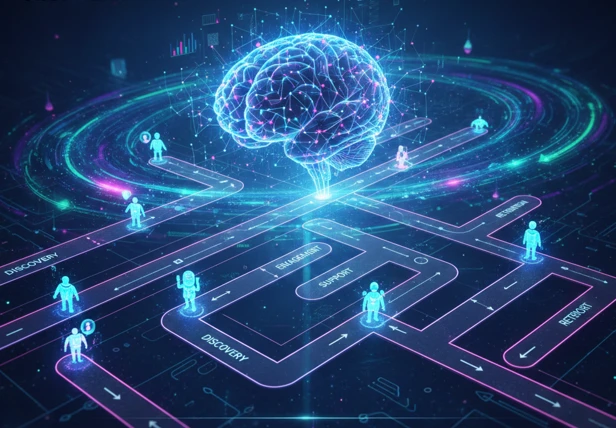

I have worked with customer experience teams long enough to see a clear pattern. As businesses grow, customer journeys become layered, unpredictable, and demanding. A single interaction rarely solves a problem. Customers research, compare, ask questions, escalate concerns, and return for follow up. The journey stretches across channels and departments.
Traditional automation struggles in this environment. Single bot systems answer basic queries, but they falter when complexity increases. That is why I have focused on deploying multi agent AI systems designed to support complex customer journeys. When integrated into a modern cloud call center, these systems create a coordinated network of intelligence rather than a single isolated assistant.
In this article, I will share how I approach multi agent deployments, the architectural considerations involved, and how a cloud call center becomes the foundation for success.
Understanding Complex Customer Journeys
Before implementing any advanced system, I begin by mapping the customer journey in detail. Most organizations underestimate how fragmented their journeys are. A customer may begin with a website visit, move to live chat, receive an email follow up, and later call support for clarification.
Each touchpoint generates data. Each department stores information separately. The result is disconnected experiences.
Complex journeys often include:
- Multiple communication channels
- Repeated authentication steps
- Escalations between departments
- Delayed responses due to missing context
- Manual handoffs between teams
When I analyze these patterns, I look for friction. Where do customers repeat themselves? Where do agents lack visibility? Where does resolution time increase?
These friction points define where multi agent AI systems can create measurable value.
What Multi Agent AI Systems Actually Mean
When I refer to multi agent AI systems, I am not describing multiple chatbots running in parallel. I am describing specialized agents that collaborate, each responsible for a defined function within the customer journey.
For example, one agent may handle intent detection. Another may retrieve customer history. A third may assess risk signals. Yet another may guide troubleshooting steps. These agents communicate through structured workflows rather than operating in isolation.
I treat the system like a team. Each agent has a role. Each agent contributes to a shared objective. Together, they guide the customer from inquiry to resolution.
This distributed intelligence model becomes especially powerful inside a cloud call center environment.
Why a Cloud Call Center Is the Ideal Foundation
A cloud call center provides centralized access to voice, chat, email, and analytics within a unified infrastructure. When I deploy multi agent AI systems, I rely on this centralized environment to coordinate interactions.
Without a cloud call center, agents and automation tools often sit in separate silos. Data synchronization becomes inconsistent. Real time orchestration becomes difficult.
In contrast, a cloud call center enables:
- Unified customer profiles
- Real time routing decisions
- Integrated voice and digital channels
- Scalable infrastructure for high interaction volumes
- Centralized reporting and monitoring
By embedding multi agent systems directly into the cloud call center architecture, I ensure that automation and human agents operate within the same ecosystem.
Designing Agent Roles for Clear Responsibility
One mistake I have seen repeatedly is overlapping functionality. When multiple agents attempt to solve the same problem without defined boundaries, performance declines.
I design agent roles carefully. Each agent should have a clear purpose.
For example:
- A conversation analysis agent interprets customer language and emotional signals.
- A knowledge retrieval agent searches structured and unstructured data sources.
- A workflow orchestration agent determines the next best action.
- A compliance monitoring agent checks responses against regulatory standards.
These agents communicate through APIs and event driven triggers within the cloud call center platform. This structured collaboration reduces redundancy and improves reliability.
Orchestrating Real Time Decision Making
Complex customer journeys require decisions that adapt dynamically. Static scripts cannot handle unpredictable conversations.
In my deployments, I create an orchestration layer that coordinates all agents. This layer evaluates context in real time. It determines whether to escalate to a human agent, present a self service solution, or trigger follow up communication.
For example, if a customer contacts support about billing discrepancies, the system can:
- Identify the intent.
- Retrieve account history.
- Assess payment risk signals.
- Offer a tailored explanation.
- Route to a human specialist if needed.
All of this occurs within seconds inside the cloud call center environment. The customer experiences a seamless interaction rather than fragmented steps.
Balancing Automation with Human Expertise
I never advocate for full automation in complex journeys. Customers still value human judgment, especially in sensitive scenarios.
The goal of multi agent AI systems is to enhance human agents, not replace them. In a cloud call center, I configure the system so that when a conversation escalates, the human agent receives complete context. Previous interactions, detected intent, sentiment analysis, and suggested responses are already available.
This preparation reduces handling time and improves accuracy.
Human agents can then focus on empathy, negotiation, and complex decision making. Automation handles repetitive tasks and data retrieval.
Ensuring Data Integrity and Security
When deploying multi agent systems across a cloud call center, security becomes critical. These systems process sensitive customer information including personal data and transaction history.
I implement strict access controls at each agent level. Data encryption protects information in transit and at rest. Audit logs record every automated action.
Additionally, I design agents to operate with minimal data exposure. An agent responsible for intent classification does not need full financial records. Limiting data access reduces risk.
Compliance frameworks must also be embedded into workflows. The compliance monitoring agent continuously evaluates outputs to ensure regulatory alignment.
Scaling Across Growing Customer Bases
As businesses expand, interaction volumes increase. One of the primary advantages of a cloud call center is scalability. Infrastructure can grow without physical limitations.
Multi agent AI systems scale effectively within this environment because each agent can operate independently. If interaction volume doubles, additional instances of high demand agents can be deployed without redesigning the system.
This modular design prevents bottlenecks. It also allows gradual optimization. I often begin with a limited deployment, measure performance, and refine agent coordination before expanding organization wide.
Measuring Performance and Continuous Improvement
Deployment is only the beginning. I rely heavily on data to refine multi agent systems.
Within a cloud call center, performance metrics provide clear visibility. I monitor:
- First contact resolution rates
- Average handling time
- Customer satisfaction scores
- Escalation frequency
- Agent productivity
By analyzing these metrics, I identify patterns. Are customers dropping off at specific stages? Are certain intents triggering unnecessary escalations?
Continuous optimization ensures that the system evolves alongside customer expectations.
Real World Impact on Customer Experience
I recall working with a financial services organization that struggled with long resolution cycles. Customers frequently contacted support multiple times for the same issue.
After deploying a multi agent system within their cloud call center, the difference was measurable. Automated agents retrieved account history instantly. Risk analysis occurred in real time. Human agents received structured guidance during calls.
Resolution time decreased. Repeat contacts dropped significantly. Customer satisfaction improved.
The transformation did not come from automation alone. It came from coordination between specialized agents and human expertise inside a unified cloud call center infrastructure.
Preparing for the Future of Customer Journeys
Customer expectations continue to rise. They demand faster responses, personalized interactions, and seamless transitions between channels.
Multi agent AI systems provide the adaptability required to meet these expectations. When deployed strategically within a cloud call center, they enable intelligent collaboration between machines and people.
From my experience, success depends on thoughtful design, clear role definition, secure architecture, and continuous measurement. Complexity does not disappear. Instead, it becomes manageable.
Deploying multi agent AI systems for complex customer journeys is not simply a technology upgrade. It is a strategic shift toward coordinated intelligence. When executed correctly, it transforms customer experience from reactive support to proactive engagement.

























Sign in to leave a comment.