
Introduction
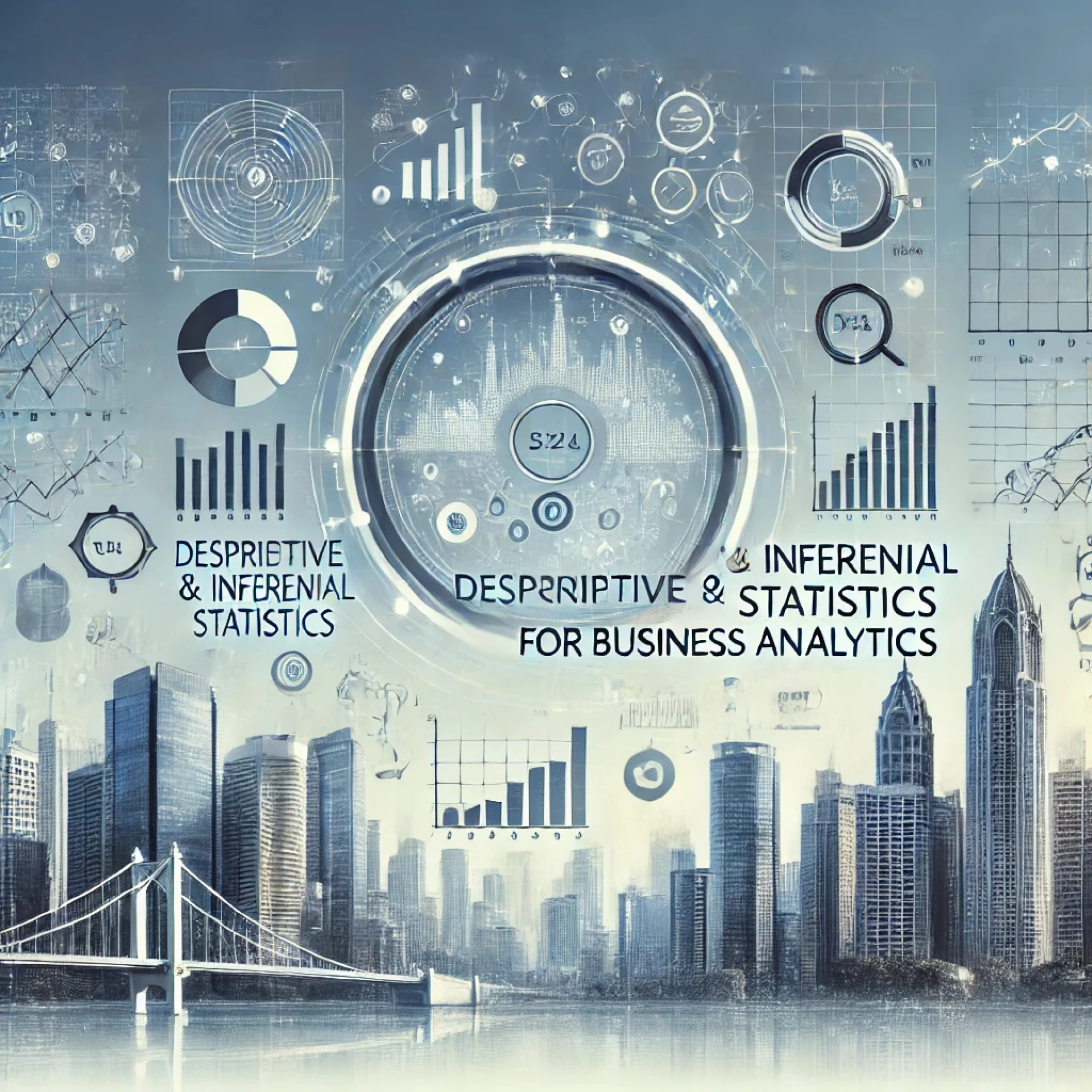
Business analytics generates or offers decisions in the current world, which revolves around data. It has been defined as the extraction of valuable information using statistics for analysis and forecasting. Descriptive and inferential statistics are recognized as two general categories of analysis applied to raw data to provide a new meaningful dimension. Business analytics has seen a rise in demand nowadays, and choosing to do a business analytics course in Mumbai will help you acquire the right skills.
Understanding Descriptive and Inferential Statistics
Statistics is not just a theoretical concept, but an integral component of practical business decision-making. From understanding customer behavior and forecasting sales to streamlining operations and improving processes, businesses rely on statistical tools to interpret data effectively and make sound business decisions.
Descriptive Statistics
Descriptive statistics is used to organize data in an easy-to-access fashion, outlining its fundamental characteristics without concluding what can be drawn from that data alone. Some standard methods used for descriptive statistics include:
Measures of Central Tendency:
- Mean: The average of all values in a dataset.
- Median: The middle value in an ordered dataset.
- Mode: The most frequently occurring value.
Measures of Dispersion:
- Range: The difference between the highest and lowest values.
- Variance: A measure of how far data points are spread from the mean.
- Standard Deviation: The square root of variance, indicating the spread of data.
Data Visualization:
- Histograms, Pie Charts, and Bar Graphs: Used to visualize data distribution.
- Box Plots: Display data spread and identify outliers.
Professionals taking a Business Analyst Certification course in Mumbai need to grasp these concepts well, as they are the cornerstone of data analysis.
Inferential Statistics
Descriptive statistics allow businesses to summarize data, but inferential statistics truly open the door to the future. They enable enterprises to use sampled information to predict trends and preferences and draw conclusions based on statistical evidence. These statistics help us understand the present and anticipate market developments, customer behavior, and future business strategies.
Key components of inferential statistics include:
Hypothesis Testing:
- Null Hypothesis (H0): Assumes no effect or difference in the dataset.
- Alternative Hypothesis (H1): Assumes a significant impact or difference.
- P-Value: Determines the statistical significance of results.
Confidence Intervals:
- Provides a range of values that likely contain the proper population parameter.
Regression Analysis:
- Linear Regression: Determines relationships between independent and dependent variables.
- Multiple Regression: Analyze the effect of numerous independent variables on a dependent variable.
Correlation and Causation:
- Correlation Coefficient (r): Measures the strength of a relationship between two variables.
- Causation: Determines whether one variable directly affects another.
Enrolling at a business analyst institute in Mumbai allows professionals to hone their expertise in applying inferential statistical methods to real-life business problems.
Applications of Descriptive and Inferential Statistics in Business Analytics
1. Market Research and Customer Insights
Companies utilize descriptive statistics to analyze customer demographics, purchasing habits, and preferences. Meanwhile, inferential statistics help businesses anticipate future trends and adjust marketing strategies accordingly.
2. Financial Analysis and Risk Assessment
Financial institutions use statistical models to manage risks, forecast revenues, and analyze investment opportunities. Inferential statistics play a crucial role in this, helping assess credit risk and predict stock markets. For example, a bank can use inferential statistics to predict potential loan defaults based on historical data, thereby managing their credit risk more effectively.
3. Operations and Supply Chain Optimization
Descriptive statistics enable organizations to measure operational efficiency, while inferential statistics assist with demand forecasting and inventory control.
4. Performance Measurement and HR Analytics
Businesses use statistics to evaluate employee performance, predict turnover rates, and boost workforce productivity.
Importance of Learning Statistics in Business Analytics
Mastery of statistical techniques is not just beneficial but vital to becoming a practical business analyst. Undergoing business analyst training in Mumbai provides ample practical exposure to this methodology, equipping professionals with the analytical abilities necessary for effectively deciphering business data. It's not just a skill but a necessity in today's data-driven business world.
Future of Statistics in Business Analytics
The future of business analytics relies heavily on advanced statistical techniques and machine learning algorithms. As industries adopt data-driven strategies, professionals skilled in descriptive and inferential statistics remain in high demand. Companies are increasingly focusing on predictive analytics, which combines historical data with statistical algorithms to anticipate market changes, customer behaviors, and potential risks and forecast future events with greater precision than ever.
Learning statistical techniques at a business analyst institute in Mumbai equips professionals with the essential skills to keep up with this ever-evolving industry. From optimizing marketing campaigns and financial forecasting to increasing operational efficiencies and unlocking company success, statistics is the cornerstone of business success!
Conclusion
Descriptive and inferential statistics are key tools in business analytics. Descriptive statistics offer an overview of data, while inferential statistics enable predictions and decision-making. A structured business analytics course in Mumbai helps professionals build expertise in statistical methods—an indispensable foundation to develop for a rewarding career in analytics spanning from trend analyses optimizing business strategies, or increasing decision-making ability.





























Sign in to leave a comment.