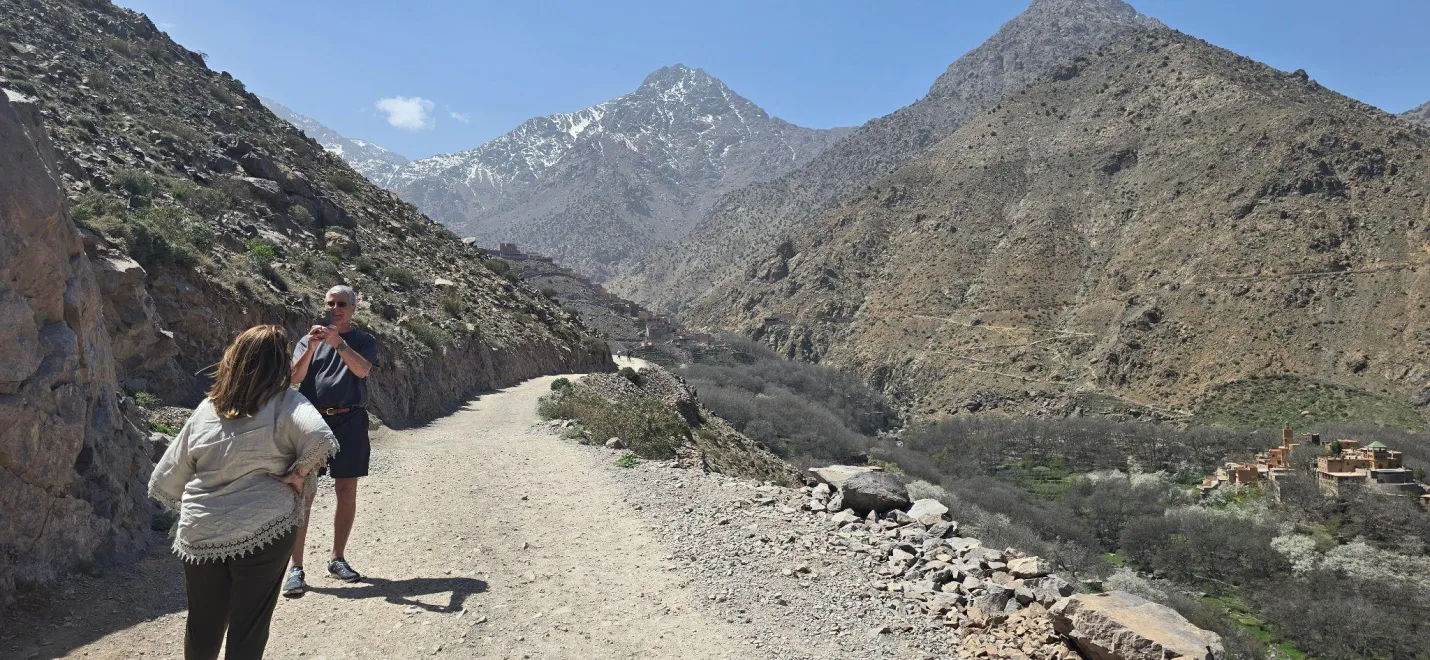

What makes a single photograph of the Sahara feel like it holds silence, heat, and motion all at once? For many travelers, their desert photos fail to reflect what they actually saw and felt in person, mostly due to harsh lighting and fast-changing conditions.
This is where guided routes such as a trek Morocco Desert tour offered by Omar Adventures can make a meaningful difference, giving travelers structured access to some of the most photogenic regions during a desert trek in Morocco.
This guide covers practical desert photography tips for dunes, camel scenes, and desert camps, including techniques suited for an 8 day Sahara tours experience, an 8-day Sahara Desert circuit, and a camel trek in Morocco.
Light That Shapes the Desert Story
Shooting During Golden Hours
Desert light changes quickly. The most effective images often come within the first hour after sunrise and the hour before sunset. During these periods:
- Shadows stretch across dunes, creating strong texture
- Sand color shifts from pale beige to deep amber
- Heat haze is reduced, improving sharpness
Midday shooting is often less forgiving. If unavoidable, positioning subjects in partial shade from dunes or tents can help reduce harsh contrast.
Working With Contrast
The Sahara is naturally high in contrast. To manage it:
- Slightly underexpose shots to preserve sky detail
- Use spot metering on subjects like camels or tents
- Avoid relying fully on automatic exposure modes
Photographing Dunes with Depth
Dunes are more than simple curves of sand. Capturing their shape requires attention to perspective.
- Composition techniques
- Use leading lines formed by dune ridges
- Position footprints or trekking paths in the foreground
- Include a human or camel figure for scale
Angle Selection
Low angles emphasize height and curvature. Higher vantage points, often found during an 8 day Sahara tours route, help show dune patterns extending into the distance.
Wind And Texture
Wind can erase footprints within minutes, but it also creates ripple textures. Photographers on an 8-day Sahara Desert circuit often wait for wind patterns to settle slightly to capture defined surface detail.
Camel Trek Photography in Motion
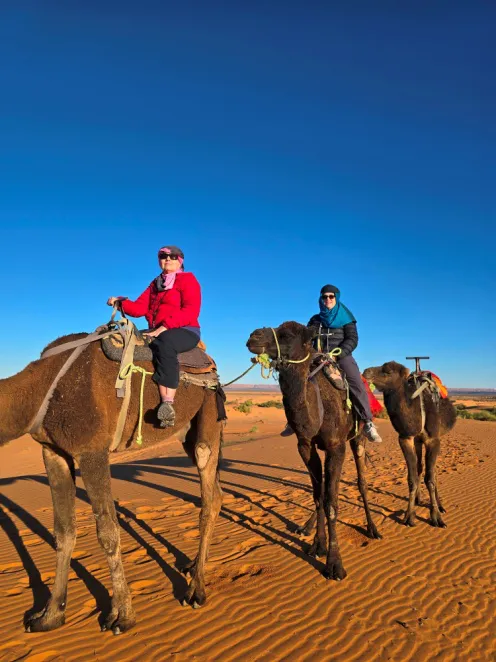
A camel trek in Morocco provides constant movement, making timing essential.
Key Tips For Movement Shots
- Use a faster shutter speed (1/500 or higher) to freeze motion
- Track subjects smoothly rather than panning abruptly
- Focus on the lead camel for a natural visual anchor
Story-Driven Framing
Instead of isolating camels, include:
- Riders interacting with guides
- Dust trails forming behind the group
- Horizon lines showing direction of travel
These elements help represent the rhythm of a desert trek in Morocco without relying on static poses.
Desert Camp Atmosphere at Night
Camps become central visual points during longer routes such as an 8-day Sahara Desert circuit.
Low-Light Photography Approach
- Increase ISO moderately while balancing noise
- Use a tripod or stable surface for long exposures
- Capture warm lantern light against cool night skies
Elements Worth Capturing
- Traditional tents arranged under open sky
- Tea preparation moments around firelight
- Star-filled skies over still sand
During a trek Morocco Desert tour, camps often sit far from artificial light, making astrophotography more accessible than in urban environments.
Camera Settings and Gear Preparation
Desert environments are demanding on equipment. Preparation matters as much as technique.
Recommended Settings Baseline
- Aperture: f/8 to f/11 for landscapes
- Shutter speed: varies from 1/60 to fast bursts for movement
- ISO: 100 to 800 depending on light conditions
Gear Considerations
- Lens cloth for frequent sand removal
- UV filter for lens protection
- Lightweight tripod for night shots
Spare batteries, as heat drains power faster
Sand intrusion is constant, so changing lenses should be minimized and done in protected areas like tents.
Framing Human Connection in the Desert
Photography becomes more compelling when people are included naturally.
What To Focus On
- Guides adjusting saddles or preparing routes
- Travelers resting on dunes
- Shared meals inside camp circles
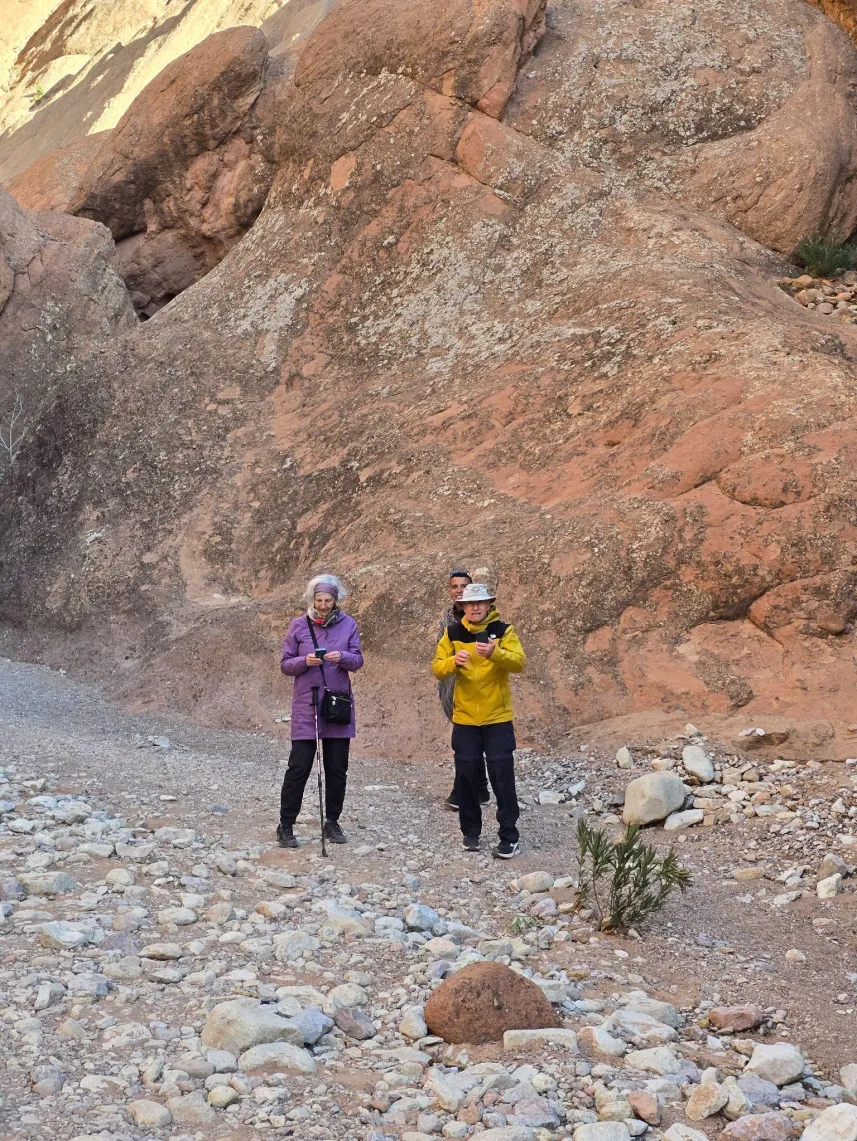
These moments reflect the lived experience of a desert trek in Morocco and help connect scale, emotion, and environment.
Framing the Final Frame: A Story in Sand and Light
What remains after the sand settles and the trek slows down?
Desert photography in Morocco is less about isolated images and more about sequences of light, movement, and human presence. Whether capturing the sweeping curves of dunes during an 8 day Sahara tours experience, the rhythm of a camel trek in Morocco, or the quiet glow of desert camps, each frame contributes to a larger visual memory shaped by time and terrain.
For travelers seeking structured routes such as an 8-day Sahara Desert circuit, organized experiences through Omar Adventures provide access to varied terrain, guided timing for sunrise and sunset shoots, and routes that naturally support strong photographic opportunities across the desert trek in Morocco.
To plan a photography-focused trek Morocco Desert tour, reaching out to the team at Omar Adventures helps align timing, route selection, and pacing with photographic goals.




















Sign in to leave a comment.