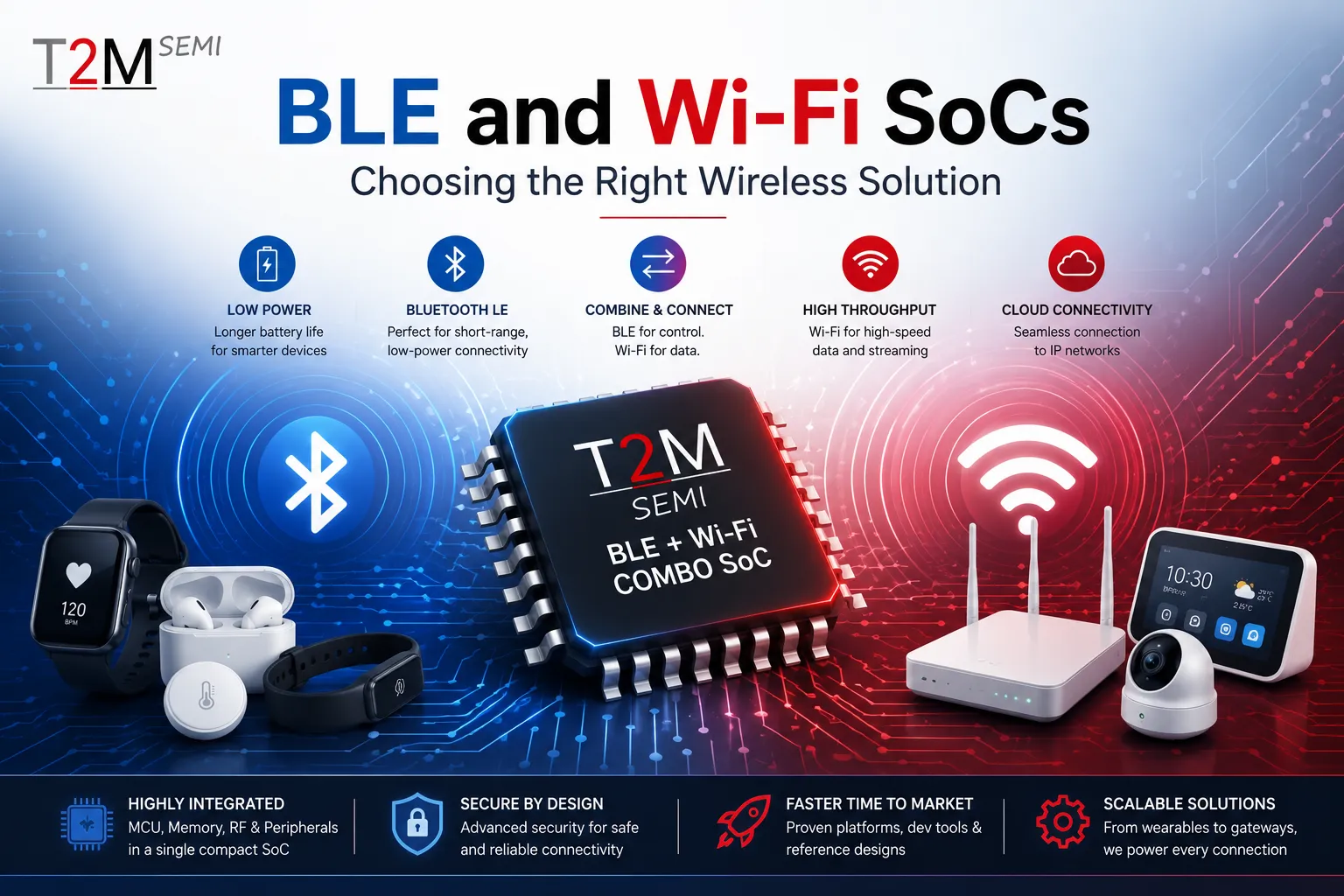

The IoT industry is moving toward devices that are smaller, more connected, and capable of delivering better performance with lower energy consumption. As manufacturers compete to develop smarter products, the semiconductor architecture behind wireless connectivity has become increasingly important.
BLE SoCs and Wi-Fi SoCs are playing a central role in this evolution. By integrating wireless connectivity with processing and system functions, these solutions can help developers simplify product architectures while building reliable connected devices.
Why Wireless SoC Architecture Matters
The design of a connected product involves much more than selecting a wireless communication standard. Developers must consider power consumption, processing performance, PCB size, connectivity requirements, security, software support, and production cost.
Using a highly integrated SoC can address several of these requirements simultaneously. Instead of designing a system around multiple separate chips, manufacturers can use a single semiconductor platform that combines important functions into a compact solution.
This approach can reduce hardware complexity and provide a more efficient foundation for product development.
BLE SoCs for Always-Connected Devices
BLE technology has become essential for products where efficient short-range communication is required. Its low-power characteristics make it particularly attractive for battery-operated products that need to remain connected for extended periods.
A BLE SoC can integrate the Bluetooth radio, processor, memory, and other system functions into a single chip. This allows manufacturers to develop compact wireless products without requiring a large collection of external components.
Wearables are a strong example. Devices such as fitness trackers, wireless accessories, smart sensors, and portable controllers often have strict power and size limitations. A BLE SoC can provide the connectivity required by these products while supporting efficient operation.
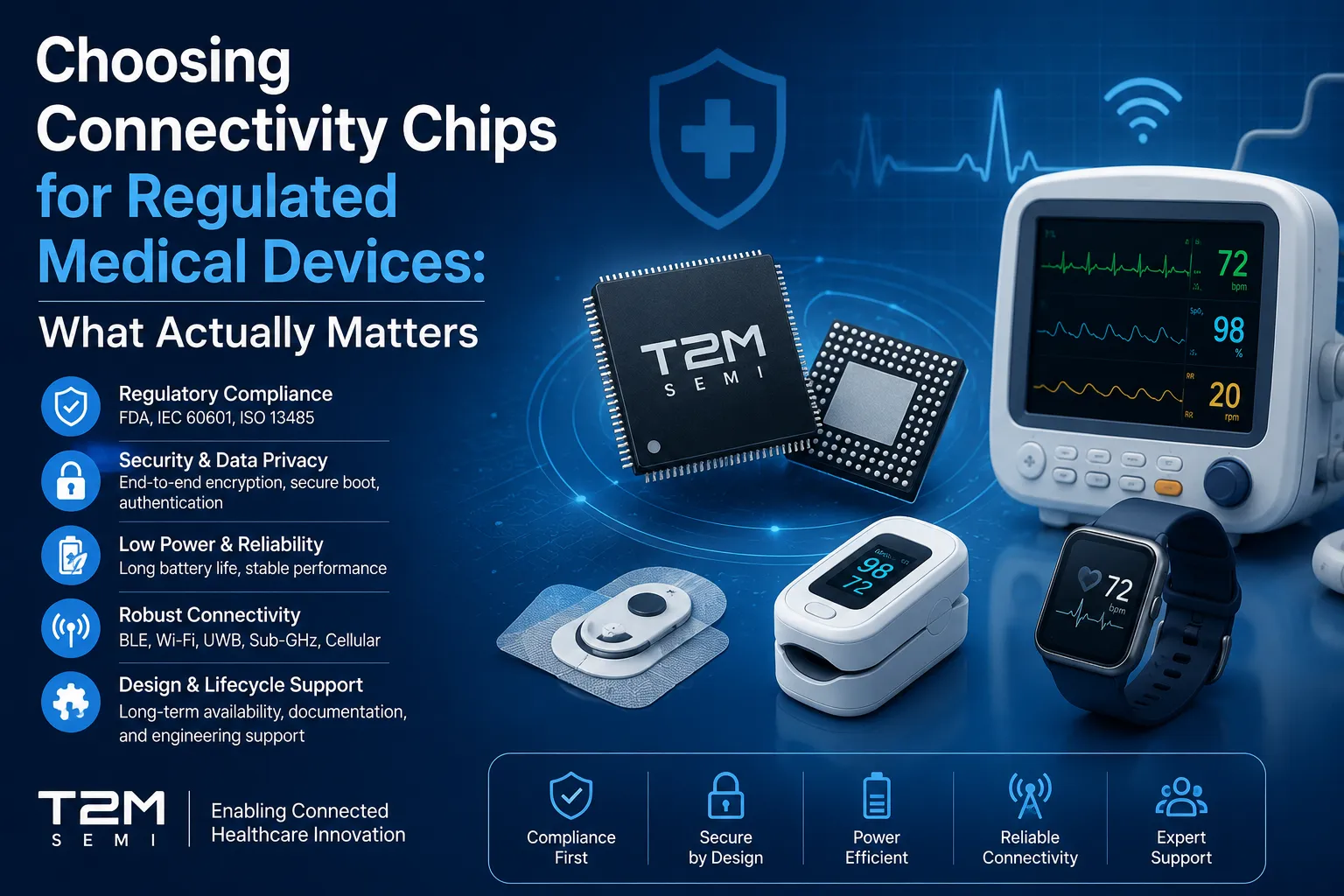
BLE SoCs are also useful in human interface devices, smart toys, remote controls, connected medical electronics, and various IoT applications where low energy consumption is a key design objective.
Wi-Fi SoCs for Connected Applications
Wi-Fi plays a different role in the IoT ecosystem. Products that require higher data rates or direct connectivity to local networks and cloud platforms can benefit from Wi-Fi SoCs.
Modern Wi-Fi SoCs integrate wireless communication with processing capabilities and other system-level functions. This can help manufacturers create connected products with fewer external components while maintaining the performance required by network-intensive applications.
Wi-Fi 6 has further expanded the capabilities of wireless IoT products. Technologies such as OFDMA, MU-MIMO, Target Wake Time, and improved security help support efficient communication in environments where many devices share the same network.
This makes Wi-Fi SoCs suitable for smart appliances, home automation products, cameras, gateways, smart displays, and other connected electronics.
Combining Connectivity with Processing
Modern IoT devices increasingly need to process information locally rather than simply transmitting raw data. This creates a greater demand for SoCs that combine wireless connectivity with capable processing resources.
Local processing can reduce unnecessary communication and improve system responsiveness. For example, a connected sensor can process information before sending relevant data to another device or cloud service.
The combination of wireless connectivity and processing within an SoC can therefore provide developers with greater flexibility when designing intelligent products.
Improving Product Size and Hardware Efficiency
Miniaturization is another important consideration in modern electronics. Consumers expect smart devices to become smaller without sacrificing functionality.
Highly integrated BLE and Wi-Fi SoCs can help address this requirement by reducing the number of individual components needed on the PCB. A smaller component footprint can provide designers with more flexibility when developing compact products.
This is particularly valuable for wearable devices, portable electronics, smart sensors, and other products where PCB space is limited.
Supporting Faster Product Development
The semiconductor platform selected at the beginning of a project can have a significant impact on development time. A mature SoC solution can provide a foundation for hardware and software development instead of requiring manufacturers to build every system component independently.
Integrated wireless solutions can simplify PCB design, firmware development, connectivity implementation, and system integration. This can help engineering teams focus more on the product's unique features rather than solving basic connectivity challenges from scratch.
For companies working in competitive IoT markets, reducing development complexity can provide an important advantage.
Building Flexible Wireless Products
The choice between BLE and Wi-Fi depends on the requirements of the final product. BLE is well suited to applications where low power consumption and efficient short-range communication are priorities. Wi-Fi is more appropriate when higher throughput and direct network connectivity are required.
In some products, both technologies can work together. BLE can be used for local interaction, configuration, or communication with smartphones, while Wi-Fi can provide internet and cloud connectivity.
This flexibility allows manufacturers to design wireless architectures that match the specific needs of their products.
The Future of Wireless SoC Technology
As IoT applications continue to expand, wireless SoCs will become increasingly important to product development. Manufacturers need semiconductor solutions that provide connectivity, processing, efficiency, and integration without unnecessarily increasing system complexity.
T2M Semi provides BLE SoC and Wi-Fi SoC technologies designed for applications across IoT, wearables, smart homes, remote controls, sensors, and connected electronics.
By adopting highly integrated wireless SoC platforms, manufacturers can develop products that are more compact, efficient, connected, and ready for the next generation of IoT applications.


























Sign in to leave a comment.