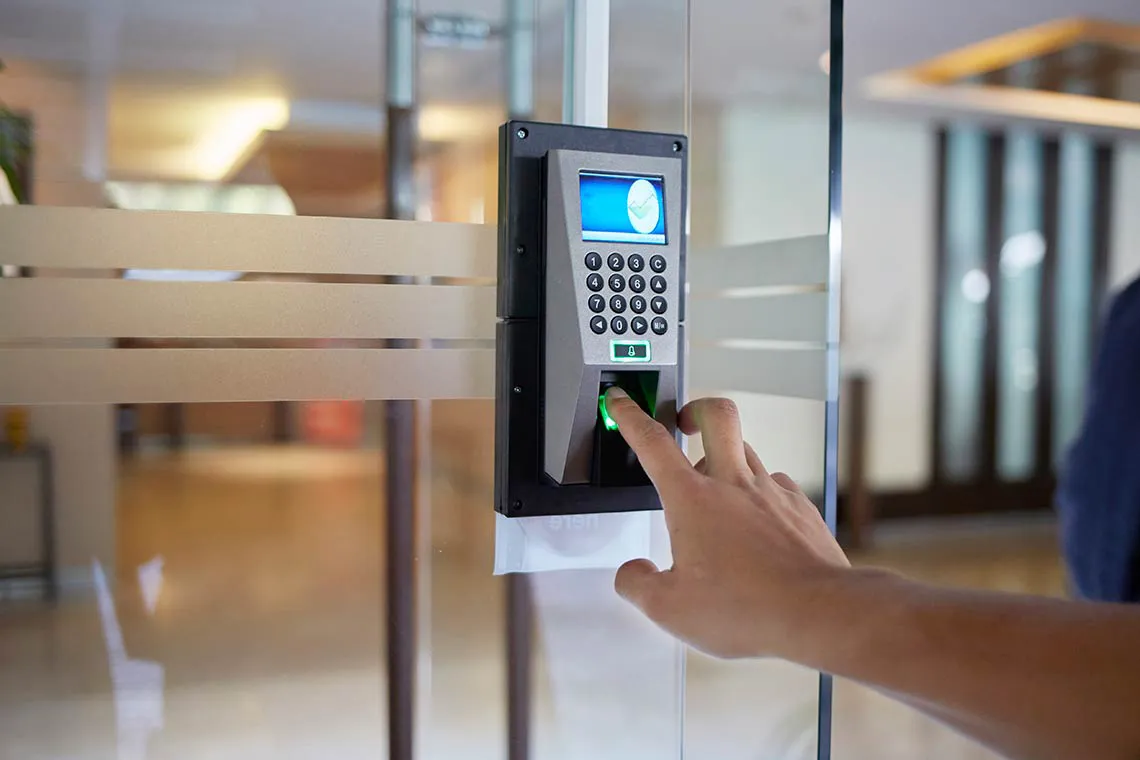

An access control system in Dubai should do more than prevent unauthorized entry. When properly planned, it can help businesses control who enters specific areas, manage employee access, maintain entry records, and improve security without making everyday movement unnecessarily difficult.
The right solution depends on the property, number of users, security requirements, working hours, and the areas that need controlled access. An office, warehouse, residential building, hotel, or industrial facility may all require a different approach.
What Is an Access Control System?
Access control is a security method used to determine who is allowed to enter a particular door or area.
Instead of relying only on traditional keys, modern systems can use different credentials or identification methods, such as:
- RFID cards
- Key cards
- PINs or keypads
- Biometric identification
- Mobile credentials
- Combined authentication methods
The system can also record access events, allowing authorized personnel to review information about entries and attempted access.
This makes access control useful not only for securing doors but also for managing permissions across a property.
Why Access Control Matters in Dubai
Dubai has a wide range of commercial, residential, retail, hospitality, and industrial properties. Many of these buildings have areas that should not be accessible to everyone.
An office, for example, may allow general employees to enter work areas while restricting server rooms, management offices, or records rooms. A warehouse may need separate permissions for staff, contractors, loading areas, and administrative spaces.
The important part is to define access requirements before choosing the technology.
A system should answer practical questions such as:
- Who needs access?
- Which doors should they use?
- At what times?
- How should temporary access be handled?
- Which areas require additional protection?
- Who manages access permissions?
- What happens when an employee leaves?
Choosing the Right Authentication Method
Different properties may benefit from different access methods.
Key Cards and RFID
Card-based access is common in offices and commercial buildings because credentials can be assigned to individual users and deactivated when necessary.
It can also be easier to manage than traditional physical keys, particularly when a property has many employees.
Biometric Access
Biometric systems can use characteristics such as fingerprints or other supported biometric identifiers.
These systems may be useful where stronger identity verification is required, although the suitability of a biometric solution depends on the environment, user requirements, privacy considerations, and system design.
PIN or Keypad Access
Keypads can be useful for selected doors or areas where issuing physical credentials to every user is inconvenient.
However, shared codes should be managed carefully. A code that is widely known can reduce the effectiveness of the access control system.
Mobile Access
Some modern systems can use mobile devices as credentials. This can be useful for organizations that want to reduce physical cards or manage access digitally.
The choice should always be based on the property's operational requirements rather than technology trends alone.
Think About Access Permissions, Not Just Doors
A common mistake is to focus on how many doors need readers without first deciding who should be allowed through them.
A better approach is to create access groups.
For example:
Employees: Main entrance and general office areas
Managers: Employee areas plus selected management spaces
IT team: Server and network rooms
Maintenance staff: Approved technical areas during defined periods
Visitors: Reception or designated visitor areas only
This type of role-based planning can make permissions easier to manage and reduce unnecessary access.
Integration Can Make the System More Useful
Access control does not always have to operate separately from other security systems.
Depending on the project, it may be integrated with CCTV so that access events and video footage can be reviewed together. Alarm systems and intercoms may also form part of a wider security design.
For example, if an access-controlled door is opened outside normal working hours, security personnel may need a way to review the associated event or video.
Integration should be planned carefully, however. Adding multiple systems without a clear purpose can increase complexity and maintenance requirements.
Installation Planning Matters
The quality of the physical installation can affect how reliably an access control system works.
Before installation, the project team should consider:
- Door type and construction
- Reader location
- Locking mechanism
- Power requirements
- Exit arrangements
- Network connectivity
- Controller location
- Cable routing
- Emergency requirements
- Future expansion
A door reader may be simple to install, but the complete system includes controllers, locks, power supplies, communication infrastructure, software, and user management.
This is why a site assessment is particularly useful before equipment is selected.
Common Access Control Mistakes
Several problems can be avoided through better planning.
Giving Everyone the Same Access
Not every employee needs access to every part of a building. Excessive permissions can create unnecessary security exposure.
Forgetting Former Employees
Access credentials should be disabled promptly when employees or contractors no longer require entry.
Ignoring Temporary Users
Visitors, contractors, and short-term workers may need controlled access without receiving permanent permissions.
Poor Door Hardware Selection
The reader may work correctly while the lock or door hardware is unsuitable for the application.
No Backup Plan
Projects should consider what happens if power, network connectivity, or a particular access controller becomes unavailable.
Failing to Maintain the System
Readers, locks, controllers, software, and power equipment may require inspection and maintenance over time.
Compliance and Project Requirements
Security projects in Dubai can involve specific requirements depending on the property, project type, and systems being installed.
Access control should therefore be planned alongside applicable building, security, and project requirements rather than treated as an isolated hardware installation.
Where the system needs to interact with CCTV, alarms, or other regulated security infrastructure, these considerations should be identified early.
Project owners should confirm current requirements with the relevant authorities and qualified project professionals rather than relying on assumptions from older installations.
What to Ask an Access Control Provider
Before selecting an installation company, property owners can ask practical questions about the proposed system.
For example:
- How will the site be assessed?
- Which authentication method is appropriate?
- How will user permissions be organized?
- Can temporary credentials be managed?
- What happens when an employee leaves?
- Can the system integrate with CCTV or other security systems?
- How will power and network requirements be handled?
- What happens during a network or power interruption?
- Is future expansion possible?
- What maintenance and technical support are available?
These questions can help identify whether the proposed solution has been designed around the property's actual operations.
When Professional Support Is Useful
Professional assistance is particularly valuable when a building has multiple controlled doors, different user groups, sensitive rooms, several floors, or integration requirements.
An experienced installer can review the property, identify access points, understand user movements, plan the infrastructure, and configure permissions around the organization's needs.
Sevenlines is a Dubai-based security and ELV solutions provider working with access control and related security infrastructure. Businesses planning a new or upgraded system can review its access control solutions for more information.
The objective should be to create a system that improves security without making normal building operations unnecessarily complicated.
Planning for Future Changes
Access requirements rarely remain unchanged.
Companies hire new employees, move departments, add restricted areas, change office layouts, and sometimes expand into additional floors. A well-designed access control system should allow administrators to make these changes without replacing the entire infrastructure.
It is also useful to maintain accurate records of users, credentials, access groups, devices, and controlled doors.
Good documentation can save considerable time when troubleshooting or expanding the system later.
Conclusion
Effective access control is ultimately about managing movement through a property in a practical and organized way. The right combination of authentication, door hardware, permissions, network infrastructure, integration, testing, and maintenance can create a system that supports both security and everyday operations.
For businesses and property owners in Dubai, careful planning before installation is often more valuable than simply choosing the newest access technology. A system designed around real users, real doors, and real operational requirements is more likely to remain useful as the property changes.

























Sign in to leave a comment.