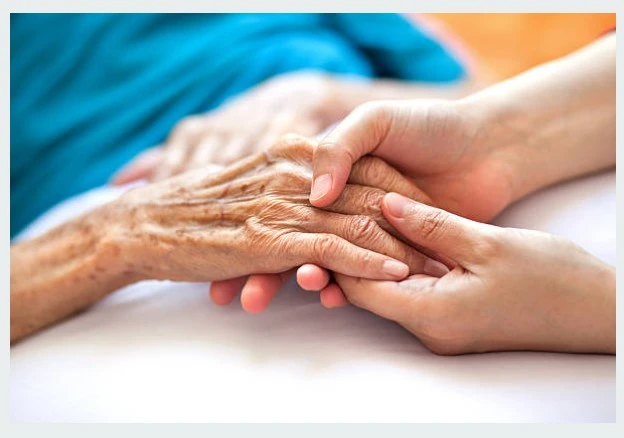

Alzheimer’s disease undoubtedly carries a social stigma. So often when family or friends learn of an Alzheimer’s diagnosis, they presume their loved one is suddenly incapable of making decisions, enjoying life, or contributing to society. There is a feeling that all is lost. The worst-case scenario has occurred—Alzheimer’s disease. However, Alzheimer’s is simply a type of brain disease, just like how coronary artery disease is a type of heart disease. We do not marginalize, isolate, or exclude people living with coronary heart disease; we should not do so to people living with Alzheimer’s disease. Learning about the disease, correcting misinformation, and talking openly about Alzheimer’s will break the Alzheimer’s stigma.
Alzheimer’s is simply a disease. Alzheimer’s is an irreversible brain disease that is ultimately fatal. An individual with Alzheimer’s does not detect or notice initial changes to the brain, changes which begin twenty years or more before symptoms begin. Examples of Alzheimer’s symptoms are memory loss and difficulty doing routine tasks. Symptoms are caused by damage to nerve cells in parts of the brain involved with cognitive function—i.e., memory, learning, and thinking.
Alzheimer’s is incredibly common. According to the Alzheimer’s Association, Alzheimer’s is the 6th leading cause of death in the United States and kills more people than breast cancer and prostate cancer combined. Over 11 percent of people 65 and older live with Alzheimer’s disease. Unless there are medical breakthroughs, the number of people aged 65 and older with Alzheimer’s in the United States may grow to nearly 13 million. A new case of dementia arises somewhere in the world every 3 seconds. With these incredibly large numbers, you surely love someone who either lives with Alzheimer’s or cares for someone who does.
We all should care about finding a cure for Alzheimer’s. Apart from the human cost of Alzheimer’s, Alzheimer’s disease is also a financial burden to society. According to the Alzheimer’s Association, the total national cost of caring for people with Alzheimer’s or other dementias is expected to reach $321 billion in 2022. This figure does not include the estimated $271 billion in unpaid caregiving by friends and family. Medicare and Medicaid are expected to cover 64% ($206 billion) of this amount. By 2025, the cost of care for Alzheimer’s and other dementias could rise to nearly $1 trillion.
There is hope in the fight against Alzheimer’s. There is both an exciting drug therapy pipeline and increased funding for the fight against Alzheimer’s. According to the Alzheimer’s Drug Discovery Foundation 2021 Alzheimer’s Clinical Trials Report, 118 potential treatments for Alzheimer’s disease are in clinical development. Some of these therapies address Alzheimer’s underlying causes, while others focus on treating Alzheimer’s symptoms. You can access the report to know more. In December 2020, a $300 million increase for Alzheimer’s research funding at the National Institute of Health (NIH) was signed into law. Today, funding for Alzheimer's and dementia research at the NIH is approximately $3.2 billion.
Open communication will help break the Alzheimer’s stigma. Cancer is an excellent example where open communication and education helped to reduce social stigma. For example, in 1961, nearly 90% of physicians at a US hospital reported that they preferred not to tell patients they had cancer, as it could cause them harm. Identity threat and stigma in cancer patients - PMC (nih.gov) In present day, a cancer diagnosis no longer stigmatizes patients; it would be unheard of for a physician to refuse to inform someone of a diagnosis out of a desire to protect the individual. We can do the same for Alzheimer’s. In fact, not only should increased communication lead to de-stigmatization of Alzheimer’s, but it should also result in individuals not fearing disclosing Alzheimer’s symptoms to their doctor (enabling them to take advantage of current treatment options) and increased funding (because people will realize the prevalence and cost of Alzheimer’s).
You can help. You can help join the fight against Alzheimer’s by volunteering, participating in an Alzheimer’s fundraiser, such as The Longest Day, advocating to make Alzheimer’s a national priority, donating to the Alzheimer’s Association, or joining a research trial. For more information: Get Involved | Alzheimer's Association. To locate a clinical trial: TrialMatch - Free Clinical Trial Matching Service | alz.org. The Alzheimer’s Impact Movement has made it easy for you to urge Congress to increase Alzheimer’s funding with 1 simple click. Urge Congress to Increase Alzheimer's Research Funding (p2a.co).
Summing Up
After her family’s journey through Alzheimer’s, author Mary Moreland was determined to help fellow caregivers by sharing her experience in The Gap Between Loving and Caring for Someone with Alzheimer’s (Brown Books Publishing Group). Alongside her own story of loss, the author delivers insights on protecting and grieving for loved ones with dementia or Alzheimer’s and provides practical advice on navigating critical matters including legal documentation, diagnostic and educational resources, preparation for and accepting deterioration, and the end-of-life experience.





























Sign in to leave a comment.