TL;DR
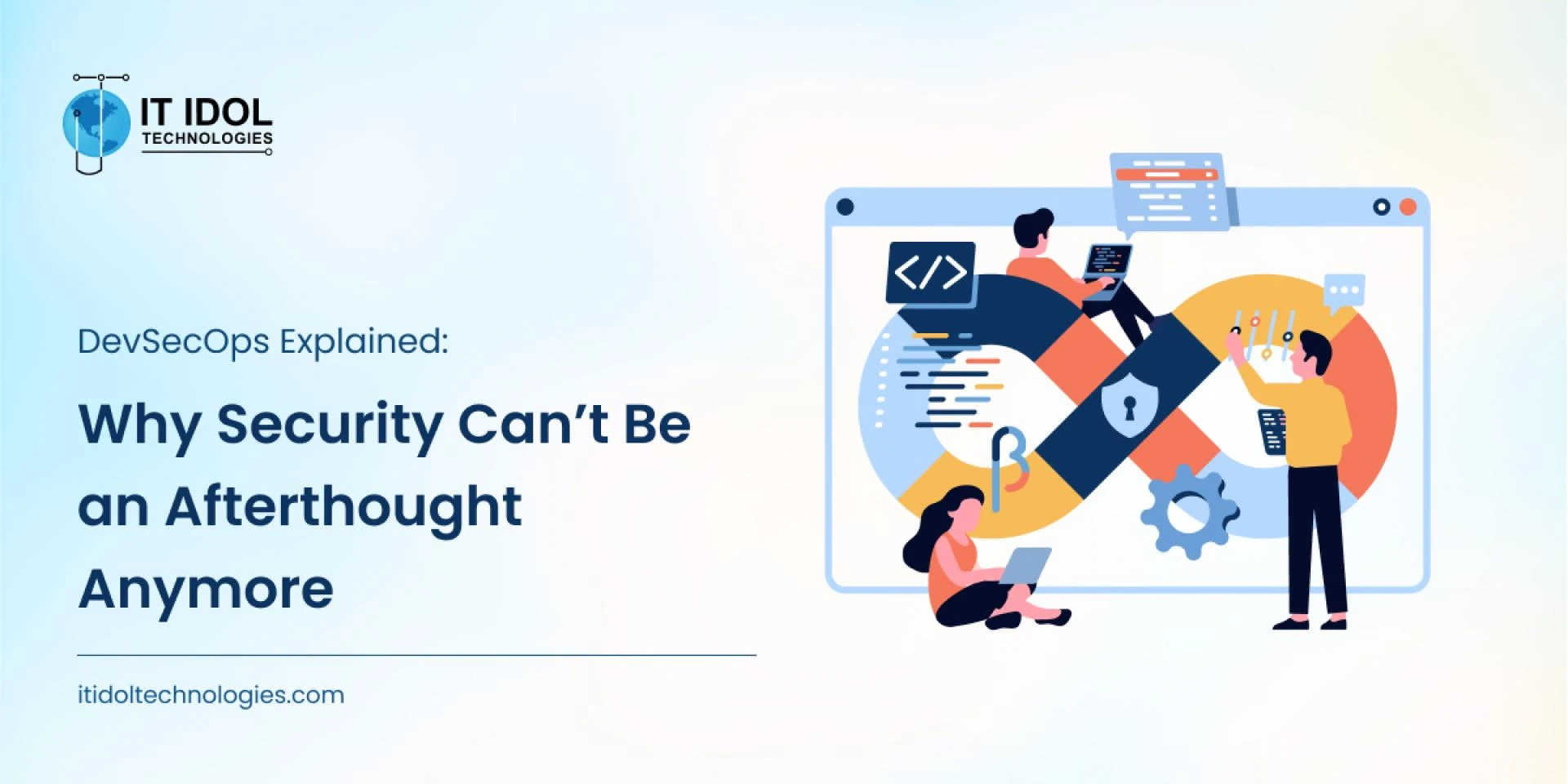
- DevSecOps integrates security directly into development workflows
- 81% of teams admit shipping vulnerable code under pressure
- Early vulnerability fixes can be up to 100x cheaper
- Mature DevSecOps teams resolve issues faster and release more confidently
- Over 70% of organizations are adopting DevSecOps practices
- Poor implementation leads to tool overload and developer friction
- The future includes runtime security, AI, and supply chain protection
Here’s the uncomfortable truth most engineering leaders already sense but rarely say out loud: speed has outpaced control.
Teams have optimized everything around delivery: faster builds, faster releases, faster iterations. But security? It’s often still operating on yesterday’s model. And that gap is no longer theoretical. It’s showing up in real numbers.
Consider this: 81% of organizations admit they’ve knowingly shipped vulnerable code under deadline pressure. At the same time, 97% of codebases now rely on open-source components, dramatically expanding the attack surface.
That’s the environment DevSecOps is responding to, not as a trend, but as a necessity.
The Shift Isn’t About Security, It’s About Flow
If you strip away the terminology, DevSecOps is really about one thing: removing friction without increasing risk.
Traditional security models were built around control points. Code gets written, then reviewed. Infrastructure gets deployed, then audited. Releases get prepared, then approved. That sequencing worked when release cycles were slow. But in a world where deployments happen dozens or hundreds of times a day, it breaks down quickly.
This is why many organizations turned to DevSecOps in the first place. According to insights from Gartner’s peer community, 48% adopted DevSecOps because security reviews were delaying releases, while 62% were driven by risks tied to open-source dependencies
So the shift isn’t just philosophical. It’s operational. Security has to move at the same speed as development, or it becomes irrelevant.
What DevSecOps Looks Like When It Actually Works

In high-performing teams, DevSecOps doesn’t feel like an added layer. It feels invisible. Security checks run where developers already work inside IDEs, during commits, within CI/CD pipelines. Vulnerabilities are flagged early, often before code even leaves a developer’s machine. Infrastructure configurations are validated before they’re applied. Dependencies are scanned continuously, not periodically.
This changes behavior in subtle but powerful ways.
When feedback is immediate, developers fix issues immediately. When security becomes part of the workflow, it stops being perceived as a blocker. And the payoff isn’t marginal. Organizations with mature DevSecOps practices can fix vulnerabilities up to 3x faster and recover from security failures significantly quicker than traditional teams
But the real advantage isn’t speed, it’s consistency. Security stops being a last-minute scramble and becomes a continuous property of the system.
Why “Shift Left” Is Only Half the Story
You’ll often hear DevSecOps described as “shifting security left.” It’s a useful idea, but incomplete. Yes, moving security earlier in the lifecycle matters. Fixing vulnerabilities during development is dramatically cheaper than fixing them in production. Some estimates suggest it can be up to 100 times less expensive when addressed early
But focusing only on “left” misses what’s happening across the entire lifecycle.
Modern DevSecOps extends in both directions:
- Left: catching issues early in code and design
- Right: monitoring behavior in production and responding in real time
Because the reality is simple: not every vulnerability can be caught before deployment. Runtime visibility, understanding what’s actually happening in production, is becoming just as critical.
This is where many implementations fall short. According to industry analysis, while DevSecOps adoption is growing, maturity remains low; only a small percentage of organizations have fully integrated security across the lifecycle.
In other words, many teams have tools. Fewer have systems that truly work.
The Hidden Constraint: People, Not Pipelines
Ask most teams where DevSecOps breaks down, and the answer is rarely “we need more tools.”
It’s usually something less tangible.
Developers get overwhelmed by false positives. Security teams struggle to scale. Processes become fragmented across tools. And somewhere in the middle, ownership becomes unclear. This is where the cultural dimension of DevSecOps becomes unavoidable. Security can’t remain a specialized function if software delivery is continuous. It has to become part of how engineers think, design, and build. That doesn’t mean turning every developer into a security expert. It means giving them the right context at the right time. It also means redefining the role of security teams from reviewers to enablers.
Organizations that succeed here tend to adopt a few consistent patterns:
- embedding security expertise within product teams
- aligning metrics across engineering and security
- Prioritizing developer experience in security tooling
Because if security slows developers down, it will eventually be bypassed. And the data reflects that reality.
DevSecOps Is Quietly Becoming a Business Strategy
It’s easy to view DevSecOps as a technical evolution. But its impact is increasingly strategic.
The economics alone are compelling. The average cost of a data breach now exceeds $4.8 million, yet organizations with strong DevSecOps practices save significantly per incident.
At the same time, adoption is accelerating. Estimates suggest that over 70% of organizations have integrated DevSecOps practices into their development lifecycle, with the market projected to grow rapidly through the decade. What’s driving this isn’t just a security risk; it’s business pressure. Faster releases, tighter compliance requirements, distributed architectures, and increasing dependency on third-party code all demand a more integrated approach.
DevSecOps sits at the intersection of these forces. It allows organizations to scale delivery without scaling risk at the same rate.
Where Most Implementations Go Wrong
Despite the momentum, DevSecOps is often misunderstood in execution.
One common pattern is over-tooling. Teams layer multiple scanning solutions into pipelines, hoping for comprehensive coverage. The result is slower builds, duplicated alerts, and frustrated developers.
Another issue is a lack of prioritization. Not all vulnerabilities are equal, but without clear risk frameworks, everything gets treated the same or ignored altogether.
There’s also a tendency to treat DevSecOps as a one-time transformation. In reality, it’s an ongoing process of refinement. Pipelines evolve. Threats change. Tools improve. Practices need to adapt continuously. Perhaps the most overlooked challenge is integration. Many organizations use a dozen or more security tools, but without cohesion. Visibility becomes fragmented, and decision-making suffers. The gap between intent and execution is still wide, and closing it requires more than adding new technologies.
The Next Phase: Runtime, AI, and Supply Chain Security
DevSecOps is not standing still. Its next phase is already taking shape.
Runtime security is gaining prominence as organizations recognize that pre-deployment checks aren’t enough. Continuous monitoring, anomaly detection, and automated response are becoming integral parts of the pipeline.
AI is also beginning to play a role not as a replacement for human expertise, but as a way to handle scale. AI-driven tools can prioritize vulnerabilities, reduce false positives, and surface patterns that would otherwise be missed.
Then there’s the software supply chain.
With open-source dependencies forming the backbone of modern applications, securing third-party components is no longer optional. The rise in malicious packages over half a million identified in recent years underscores the urgency. DevSecOps is expanding to address this reality, incorporating deeper visibility and control over external dependencies.
The Bottom Line
DevSecOps isn’t about adding security to DevOps. It’s about removing the conditions that made security a bottleneck in the first place.
When done right, it doesn’t slow teams down; it allows them to move faster with confidence. It reduces uncertainty, improves consistency, and aligns security with the pace of modern software development. But getting there requires more than pipelines and tools. It requires rethinking how teams collaborate, how decisions are made, and how responsibility is shared.
For organizations navigating this shift, the goal should be practical: build security into the system, not around it. Teams looking to move beyond fragmented adoption and into scalable, production-ready DevSecOps can explore how a custom software development company helps operationalize these practices in real engineering environments without disrupting delivery velocity.






















Sign in to leave a comment.