
It is a question many people ask themselves at least once a week. Did I take my pills today? The uncertainty may seem small, but it can lead to a serious problem known as double dosing.
Double dosing happens when someone takes a second dose because they are unsure if they already took the first one. This mistake is more common than most people realize, especially among seniors, busy professionals, and caregivers managing multiple prescriptions.
Understanding how to prevent double dosing is essential for maintaining both safety and treatment effectiveness.
What Is Double Dosing and Why It Is Risky
Double dosing occurs when a person takes more medication than prescribed within a specific time period. This can happen accidentally due to confusion or forgetfulness.
The risks vary depending on the medication, but common consequences include:
- Dizziness or lightheadedness
- Nausea or stomach issues
- Sudden drops or spikes in blood pressure
- Increased side effects
- In severe cases, medical emergencies
Even medications that seem harmless can cause problems when taken incorrectly. That is why avoiding double dosing is just as important as not missing doses.
Why People Accidentally Double Dose
Double dosing usually comes down to one simple issue. Lack of clarity.
Here are the most common causes:
1. Forgetting a Previous Dose
People often take medication on autopilot. Later in the day, they cannot remember if they already took it.
2. Multiple Medications
Managing several prescriptions at different times increases confusion.
3. Similar Packaging
When medications look alike, it becomes harder to track what has been taken.
4. Interruptions in Routine
Travel, busy schedules, or unexpected events can disrupt normal habits.
5. Lack of a Tracking System
Without a reliable way to confirm a dose, people rely on memory, which is not always accurate.
Signs You Might Be at Risk
If you find yourself asking these questions often, you may be at risk of double dosing:
- Did I already take my medication
- Should I take another dose just in case
- When was my last dose
These moments of doubt are a signal that your current system needs improvement.
Practical Ways to Avoid Double Dosing
Preventing double dosing is not complicated. It requires a clear and consistent approach.
1. Create a Fixed Medication Routine
Take your medication at the same time every day. Pair it with a regular activity such as breakfast or bedtime.
Consistency reduces confusion and builds a reliable habit.
2. Use a 7 Day Pill Organizer
A 7 day pill organizer is one of the most common tools for medication management. It allows you to pre-sort doses for each day of the week.
Benefits include:
- Clear visibility of whether a dose has been taken
- Reduced need to open multiple bottles
- Easier planning for the week
If the compartment for the day is empty, you know the dose has already been taken.
3. Try a Bottle Pill Organizer Approach
Some people prefer to keep medication in its original packaging. In this case, a bottle pill organizer system can be helpful.
This method keeps medications in their original bottles while still offering a way to track usage. It is especially useful for prescriptions that should not be removed from their containers.
4. Use a Visual Confirmation Tool
One of the most effective ways to avoid double dosing is to have a clear visual indicator.
Meticap provides this by attaching directly to a prescription bottle. It shows the last time the medication was taken or when the next dose is due.
This removes uncertainty immediately. Instead of guessing, you can look at the bottle and know the answer.
For both individuals and caregivers, this kind of system offers a simple and reliable way to stay on track.
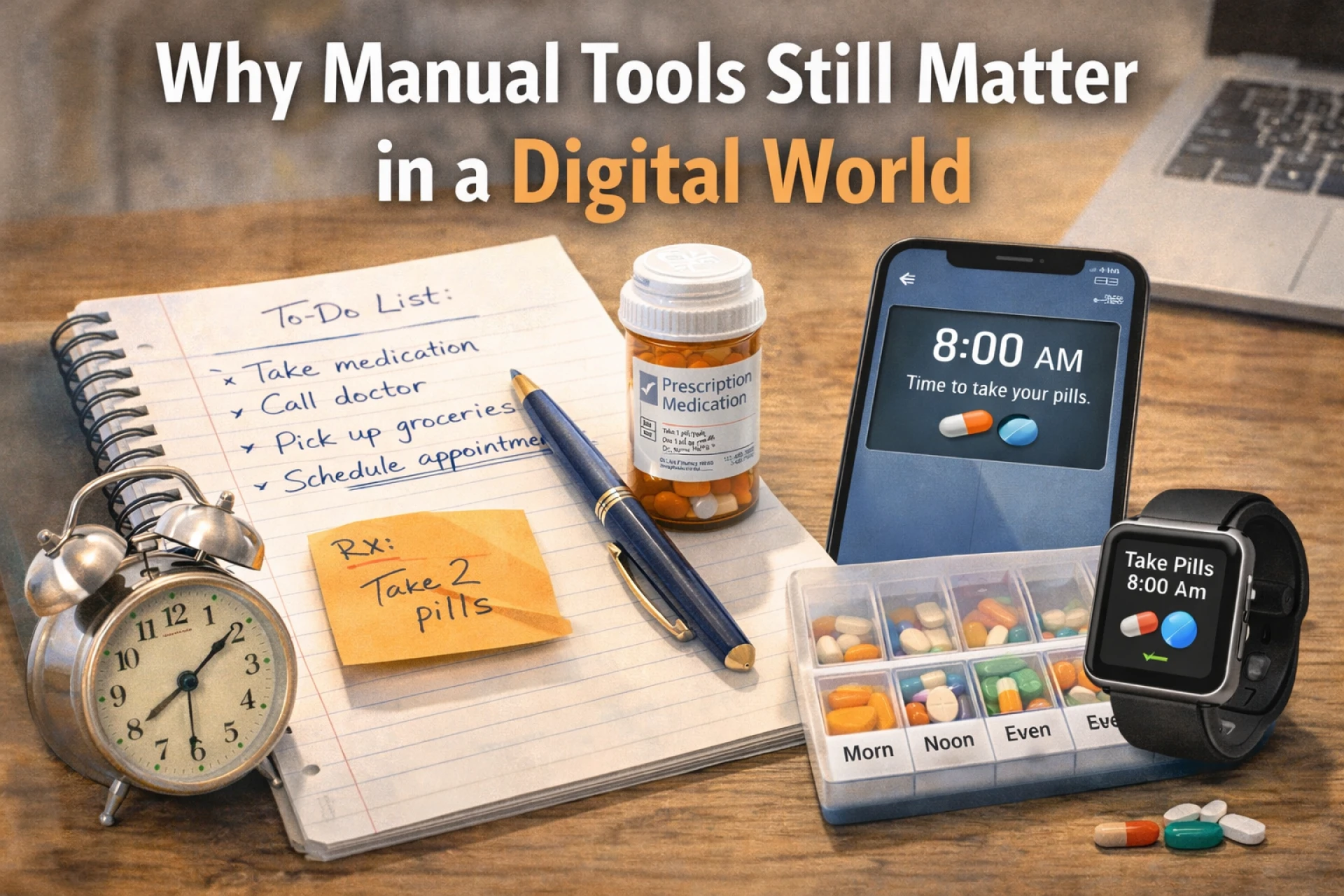
5. Keep a Written Record
Writing down each dose can help reinforce your routine. It also gives you a reference point if you are unsure later.
This method works well when combined with other tools, especially for complex medication schedules.
6. Avoid Taking Medication on Autopilot
It is easy to take medication without paying attention, especially during busy moments. Slow down and be intentional.
Take a second to confirm:
- What you are taking
- When you are taking it
This small pause can prevent mistakes.
7. Involve a Caregiver or Family Member
If you are managing multiple medications or caring for someone else, shared responsibility can reduce risk.
Caregivers can:
- Check medication routines
- Provide reminders
- Confirm doses have been taken
This added layer of oversight helps prevent errors.
Why Visual Systems Work Best
The biggest challenge with medication management is memory. People rely on recall, which can be unreliable, especially when routines are repetitive.
Visual systems solve this problem by providing immediate confirmation. Whether it is a 7 day pill organizer or a solution like Meticap, the key is visibility.
When you can see whether a dose has been taken, you eliminate doubt and reduce the risk of double dosing.
Common Mistakes to Avoid
To stay safe, be aware of these habits:
- Taking a second dose just to be safe
- Skipping tracking methods
- Mixing different medications in one place without labeling
- Ignoring moments of uncertainty
If you are unsure, it is always better to check than to guess.
Conclusion
Double dosing is a common but preventable issue. It often starts with a simple question, did I take my pills today, and can quickly lead to unnecessary risk.
By using structured routines, tools like a 7 day pill organizer or a bottle pill organizer, and reliable solutions such as Meticap, you can create a system that removes uncertainty.
The goal is clarity. When you know exactly when you took your medication, you stay safe, consistent, and in control of your health.




























Sign in to leave a comment.