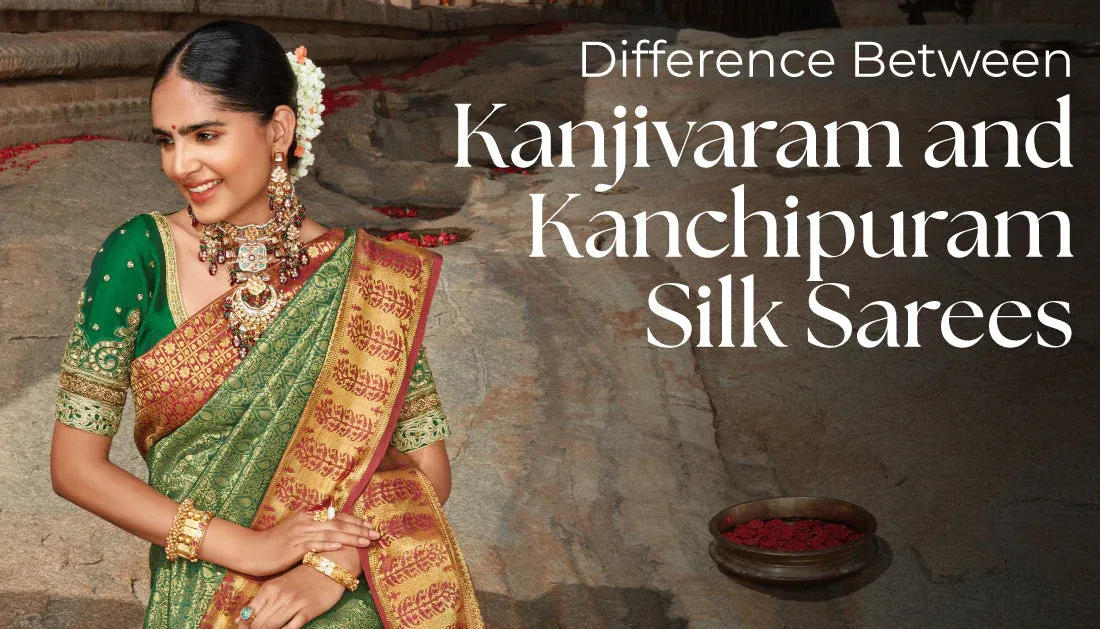

Few textiles hold as much cultural weight or timeless elegance as traditional South Indian silk sarees. For generations, these opulent garments have defined the standard of luxury for weddings, festivals, and milestone celebrations. Yet, anyone browsing the market today will quickly hit a wave of confusion regarding the actual difference between kanjivaram and kanchipuram silk sarees. The two names appear constantly across bridal boutiques, retail catalogs, and style blogs, almost always used interchangeably. This overlap leaves many modern buyers questioning if they represent distinct types of fabric, unique historical lineages, or completely separate weaving styles. This guide offers a clear, authoritative breakdown to explain the true naming origins and help you shop with absolute confidence.
Are Kanjivaram and Kanchipuram Sarees Different?
To settle the market confusion right away: are kanjivaram and kanchipuram sarees same? Yes, they are identical. There is no secret technical distinction, variation in materials, or difference in origin between the two. The divide is purely a matter of language, spelling preferences, and how local words translated into English over time.
"Kanchipuram" refers to the actual, historic temple town in Tamil Nadu where these traditional south indian silk sarees are crafted. Meanwhile, "Kanjivaram" is simply the anglicized version of that name. This phonetic shift explains why an online search for a kanjivaram vs kanchipuram saree can feel confusing. E-commerce brands use both versions to catch global audiences, but the underlying kanjivaram saree meaning remains rooted in the exact same geographic legacy. Both terms celebrate the grand bridal drapes that have anchored South Indian heritage fashion for centuries.
Why Are Kanchipuram Silk Sarees So Popular?
The global fascination with these textiles is no accident; it is the result of a centuries-old traditional weaving legacy. Originally nurtured under the watchful eyes of royal dynasties, this art form has survived because generations of artisans protected its core identity. These masterpieces are not products of rapid mass production, but rather the result of painstaking handloom silk sarees craftsmanship.
The answer to 'what is a Kanchipuram silk saree' lies not only in its craftsmanship but also in its strict legal protection. The Government of India recognized this artistry with a Geographical Indication (GI) tag. This status means a saree cannot legally claim the name unless it is woven within Kanchipuram's city lines and satisfies uncompromising purity rules. This standard transforms these garments into premium heirloom textiles. Families buy them not as temporary evening wear, but as lifelong investments meant to be passed down through generations.
Read more about Difference Between Kanjivaram and Kanchipuram Silk Sarees
👉 If you enjoy reading about silk sarees, wedding collections, and traditional craftsmanship, you can explore more similar blogs and guides on RmKV Silks.

























Sign in to leave a comment.