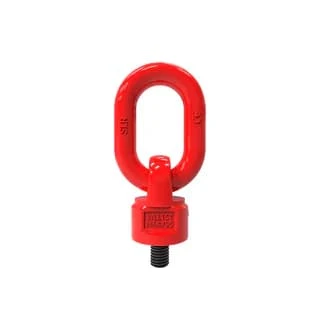

Understanding the differences between welded and threaded lifting eyes is essential for selecting the right equipment in various lifting and rigging applications. Both types serve as crucial attachment points for lifting heavy loads, but their design, installation, and performance characteristics vary significantly. Choosing the appropriate lifting eye affects safety, ease of use, and durability. This article explores the key distinctions between welded and threaded lifting eyes to help users make informed decisions for their specific needs.
What Are Lifting Eyes?
Purpose and Function
Lifting eyes are hardware components used to create secure attachment points for lifting equipment such as hooks, chains, and slings. They enable safe lifting and handling of heavy objects in construction, manufacturing, and transport. Their strength and reliability are paramount to preventing accidents and damage during lifting operations.
Common Applications
Lifting eyes are found in a wide range of industries and applications. They attach to machinery, structural components, and heavy equipment, facilitating safe and efficient movement. Understanding the differences between types of lifting eyes helps ensure compatibility with the load and lifting method.
Welded Lifting Eyes
Design and Construction
Welded lifting eyes are permanently affixed to the load or equipment through welding. This creates a strong, fixed attachment point designed to withstand heavy loads. The welding process ensures a continuous metal bond, providing high strength and stability.
Advantages of Welded Lifting Eyes
One of the main benefits of welded lifting eyes is their durability. The permanent bond reduces the risk of loosening or detachment during lifting. They also offer a clean, low-profile appearance and can be custom welded in various positions to suit specific lifting requirements. Welded lifting eyes are ideal for heavy, static loads where a permanent lifting point is needed.
Considerations and Limitations
However, welded lifting eyes require skilled welding and proper inspection to ensure safety. Incorrect welding can weaken the attachment, leading to failure. Additionally, they are less flexible since they cannot be easily removed or repositioned. For applications requiring temporary or adjustable lifting points, welded eyes may not be practical.
Threaded Lifting Eyes
Design and Construction
Threaded lifting eyes consist of a loop or ring attached to a threaded shank that screws into a pre-tapped hole in the equipment or load. This design allows for easy installation, removal, and repositioning without welding.
Advantages of Threaded Lifting Eyes
Threaded lifting eyes offer flexibility and convenience. They can be installed or removed quickly, making them suitable for temporary lifting points or applications where lifting locations change frequently. They also avoid the need for welding, reducing labor and equipment costs.
Considerations and Limitations
Despite their ease of use, threaded lifting eyes depend heavily on the quality of the threaded connection. If the threads are worn, damaged, or improperly engaged, the lifting eye may fail. They also require periodic inspection to ensure tightness and integrity. Threaded lifting eyes are generally better suited for lighter loads or adjustable lifting needs.
Strength and Safety Comparison
Load Capacity Differences
Welded lifting eyes typically provide higher load capacities due to the continuous metal bond created by welding. Threaded lifting eyes have load limits based on thread strength and engagement depth. Choosing the correct lifting eye depends on understanding these load capacities in relation to the intended use.
Inspection and Maintenance
Regular inspection is critical for both types of lifting eyes to maintain safety. Welded eyes should be checked for cracks, corrosion, or weld defects. Threaded eyes require examination of thread condition and secure fit. Proper maintenance extends the life and reliability of lifting eyes in all applications.
Installation and Usage
Installing Welded Lifting Eyes
The installation of welded lifting eyes involves precise welding techniques to ensure strength and compliance with safety standards. This process requires skilled labor and quality control inspections to verify weld integrity and load-bearing capacity.
Installing Threaded Lifting Eyes
Threaded lifting eyes are installed by screwing them into compatible tapped holes. Ensuring correct thread engagement and torque is essential to avoid loosening during use. Threaded eyes can be repositioned or replaced easily, enhancing versatility in various operations.
Cost and Practicality
Cost Implications
Welded lifting eyes generally involve higher initial costs due to welding labor and inspection requirements. However, their durability and strength may reduce replacement frequency and maintenance expenses over time. Threaded lifting eyes tend to be less costly upfront and offer savings in installation time.
Practical Considerations
The choice between welded and threaded lifting eyes also depends on practical factors such as the nature of the load, frequency of lifting, and environmental conditions. Welded eyes suit permanent fixtures, while threaded eyes excel in applications needing adaptability.
Environmental and Application Factors
Suitability in Different Environments
Welded lifting eyes perform well in harsh environments due to their solid metal bond. They resist vibration and shock better than threaded counterparts. Threaded lifting eyes may be more vulnerable to corrosion or loosening in aggressive conditions but provide flexibility for less demanding uses.
Application Specific Recommendations
Heavy industrial applications, where lifting points remain fixed, benefit from welded lifting eyes. In contrast, maintenance tasks or projects requiring multiple lifting locations favor threaded eyes. Matching the lifting eye type to the environmental and operational demands enhances safety and efficiency.
Conclusion
Choosing between welded and threaded lifting eyes requires careful consideration of strength, installation, flexibility, and cost. Welded lifting eyes offer permanent, high-strength solutions ideal for fixed lifting points, while threaded lifting eyes provide convenience and adaptability for variable applications. Regular inspection and proper installation are essential regardless of type to maintain safety. For expert guidance and quality products in lifting hardware, consider UK Lifting Store.




















Sign in to leave a comment.