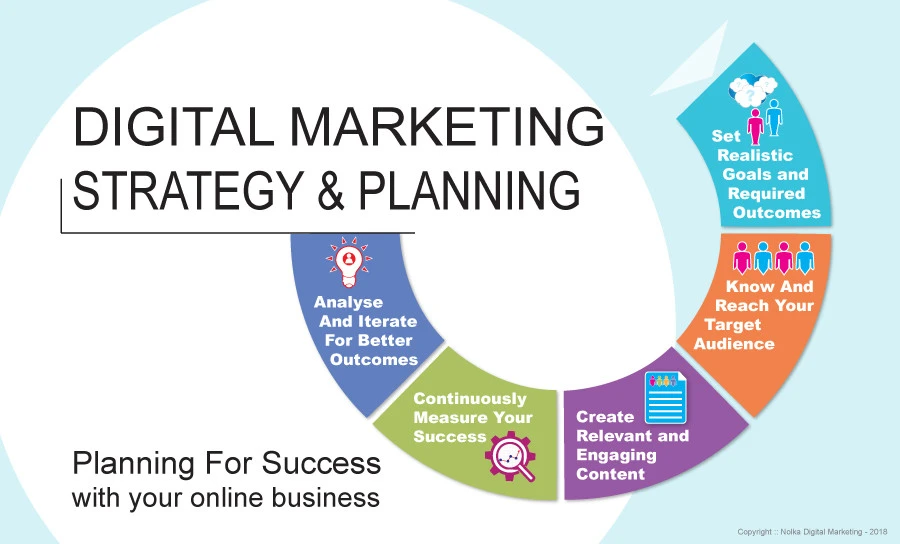

Creating a digital marketing strategy for a client\'s business involves several key steps to ensure its success. Here\'s a comprehensive guide on how to apply for a client\'s business:
1. **Understand the Business**: Start by gaining a deep understanding of the client\'s business, its goals, target audience, and industry landscape. Conduct a SWOT analysis to identify strengths, weaknesses, opportunities, and threats.
2. **Define Objectives**: Work with the client to define clear, specific, and measurable objectives for the digital marketing campaign. These could include increasing brand awareness, driving website traffic, generating leads, or boosting sales.
3. **Identify Target Audience**: Develop detailed buyer personas based on the client\'s customer demographics, behavior, and preferences. This will help tailor marketing messages and tactics to resonate with the target audience.
4. **Choose the Right Channels**: Select the most appropriate digital marketing channels based on the target audience and campaign objectives. This could include search engine optimization (SEO), pay-per-click (PPC) advertising, social media marketing, email marketing, content marketing, and more.
5. **Develop a Content Strategy**: Create a content strategy that aligns with the client\'s brand voice and resonates with the target audience. This may include blog posts, videos, infographics, case studies, and other types of content.
6. **Optimize for Search Engines**: Implement SEO best practices to improve the client\'s website\'s visibility in search engine results pages (SERPs). This includes keyword research, on-page optimization, link building, and technical SEO.
7. **Implement Paid Advertising**: Develop PPC campaigns on platforms like Google Ads, Bing Ads, or social media platforms to drive targeted traffic to the client\'s website. Monitor and optimize campaigns regularly to maximize ROI.
8. **Utilize Social Media**: Create a social media strategy to engage with the target audience on platforms like Facebook, Twitter, LinkedIn, Instagram, and others. Share valuable content, interact with followers, and run targeted ad campaigns.
9. **Measure and Analyze Results**: Use web analytics tools like Google Analytics to track the performance of the digital marketing campaigns. Measure key performance indicators (KPIs) such as traffic, conversions, engagement, and ROI.
10. **Optimize and Iterate**: Based on the performance data, make adjustments to the digital marketing strategy to improve results. Continuously test different approaches to optimize performance over time.
11. **Provide Regular Reporting**: Keep the client informed about the progress of the digital marketing campaigns through regular reporting. Highlight key metrics, achievements, and areas for improvement.
12. **Stay Updated with Trends**: Keep abreast of the latest trends and developments in digital marketing to ensure the client\'s campaigns remain relevant and effective.
By following these steps, you can create a comprehensive digital marketing strategy that drives results and helps your client achieve their business objectives.
Find more related articles on- https://linktr.ee/digitallineup





























Sign in to leave a comment.