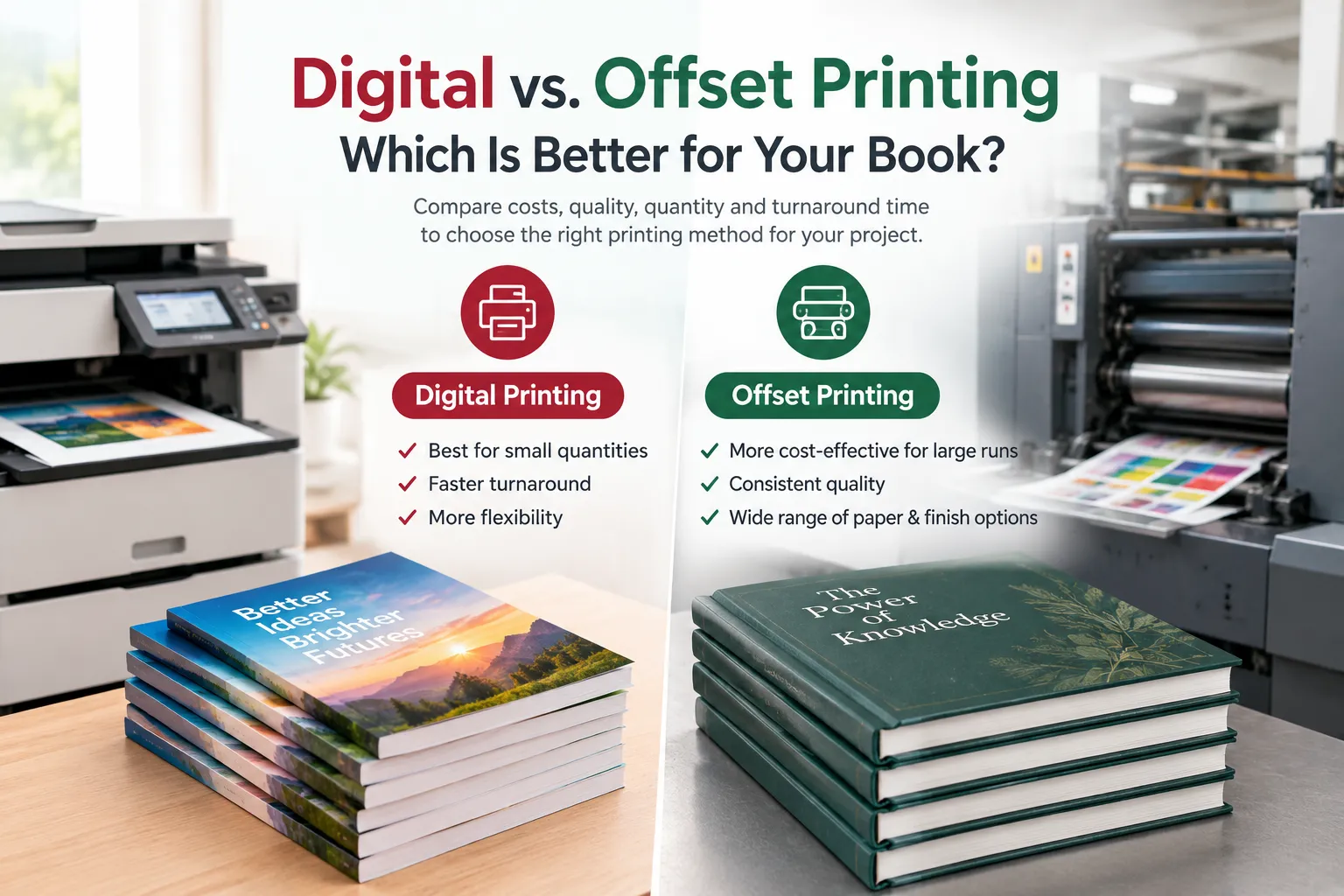

Digital vs. Offset Printing: Which Is Better for Your Book?
Choosing the right printing method can make a significant difference in the cost, quality, and production time of a book. For authors, publishers, businesses, and organizations planning a printing project, the two most common options are digital printing and offset printing.
Both methods can produce professional-looking books, but they are designed for different types of projects. Understanding their differences can help you choose the most practical option for your needs.
What Is Digital Book Printing?
Digital printing sends the book file directly to a digital printer without requiring traditional printing plates. This makes the process relatively quick and flexible.
One of the biggest advantages of digital printing is that it works well for smaller quantities. If you only need a limited number of copies, you can avoid committing to a large print run. It is also useful when you need books quickly or expect to make frequent changes to the content.
Digital printing can be a practical choice for self-published authors, short-run books, test copies, business publications, and projects where speed and flexibility are important.
What Is Offset Book Printing?
Offset printing uses printing plates to transfer ink onto paper. Although the setup process generally takes more time, offset printing can become more economical when producing larger quantities.
It is commonly used for bulk book printing because the cost per copy can decrease as the quantity increases. Offset printing also provides consistent results across large print runs and offers flexibility with paper, ink, and finishing options.
For publishers or organizations ordering hundreds or thousands of copies, offset printing can therefore be a cost-effective solution.
Digital vs. Offset: Which Should You Choose?
The right method depends mainly on your quantity, budget, deadline, and project requirements.
Digital printing is generally more suitable when you need a smaller quantity, faster turnaround, or greater flexibility. Offset printing can make more sense for larger print runs where the lower unit cost can justify the initial setup.
The type of book also matters. A simple short-run project may benefit from digital printing, while a large publishing project with consistent specifications may be better suited to offset printing.
For a detailed breakdown of digital printing vs. offset printing for books, readers can explore the key differences between both methods.
Comparing Cost, Quality, and Production
Cost is one of the most important factors when selecting a printing method. Digital printing usually has lower setup requirements, making it suitable for smaller orders. Offset printing requires more preparation but can provide a lower cost per copy when the order quantity is high.
Quality is another consideration. Both methods can deliver professional results, but the final outcome also depends on paper selection, color requirements, binding, finishing, and the quality of the original artwork and files.
Understanding these factors before placing an order can help authors and publishers avoid unnecessary expenses and select the right production method.
Consider More Than Just the Printing Method
Printing technology is only one part of the overall book production process. You should also consider page count, book size, paper type, binding, color requirements, finishing, quantity, and delivery time.
For example, choosing a standard book size and ordering an appropriate quantity may help control production costs. Similarly, selecting the right paper and binding can affect both the appearance and durability of the finished book.
Before placing an order, it is useful to compare different specifications and request a clear quotation based on your exact requirements. This guide to digital and offset book printing can also help readers understand which option is appropriate for their project.
Final Thoughts
There is no single printing method that is best for every book. Digital printing provides speed and flexibility for smaller projects, while offset printing can offer better economies of scale for larger quantities.
By considering your quantity, budget, deadline, and quality expectations, you can select the printing method that provides the best balance between cost and finished-book quality.
For anyone researching the subject further, this comparison of digital printing and offset printing for books provides additional information about the advantages, limitations, and ideal applications of each method.






















Sign in to leave a comment.