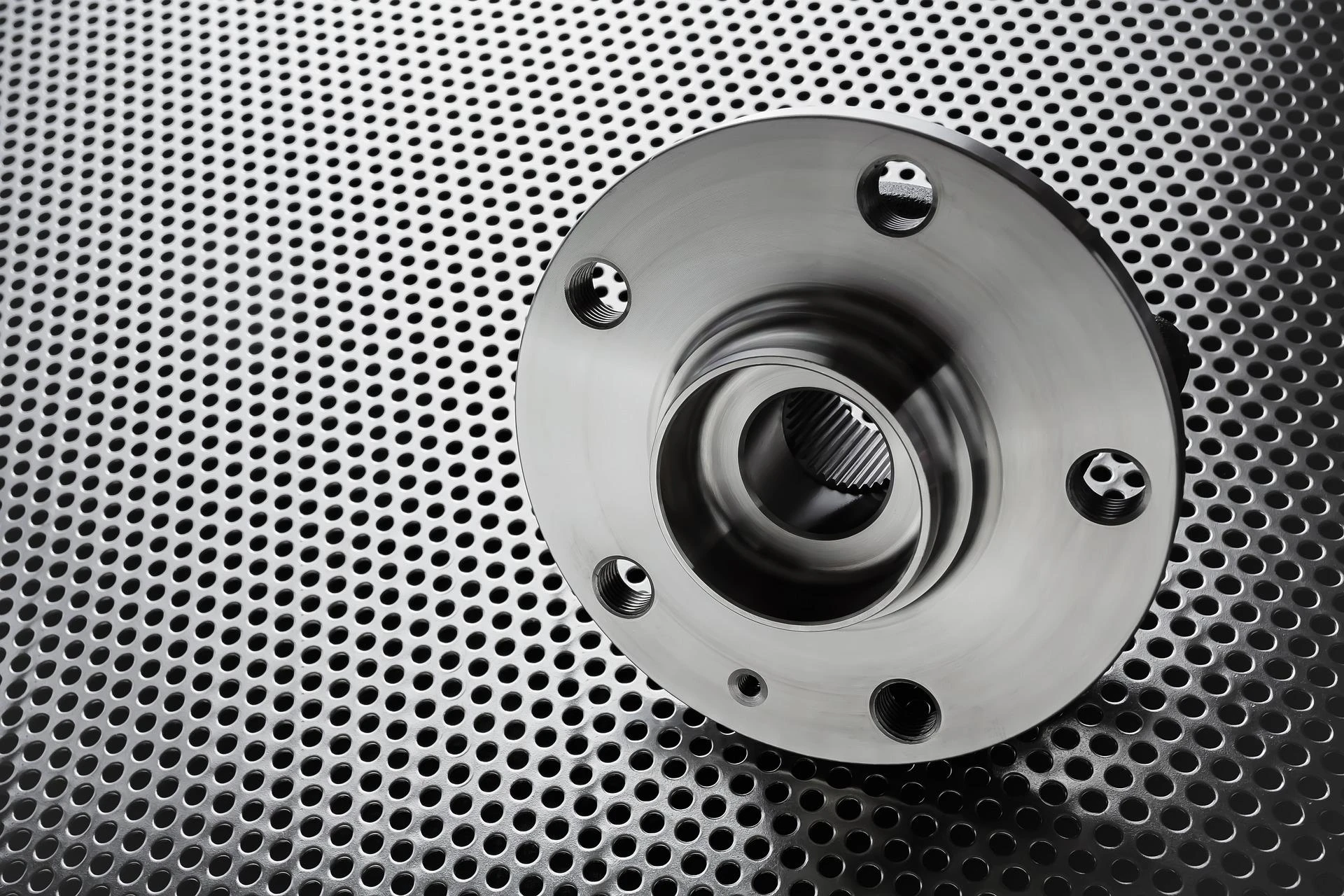

For any wheel application, bearings and bushing are quintessential. Without it, the drill of a wheel is in constant friction, which shortens its lifespan. It is essential in bearing industrial wheels as it sustains heavy loads such as metal wheels in manufacturing plants or lumber mills.
BEARING is a mechanical term that refers to the process of transferring the energy of a load between a wheel and axle. It refers to the specific device placed inside a wheel to minimize friction between the wheel and axle.
BUSHING is shaped like a sleeve or a tube that helps with a motion by sliding. It is opposite to the rolling motion of most bearings. Though, bushings are a bearing type as they support the efficiency of rotating.
From cartwheels to Ferris wheels, all wheels need bearings or bushings from a bearing manufacturing company to operate smoothly in the long run. However, the size and type of bearing or bushings require a particular application and should be carefully selected.
How Does Bearing Work?
A bearing will allow more effortless motion by reducing unnecessary friction between two surfaces. The contact of metal on metal is rough and can cause material degradation. The bearing will let the two surfaces roll over each other instead of grinding against each other. Bronze sleeve bearings use a smooth ball or roller that rolls against an inner and outer surface. The ball or roller takes the weight of the load that allows the device to rotate.
Various bearing designs control motion in different ways. The standard load types include radial, axial, combined, and moment loads.
Types of bearing
Ball bearings
Straight roller bearings
Tapered roller bearings
Limitations of bearings load and speed
Bearings are more suitable for supporting wheels with higher velocities and light load. There are three points to remember that help you check bearing limitations.
Consider the load condition and bearing type - It is important to identify the load that will be applied to the bearing. This helps to determine which bearing type you should use.
Evaluate the allowable space - The space for the bearing is limited, and the bearing manufacturers outline its constraints. Make sure that the bearing will be able to fit into the allowable space before progressing.
Check the load capacity - Each bearing with a specific load capacity. The load that the wheel and bushings will carry cannot exceed this load capacity.
How Does Bushing Work?
Bushings are also called sleeve bearings that are just one particular type of bearings. They are made to roll over rods to provide a shallow friction motion. Bushings are excellent for shock absorption and work to minimize energy usage and noise. They are widely used for heavy-duty wheels that require high load-bearing tolerances.
Bushings are self-lubricating, and proper lubrication matters. Therefore, they are ideal for low-maintenance or maintenance-free operation. Self-lubrication can be achieved through a uniform pattern of indents on the bushing surface that acts as grease reservoirs. Some bushings can operate without the use of lubricants that are especially useful in food and textile industries where dry applications are preferred.
Types of bushings
Bronze bushings
Plastic bushings
Limitation of bushings load and speed
Bushings are used with heavier loads at a slower speed. Industrial metal wheels take advantage of durable bushings that can withstand substantial load transfers and shock loading. When it comes to bushings, a frictional build-up head must be considered. The two major factors influencing heat are unit pressure (P) and surface velocity (V).
The product of surface velocity and unit pressure is pressure velocity. To determine if a bushing is suitable for any application, find the bearing manufacturer\'s pressure velocity value. The application\'s computed PV value must be lower than the manufacturer\'s PV value.
Maintenance of bearing and bushings
Proper maintenance and inspection of the bearing are critical. The periodic maintenance should include surveying operating conditions for any unusualities. You should inspect any changes in noise, temperature, the vibration. Bearings and bushing failures such as corrosion, cracking, flaking, and scoring must be treated with unusual wear immediately. You should also check the replacement or supply of lubricants regularly for optimal performance.
What to choose between bearings and bushing?
When you have to choose between bearings and bushings for wheel applications, the main consideration is speed and load capacity. You should question that the wheels will carry lighter loads at higher speeds or heavier loads at slower speeds? Another region to keep in mind is lubrication. Especially in the food and textile industry, some maintenance-free applications will require self-lubrication, where dry applications are looked after. A massive selection of bearings and bushings is available on the bearing manufacturer company with different sizes and material options that fit various wheel applications at varied prices.























Sign in to leave a comment.