
Inverter air conditioners are known for their energy efficiency and advanced compressor technology. Many homeowners believe inverter ACs can handle voltage fluctuations without extra protection. But in areas with frequent power cuts and unstable electricity supply, the question remains important: does an inverter AC need a stabilizer? The answer depends largely on your local power conditions and the voltage range your AC experiences daily.
Let’s understand when a stabilizer becomes necessary and how it protects your investment. ⚡
How Inverter AC Technology Handles Voltage Fluctuations
Unlike conventional air conditioners, inverter ACs adjust compressor speed automatically based on cooling demand. This smart technology allows them to operate within a wider voltage range compared to non-inverter models.
Most modern inverter ACs include built-in voltage protection. However, this protection works effectively only within a specific limit. When voltage drops too low or rises too high—especially during frequent power cuts—the internal circuits and compressor can still be at risk.
In regions where voltage regularly fluctuates beyond safe limits, relying only on internal protection may not be enough.
Why Frequent Power Cuts Increase Risk for Inverter ACs
Frequent power interruptions often lead to sudden voltage surges when electricity returns. These surges can damage sensitive electronic components such as:
- PCB circuits
- Compressor motors
- Sensors and control boards
Over time, repeated voltage instability reduces AC efficiency and increases maintenance costs. Installing a stabilizer adds an extra layer of protection against these issues and helps ensure smooth performance even during unstable power conditions.
When You Should Use a Stabilizer with an Inverter AC
Even though inverter ACs are advanced appliances, a stabilizer becomes highly recommended if:
- Your area experiences frequent power cuts
- Voltage drops below 170V regularly
- Sudden voltage spikes are common
- Your home is located in a semi-urban or rural area
- You want to extend the lifespan of your AC
In these situations, a stabilizer acts as a safety shield that maintains consistent voltage supply and prevents internal damage.
Choosing the Right Stabilizer Capacity for Your AC
Selecting the correct stabilizer capacity ensures maximum protection and performance. Different AC sizes require different stabilizer ratings.
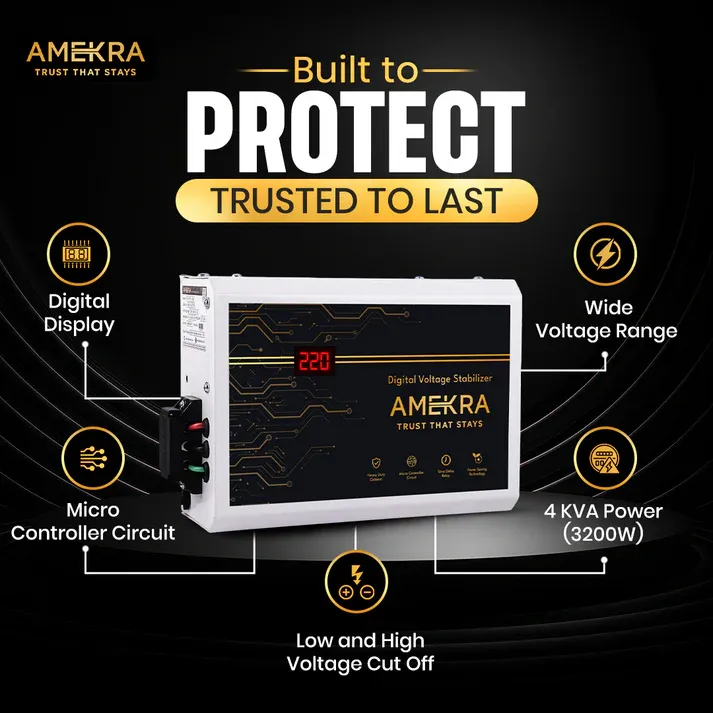
For smaller rooms and compact cooling systems, an ac stabilizer for 1 ton is ideal. It protects the compressor and maintains stable operation during voltage drops.
For medium-sized rooms and standard household usage, an ac stabilizer for 1.5 ton provides reliable voltage regulation and supports uninterrupted cooling performance.
For larger rooms or high-capacity cooling systems, an ac stabilizer for 2 ton ensures the AC receives balanced voltage even during heavy fluctuations or frequent power restoration cycles.
Choosing the correct stabilizer size prevents overload issues and improves long-term reliability.
Benefits of Using a Stabilizer with an Inverter AC
Installing a stabilizer offers several important advantages in areas with unstable electricity supply:
Improved compressor protection
Stable voltage prevents compressor overheating and failure.
Longer appliance lifespan
Consistent power supply reduces stress on internal components.
Better cooling efficiency
Proper voltage allows the inverter compressor to operate smoothly.
Reduced repair costs
Protection from voltage spikes minimizes expensive electronic damage.
Peace of mind during power cuts
Automatic voltage regulation keeps your AC safe when electricity returns suddenly.
Does Every Inverter AC Require a Stabilizer?
Not every inverter AC needs a stabilizer. If your home receives stable electricity within the recommended voltage range, the built-in protection system may be sufficient.
However, in areas where frequent power cuts are common, installing a stabilizer is a smart and preventive decision. It protects your investment and ensures uninterrupted comfort during peak summer months when voltage fluctuations are most frequent.
Final Thoughts
Inverter ACs are designed to handle moderate voltage variations, but they are not completely immune to electrical instability. If your area experiences regular power cuts or sudden voltage changes, using a stabilizer becomes essential for safe and efficient operation.
Choosing the right stabilizer—whether an ac stabilizer for 1 ton, ac stabilizer for 1.5 ton, or ac stabilizer for 2 ton—helps protect your air conditioner, improves performance, and increases its lifespan. A small investment in voltage protection today can save you from costly repairs tomorrow.


























Sign in to leave a comment.