

Many pet parents are surprised that dogs suffer from sun damage just like humans do. Ultraviolet (UV) rays can penetrate a dog’s coat, leading to painful sunburns, skin peeling, tissue damage, and an increased long-term risk of skin cancer (such as squamous cell carcinoma).
Whether you're spending the day at the beach, hiking, or relaxing in the backyard, understanding canine sun safety is essential for responsible pet care.
Can dogs get sunburned?
Yes. Dogs can get sunburned, especially in areas with thin fur, light pigmentation, or hairless skin such as the bridge of the nose, ear tips, belly, and groin. Common signs include red or pink skin, heat radiating from the body, hair loss, peeling, and signs of pain when touched. Never use human sunscreen, as ingredients like zinc oxide are toxic to dogs if ingested.
Why Do Dogs Get Sunburned?
A dog’s fur acts as a natural barrier against environmental elements, but it does not provide 100% protection against harmful UV radiation. Sunlight easily reaches exposed skin, particularly where the hair coat is sparse or where skin lacks protective dark pigment (melanin).
High-Risk Areas on Your Dog’s Body
- The Bridge of the Nose & Muzzle: Skin here is thin and frequently exposed to direct sunlight.
- Ears & Ear Tips: Especially in dogs with erect or thin ears.
- Belly & Inguinal Region (Groin): Sunlight reflects upward from concrete, sand, and water onto bare bellies during sunbathing.
- Around the Eyes & Forehead: Sensitive areas where fur is often thinner.
Which Dog Breeds Are Most Prone to Sunburn?
While any dog can develop a sunburn under intense solar exposure, certain dogs face a significantly higher risk:
| Vulnerability Category | High-Risk Breeds / Traits | Why They Are at Risk |
| Short-Haired / Single-Coated Breeds | Boxers, Dalmatians, Pit Bulls, Greyhounds, French Bulldogs | Minimal fur density allows UV rays to reach the skin directly. |
| Light-Pigmented / White Breeds | American White Shepherds, Bull Terriers, Samoyeds | Lack of protective melanin in the skin and hair follicles. |
| Hairless Breeds | Xoloitzcuintli, Chinese Crested | Complete lack of coat leaves skin fully exposed. |
| Groomed or Shaved Pets | Summer-shaved Golden Retrievers, Poodles, Pugs | Removing natural hair density exposes vulnerable under-skin. |
Veterinary Caution: Medical conditions such as autoimmune skin diseases, recent surgical incisions, or seasonal allergies with hair loss can drastically increase a dog’s susceptibility to UV damage.
Recognizing the Signs of Dog Sunburn
Sunburn symptoms in dogs range from mild discomfort to severe skin inflammation. Identifying these signs early prevents deeper dermal damage.

1. Early & Mild Signs
- Skin appears pink or unusually red (most visible on light-skinned areas).
- The skin feels noticeably hot to the touch.
- Slight tenderness when you stroke their nose or ears.
2. Moderate Signs
- Dry, cracked, or flaking skin along the bridge of the nose or ear edges.
- Localized hair loss in sun-exposed zones.
- Excessive scratching, licking, or rubbing against furniture to relieve itching.
3. Severe Signs
- Blistering, open sores, or oozing skin lesions.
- Whining, vocalizing, or flinching away when touched.
- Systemic signs such as fever, lethargy, or heat distress.
What to Do If Your Dog Gets Sunburned
If you notice signs of sun damage after outdoor activity, take immediate steps to soothe their skin:
1. Move to the Shade Immediately:
Get your dog out of direct sunlight and into a cool, air-conditioned environment.
2. Apply Cool Compresses:
Dampen a clean towel with cool (not freezing) water and gently rest it on the affected skin for 5 to 10 minutes.
3. Hydrate:
Offer fresh, cool water to help prevent heat stress and dehydration.
4. Prevent Licking:
Do not allow your dog to scratch or lick the sunburned area, which can introduce bacteria and lead to secondary skin infections.
5. Consult Your Veterinarian:
For moderate-to-severe burns, seek professional veterinary care. A vet may prescribe soothing topical treatments or antibiotics if infection is present.
CRITICAL WARNING: Never apply human sunscreen, aloe vera products containing alcohol, or human hydrocortisone creams without explicit veterinary direction. Zinc oxide and PABA (para-aminobenzoic acid) are toxic to dogs if licked and ingested.
Safe & Effective Sun Protection Solutions for Dogs
Preventing a sunburn is always easier than treating one. To keep your dog safe, avoid the sun between 10 AM and 4 PM, and always apply a pet-safe sunscreen.
Pet Sunscreen Options
When selecting sun care products for your dog, choose solutions explicitly manufactured for animal safety, non-toxic if licked, and designed for sensitive areas.
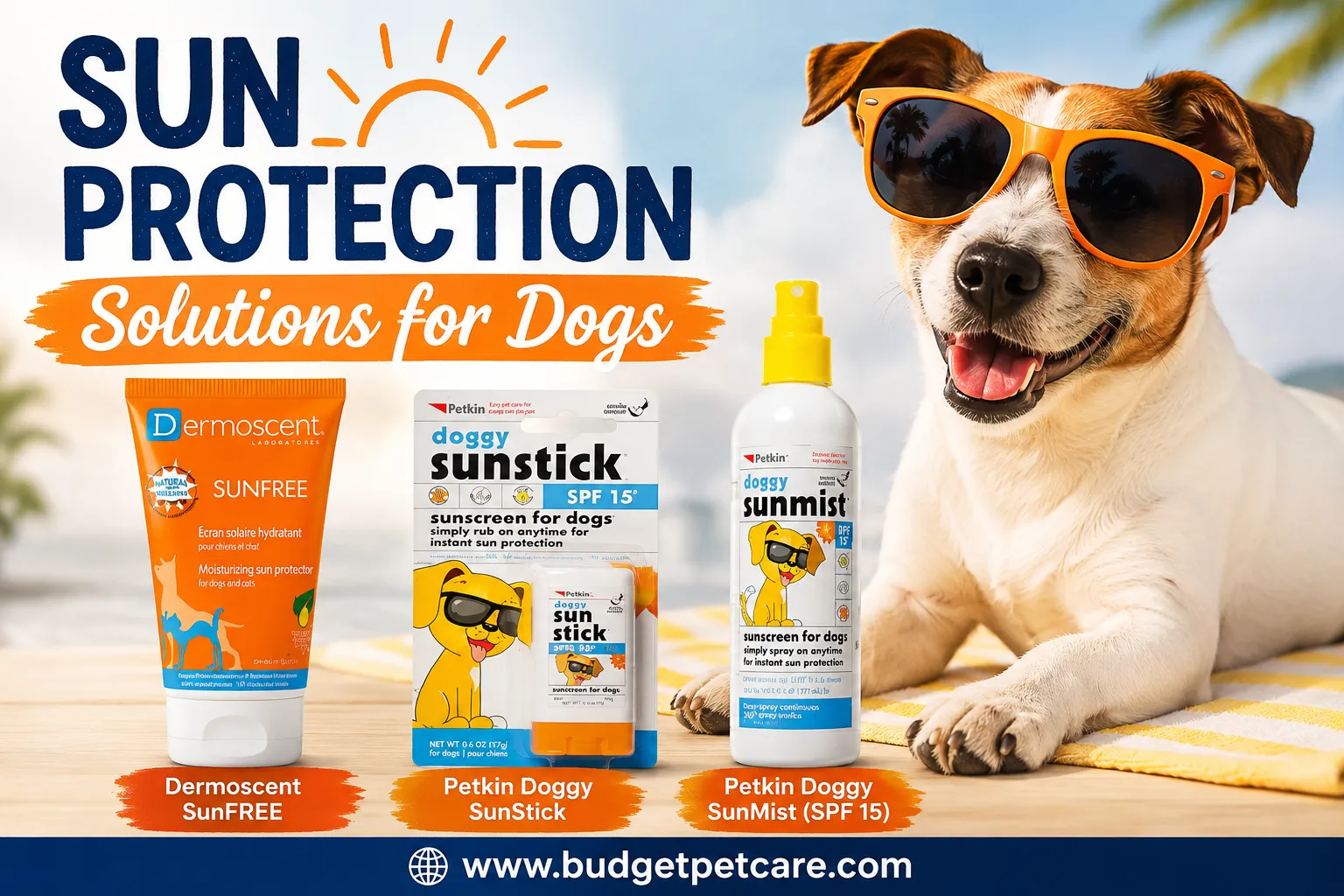
1. Hydrating & High-Protection Care: Dermoscent SunFREE
- Best Used For: Dogs (and cats) with sensitive, dry, or delicate skin requiring natural moisture alongside high-level sun protection.
- Why It Works: Formulated specifically for pets, this moisturizing cream hydrates fragile skin while shielding against UVA and UVB rays. It is water-resistant, non-greasy, and ideal for hairless zones, pink skin patches, or thin coats. Learn More about Dermoscent SunFREE
2.Targeted Protection for Sensitive Spots: Petkin Doggy SunStick (SPF 15)
- Best Used For: Precise application on vulnerable facial zones like the nose, ears, and muzzle.
- Why It Works: A stick applicator allows for easy control around sensitive areas without getting sunscreen into the eyes. Provides gentle, non-greasy SPF 15 protection. Learn More about Petkin Doggy SunStick (SPF 15)
3. Broad Body Coverage: Petkin Doggy SunMist (SPF 15)
- Best Used For: Short-haired coats, light-furred backs, and exposed bellies.
- Why It Works: A convenient mist spray that allows quick, even coverage over larger body surface areas. It features a gentle, non-greasy formula that helps screen out harmful UV rays without leaving heavy residue.
How to Apply Pet Sunscreen Safely?
1. Patch Test First:
Apply a small dab on a tiny area of skin and wait 24 hours to ensure no allergic reaction occurs.
2. Focus on Vulnerable Zones:
Target the bridge of the nose, ear tips, skin around the lips, groin, and inner thighs. Avoid direct contact with the eyes.
3. Allow Time to Absorb:
Keep your dog distracted with a treat or toy for 3 to 5 minutes after application to prevent them from immediately licking the product off.
4. Reapply as Needed:
Reapply sunscreen if your dog goes swimming, rolls in wet grass, or remains outdoors for extended periods.
In Conclusion
Summer should be a fun time for you and your furry friend, not a painful one! By taking a few simple precautions like avoiding direct sunlight between 10 AM and 4 PM, providing plenty of shade and fresh water, and applying a pet-safe sunscreen to sensitive spots like their ears, nose, and belly you can easily protect your pup's skin.
Remember to keep a close eye on light-skinned or short-furred dogs for any redness after a day outside. If you ever notice severe signs like blisters, swelling, or pain, don't hesitate to contact your vet. Here’s to a safe, happy, and sunburn-free summer!
























Sign in to leave a comment.