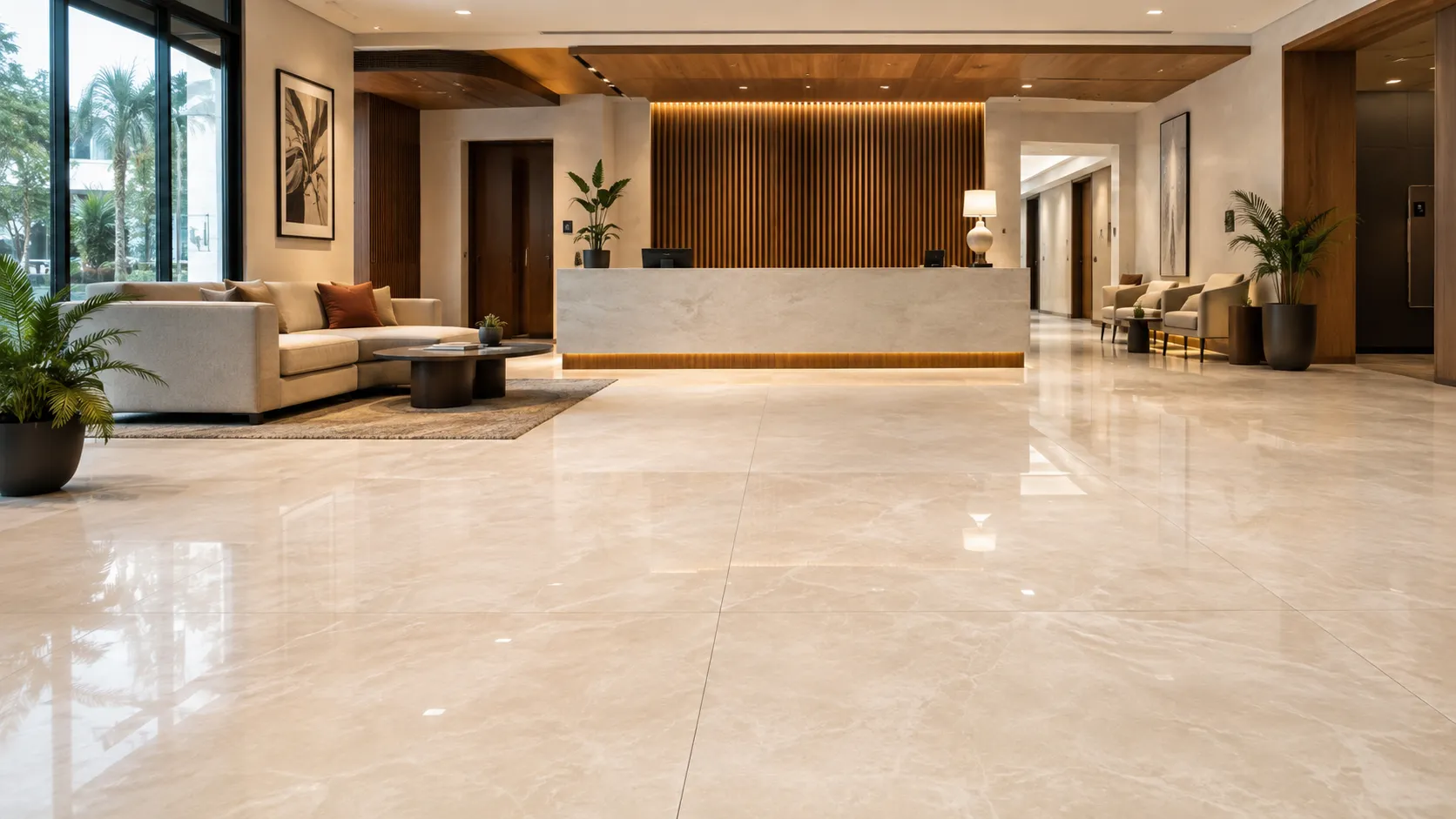

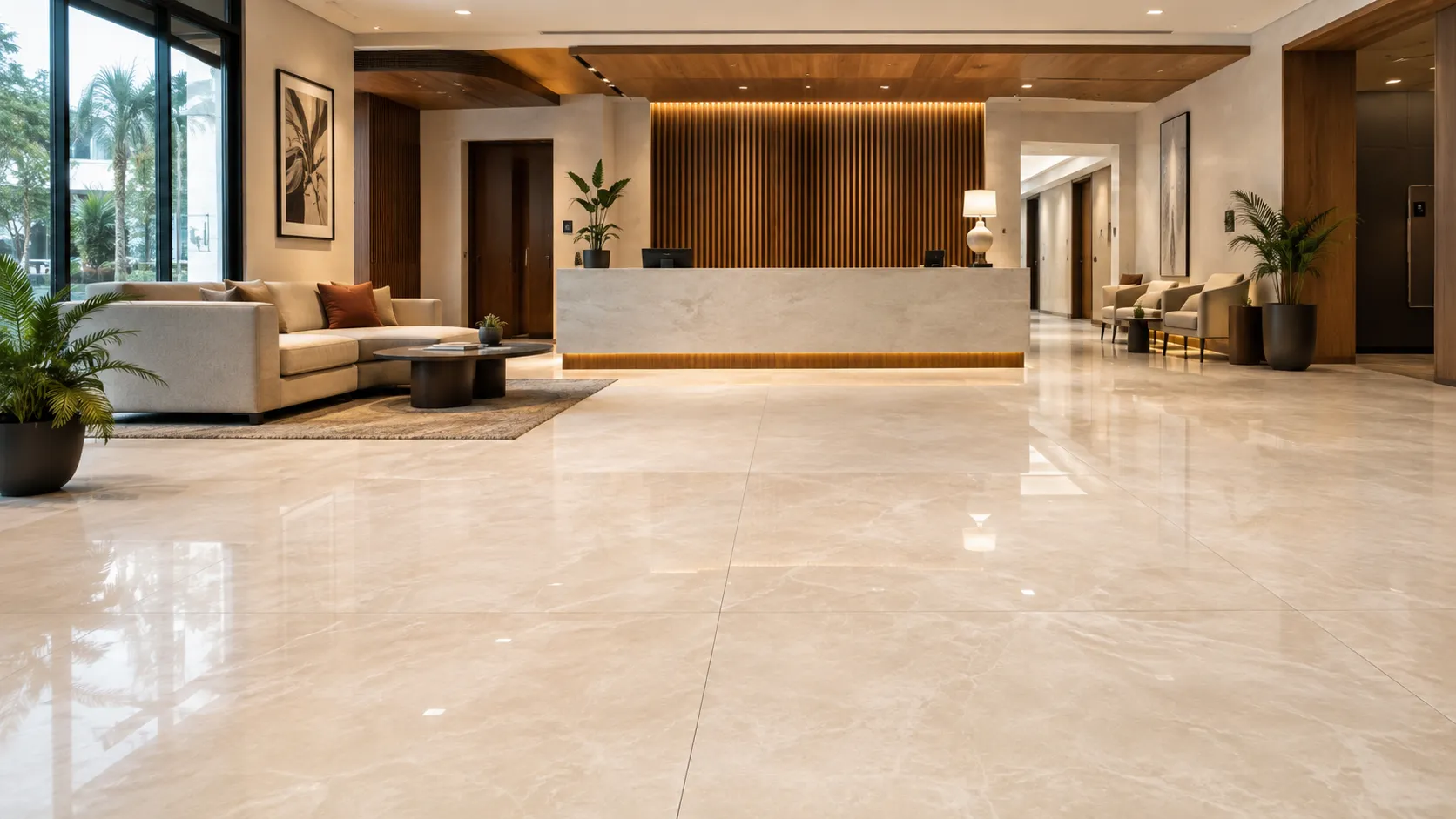
Flooring in a frequently used space must handle more than regular foot traffic. It may face furniture movement, dust, cleaning, minor impacts, and continuous wear over many years. This is why durability becomes an important consideration when selecting tiles for homes, offices, shops, hospitals, schools, and other high-use areas.
Double charge tiles are a type of vitrified tile known for their durable upper design layer and practical performance. They are commonly chosen for projects where long-term flooring strength matters more than highly detailed decorative patterns.
As an architecture consultant, I recommend evaluating double charge tiles according to the expected foot traffic, surface finish, tile size, maintenance needs, and installation conditions. Their simple designs and strong construction make them useful for many applications, but they are not automatically suitable for every area.
What Are Double Charge Tiles?
Double charge tiles are manufactured using a vitrified tile body with an additional layer of coloured pigment applied to the upper surface during production. Two layers of pigment are pressed into the tile before firing, which is why the product is commonly called a double charge tile.
The decorative layer is generally thicker than the surface print found on many glazed tiles. This allows double charge tiles to handle regular surface wear more effectively, making them a practical option for spaces with moderate to heavy foot traffic.
Their designs are usually created using mineral-based pigments rather than detailed digital printing. As a result, double charge tiles commonly feature simple marble effects, granular patterns, cloudy textures, and subtle colour combinations.
The design options may be more limited than those available in GVT or PGVT tiles. However, double charge tiles are often selected for durability, consistency, and ease of maintenance rather than highly decorative surfaces.
The design does not usually run through the complete tile body, so double charge tiles should not be confused with full-body vitrified tiles. The upper layer is thicker than a standard surface coating, but deep damage may still reveal a different body colour underneath.
Before buying, homeowners and project professionals should confirm the product category, thickness, finish, and recommended application instead of relying only on the tile’s appearance.
Where Double Charge Tiles Work Best
Double charge tiles are commonly used in living rooms, dining spaces, passages, offices, retail stores, schools, hospitals, reception areas, and other locations that receive regular movement.
In Indian homes, they can be a practical choice for living rooms and passages where family members, visitors, and furniture create repeated surface use. Their simple designs also make them easier to coordinate with different wall colours, furniture styles, and interior themes.
Commercial spaces often use double charge tiles because they offer a balance between appearance and durability. Offices, showrooms, clinics, and shops may benefit from flooring that remains presentable without requiring complicated maintenance.
Light shades such as ivory, beige, cream, and light grey can make interiors appear brighter and more spacious. Darker shades can create a formal appearance, but they may show dust, surface marks, and scratches more clearly.
Double charge tiles are usually available in polished and semi-polished finishes. These surfaces can work well in dry indoor spaces, but they require caution in areas exposed to water.
Bathrooms, balconies, utility areas, ramps, and outdoor spaces need tiles with suitable grip and weather resistance. A polished double charge tile may become slippery when wet and should not be selected for such areas without checking its application rating.
For parking areas, industrial floors, and locations exposed to heavy loads or rough movement, buyers should confirm whether the specific product is designed for that level of use. A full-body, heavy-duty, or specialised outdoor tile may be more appropriate in certain conditions.
How to Select and Install Double Charge Tiles
The first step is to consider the expected level of foot traffic. A tile used in a private bedroom will face different conditions from one installed in a busy showroom, hospital corridor, or office entrance.
Surface finish should also be selected carefully. Polished double charge tiles provide a smooth and reflective appearance, helping dry indoor areas look brighter and more formal. However, they may show dust, footprints, and water marks more easily than matte surfaces.
The tile size should suit the dimensions and layout of the room. Larger tiles reduce the number of grout joints and can make a space appear more continuous. However, they require a level base, suitable adhesive, accurate alignment, and experienced installers.
In compact or irregular rooms, oversized tiles may require several cuts around doors, columns, corners, and fixed furniture. This can increase material wastage and affect the visual balance of the floor.
Before placing an order, inspect multiple tiles together. Check the colour consistency, surface flatness, edge quality, polish, dimensions, and pattern distribution. Since double charge designs tend to be subtle, even small batch differences may become noticeable across a large floor.
The complete required quantity should be purchased from the same manufacturing batch. Additional tiles should be included for cutting, breakage, installation adjustments, and future repairs.
A dry layout can help determine the tile direction, joint alignment, and placement of cut pieces. Grout should generally be selected in a shade close to the tile colour for a cleaner and more continuous appearance.
The base must be flat, stable, and properly prepared before installation. Insufficient adhesive coverage, uneven levelling, incorrect joint spacing, or rushed installation may lead to hollow spots, cracked corners, lippage, or uneven grout lines.
Regular cleaning should be carried out using a soft mop and a suitable non-abrasive cleaner. Harsh powders, metal scrubbers, and strong acidic products may damage or dull a polished surface over time.
Conclusion
Double charge tiles are a dependable option for spaces that require durable, low-maintenance flooring with simple and consistent designs. Their relatively thick upper pattern layer makes them suitable for many residential and commercial interiors that experience regular foot traffic.
The right selection depends on the application area, surface finish, expected wear, room size, and installation quality. Buyers should compare the technical suitability of different products rather than choosing only by colour or price.
The TilesFinders marketplace helps homeowners, architects, builders, and project professionals explore double charge tiles from verified dealers, compare available sizes, finishes, designs, and suppliers, and create a practical shortlist before visiting a showroom.

























Sign in to leave a comment.