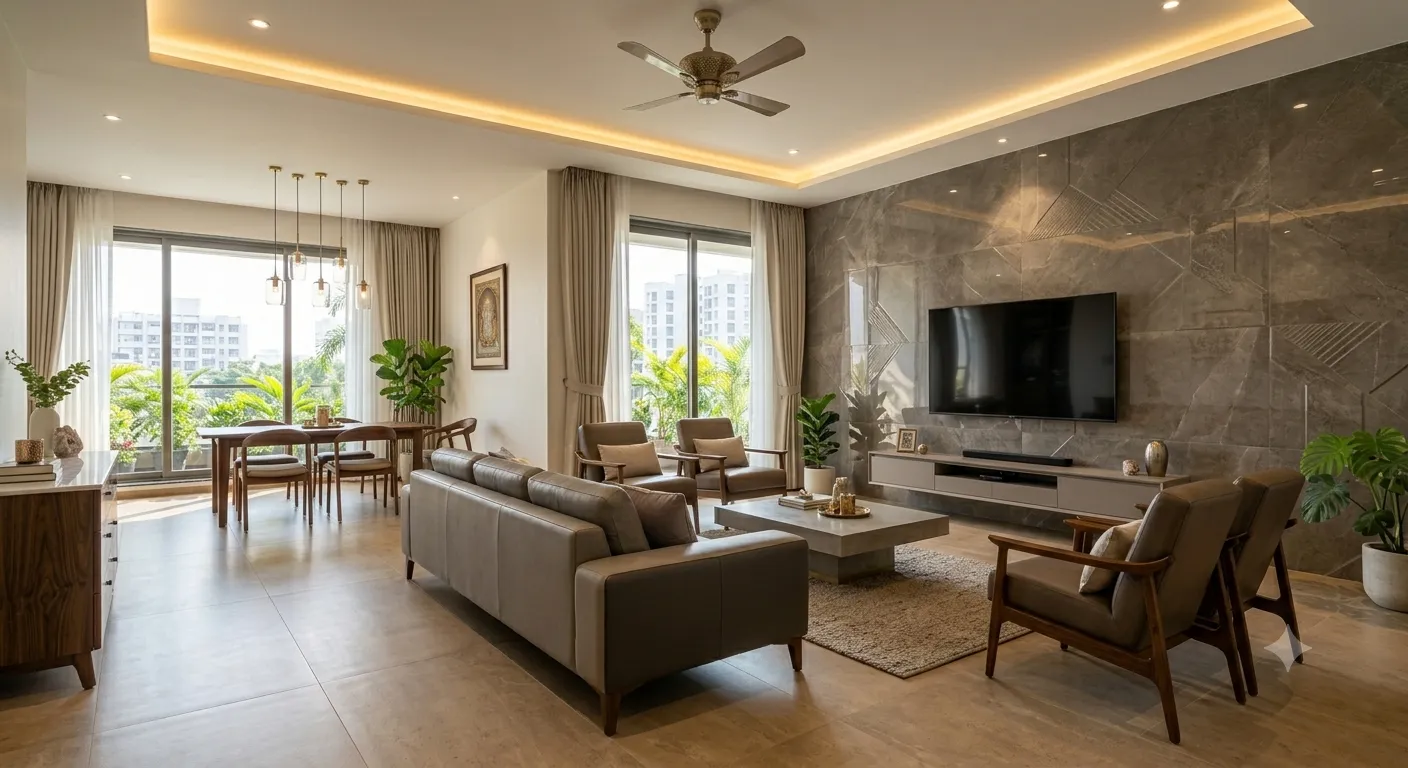

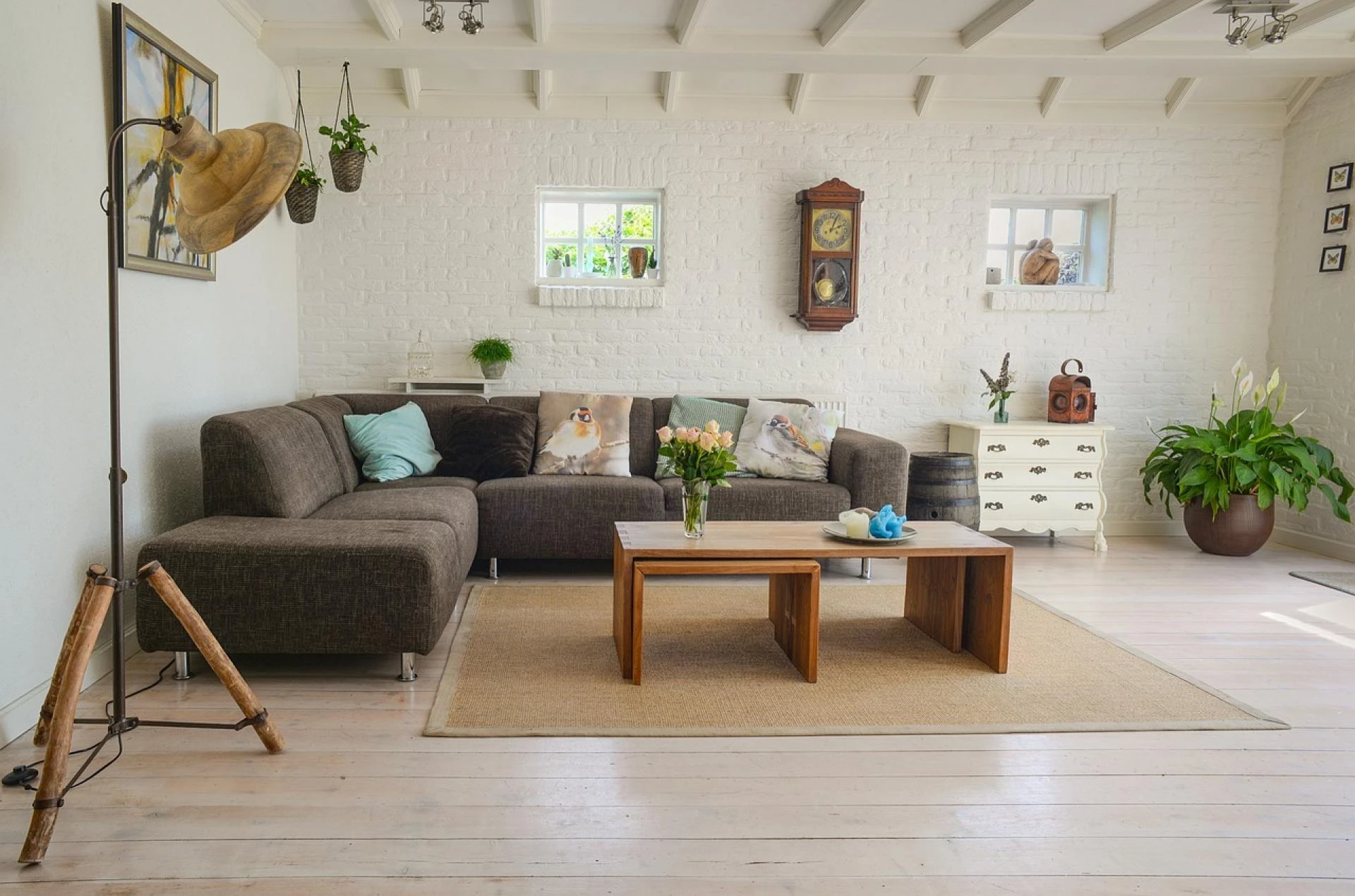
The living room tiles carries more daily load than any other room in the house. Families walk through it constantly, furniture gets shifted, children play on the floor, and guests form their first impression of your home from this space. Tiles chosen here must look good on day one and hold up for a decade without visible wear.
Floor Tiles: Strength That Shows
Living room floors need material that resists scratching from furniture legs, daily foot traffic, and occasional spills. GVT (Glazed Vitrified Tiles) and double charge vitrified tiles are the right choice. Both are compressed under high pressure during production, giving them a hard, dense body that resists scratching, staining, and fading from sunlight.
Large-format sizes like 24x24 (600x600) or 2x4 (600x1200) reduce grout lines across the floor. In an open-plan living and dining layout, this creates a continuous surface with no visual breaks, making the combined space feel larger.
Wall Tiles: Feature Walls Done Right
Living room wall tiles have moved well beyond wet-area logic. A tiled accent wall behind the TV unit or sofa back is now one of the most common design choices in Indian homes. Textured, 3D, or large-format slab tiles on a single wall add depth and material contrast without making the room feel busy.
Wall tiles do not take structural load or foot traffic, so you have full freedom on finish. Glossy and polished wall tiles reflect the light from windows and ceiling fixtures, which works well in apartments or rooms with limited natural light.
Surface Finish: Match the Function
For living room floors, choose matte or GHR (Glaze High Resistance) finish. Matte floors hide dust, footprints, and minor scuffs between cleanings, which matters in a high-traffic room. They also give safe grip for barefoot walking.
Never use satin matte on living room floors. It sits between matte and polished without the grip of matte or the reflectivity of polished, and becomes slippery in humid conditions.
For living room walls, glossy and polished finishes work well. They bounce light and resist fingerprints and smudges on commonly touched surfaces.
Tile Size and Room Proportion
Large-format tiles make rooms feel bigger by reducing the number of grout lines the eye has to process. For a standard Indian living room of 12x15 feet or larger, 600x1200 tiles on the floor read well. For compact urban flats, 600x600 with minimal grout in a matching tone keeps the floor looking clean and open.
For living rooms that connect to dining areas without a wall break, running the same tile format across both zones creates a unified look and simplifies the purchase.
Low Maintenance Is Built Into the Material
GVT tiles with 0.05% water absorption per IS 15622:2006 do not absorb spills. Tea, juice, muddy footprints, and dust sit on the surface until you mop. A wet mop with mild detergent clears the floor in one pass. Unlike carpet or laminate, tiles do not trap dust mites or allergens, which matters in Indian homes where dust levels are high year-round.
Living Room Tile Checklist
| Factor | Right Choice |
|---|---|
| Floor material | GVT or double charge vitrified |
| Floor finish | Matte or GHR only |
| Finish to avoid | Satin matte, semi-polished on floors |
| Wall finish | Glossy or polished |
| Floor size | 600x600 or 600x1200 |
| Colour palette | Neutral greys, warm beige, stone patterns |
Tilesfinders sources living room tiles directly from Morbi and Gujarat manufacturers. Browse by finish and size to find options that match your room layout and design direction.























Sign in to leave a comment.