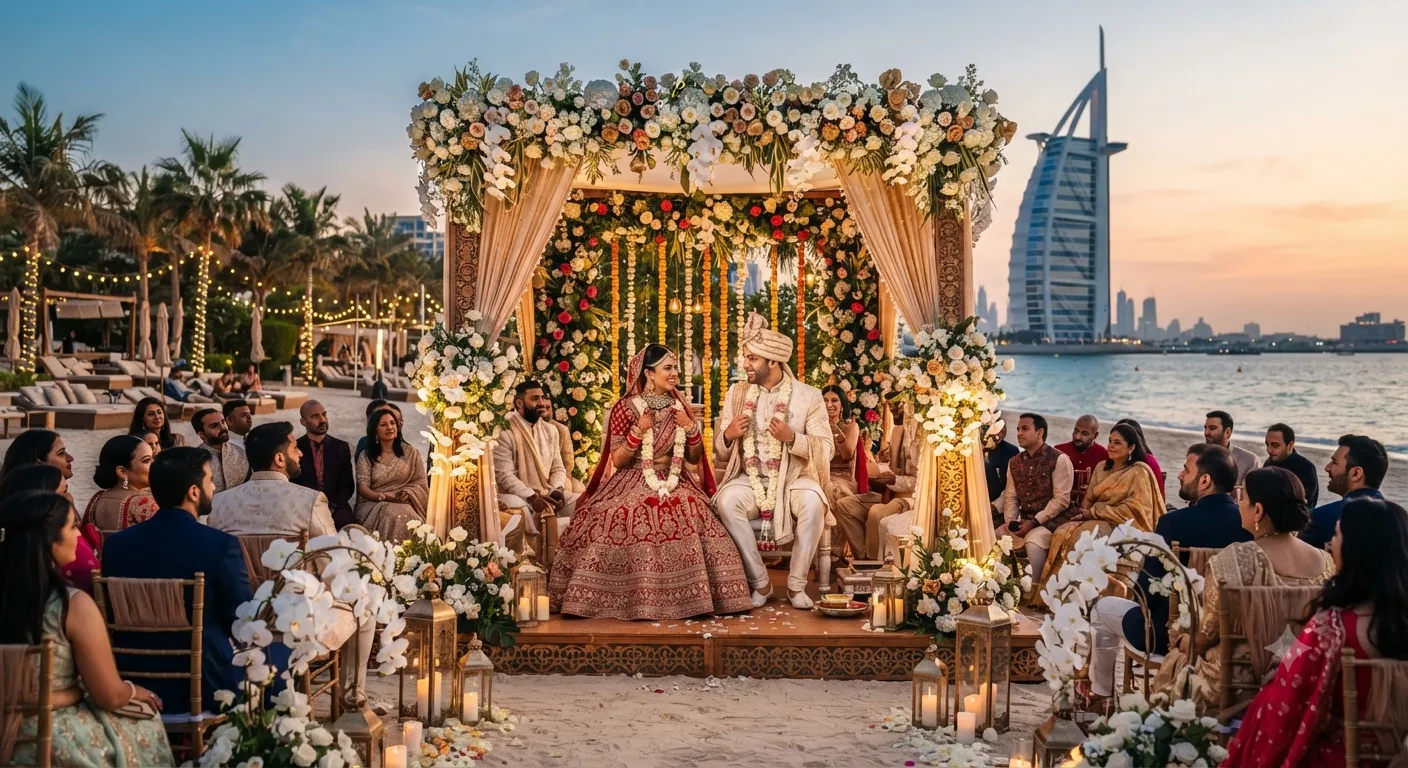

Planning a destination wedding is exciting, but when your chosen location is Dubai, there are many details to coordinate—from finding the right venue and arranging guest accommodation to planning Indian ceremonies, décor, catering, entertainment, and transportation. A well-organized Dubai destination wedding checklist can help you manage each stage without overlooking the smaller details that make a celebration memorable.
Dubai offers an impressive combination of luxury hospitality, modern infrastructure, international connectivity, beaches, desert landscapes, elegant ballrooms, and premium event venues. For Indian couples in particular, the city provides the flexibility required for multi-day celebrations involving Mehendi, Haldi, Sangeet, wedding ceremonies, receptions, and family gatherings.
However, organizing everything from another city or country requires careful coordination. This is where experienced Destination Wedding Planners in Dubai can help by bringing venues, vendors, hospitality, entertainment, logistics, and event execution under a structured plan.
This detailed checklist covers everything you should consider when planning your dream wedding in Dubai.
Why Choose Dubai for a Destination Wedding?
Dubai has developed into an attractive international wedding destination because couples do not have to choose between modern luxury and distinctive experiences. One celebration can take place beside the beach, another in an elegant ballroom, while a pre-wedding event can incorporate a desert-inspired setting.
Here are some of the reasons couples consider Dubai:
- Excellent flight connectivity with major Indian and international cities
- Luxury hotels and resorts suitable for destination weddings
- Beachfront, ballroom, rooftop, garden, and desert venue options
- Professional hospitality and event infrastructure
- Accommodation options for different guest requirements
- Diverse Indian and international food choices
- Opportunities for premium entertainment and event production
- Suitable settings for intimate as well as large celebrations
Dubai can be particularly convenient for families whose guests are travelling from different parts of India and overseas.
The key is to start planning early and choose venues and services according to your guest count, budget, wedding style, and preferred dates.
Complete Dubai Destination Wedding Checklist
Before exploring every stage in detail, here is a quick overview of what your wedding plan should cover:
- Set the overall wedding budget
- Prepare the initial guest list
- Select preferred wedding dates
- Hire a destination wedding planner
- Shortlist and finalize the venue
- Reserve guest accommodation
- Create the ceremony and event schedule
- Finalize wedding themes and décor
- Plan food and beverages
- Book entertainment
- Arrange photography and videography
- Plan airport transfers
- Arrange local guest transportation
- Prepare guest welcome hampers
- Review marriage documentation requirements
- Coordinate vendors
- Prepare contingency plans
- Conduct final event checks
Now, let's look at each part of the Dubai destination wedding planning process.
1. Start by Setting a Realistic Wedding Budget
Your budget is the foundation of almost every decision that follows. Instead of booking individual services first, establish an approximate overall budget and divide it into major categories.
Your destination wedding budget may include:
- Venue rental
- Hotel accommodation
- Catering
- Wedding décor
- Lighting and production
- Entertainment
- Photography and videography
- Makeup and styling
- Wedding planning and coordination
- Airport transfers
- Local transportation
- Guest hospitality
- Welcome hampers
- Invitations and stationery
- Special performances
- Contingency expenses
The cost of a Dubai wedding can vary considerably depending on the number of guests, venue category, season, number of functions, décor scale, accommodation choices, entertainment, and level of customization.
Rather than starting with a fixed online estimate, ask your planner to prepare a customized budget based on your actual requirements.
A contingency allocation is also useful because destination weddings often involve last-minute logistical or production changes.
2. Prepare Your Guest List Early
Before finalizing a venue, determine approximately how many people are likely to attend.
There is a significant difference between planning an intimate 80-person wedding and coordinating a celebration for 400 guests.
Your guest count affects:
- Venue capacity
- Number of hotel rooms
- Catering quantities
- Seating arrangements
- Airport transfers
- Local transportation
- Welcome hampers
- Event production
- Hospitality staffing
- Overall budget
Create separate categories for close family, relatives, friends, colleagues, and international guests. You can then estimate how many people are likely to travel to Dubai.
It is also helpful to identify elderly guests, children, and people who may require special assistance.
3. Select the Right Wedding Dates
Weather and season are particularly important when planning outdoor events in Dubai.
The cooler months are generally more comfortable for outdoor celebrations, while warmer periods may require indoor or climate-controlled venues. Seasonal demand can also affect venue availability and pricing.
When comparing dates, consider:
- Expected weather
- Indoor versus outdoor events
- Venue availability
- Hotel room availability
- Flight convenience
- Public holidays
- Guest schedules
- Vendor availability
Popular wedding dates can get booked well in advance, so flexibility with dates can provide more venue and accommodation options.
4. Hire Experienced Destination Wedding Planners in Dubai
Destination weddings involve considerably more coordination than events held close to home. You are not simply organizing a wedding ceremony—you are effectively coordinating a multi-day experience for guests travelling to another destination.
Professional Destination Wedding Planners in Dubai can serve as the central point between the couple, families, venues, hotels, decorators, entertainers, photographers, production teams, caterers, transportation providers, and other vendors.
Depending on your requirements, a planner can assist with:
- Budget planning
- Venue research and shortlisting
- Hotel coordination
- Vendor sourcing
- Décor concepts
- Entertainment planning
- Catering coordination
- Guest hospitality
- Transportation
- Event schedules
- Production requirements
- On-ground management
- Vendor coordination
- Wedding-day execution
For Indian weddings involving several functions, having one coordinated planning team can be especially valuable because each ceremony may require a different setup, menu, entertainment plan, dress code, and timeline.
5. Choose the Perfect Dubai Wedding Venue
The venue is one of the biggest decisions you will make.
Rather than selecting a property based solely on photographs, consider how well it supports your complete wedding plan.
Beachfront Venues
Ideal for sunset ceremonies, welcome evenings, relaxed celebrations, and romantic wedding settings.
Luxury Hotel Ballrooms
Ballrooms provide greater climate control and flexibility for elaborate décor, Sangeet nights, receptions, and large guest lists.
Resort Weddings
A resort can make it easier to keep accommodation and celebrations within the same property, reducing transportation requirements.
Desert-Inspired Venues
For couples looking for a distinctive Dubai experience, desert settings can work well for welcome celebrations, dinners, or themed events.
Rooftop and Outdoor Venues
These can provide impressive city views but require careful consideration of weather, sound restrictions, capacity, and backup arrangements.
Before signing a venue agreement, check:
- Maximum capacity
- Venue timings
- Indoor backup availability
- Décor restrictions
- Catering policies
- Alcohol policies where applicable
- Sound and entertainment restrictions
- Setup and dismantling timings
- Parking and transportation access
- Accommodation availability
- Vendor policies
- Applicable permits and approvals
An experienced planner can help compare these practical factors rather than evaluating a venue only on appearance.
6. Plan Every Indian Wedding Ceremony
An Indian destination wedding is rarely a one-event celebration.
Depending on your traditions and preferences, your Dubai wedding itinerary could include:
Welcome Dinner
A relaxed first evening allows guests to meet, settle into the destination, and enjoy the beginning of the celebration.
Mehendi
Create a colourful, comfortable environment with interactive elements, music, food counters, and seating areas.
Haldi
Haldi celebrations can be vibrant and playful. Keep the décor cheerful while making practical arrangements for changing areas and cleanup.
Sangeet
This often requires more extensive production planning, including a stage, LED screens, lighting, sound systems, choreography, rehearsals, and artist coordination.
Wedding Ceremony
Whether you are planning a Hindu wedding, Sikh ceremony, Muslim wedding, Christian ceremony, or another cultural celebration, religious and logistical requirements should be discussed early.
Reception
The reception can bring together formal dining, speeches, live performances, DJ entertainment, and a grand finale.
Avoid scheduling events too closely together. Guests and family members need sufficient time to rest, change, eat, and prepare.
7. Decide the Wedding Theme and Décor
Décor transforms a venue into a celebration that feels personal to the couple.
Instead of repeating one design across every function, create a visual identity for the overall wedding while giving each ceremony its own atmosphere.
Your décor planning may cover:
- Entrance installations
- Floral arrangements
- Mandap design
- Stage design
- Table décor
- Centrepieces
- Lounge areas
- Lighting
- Signage
- Photo opportunities
- Dance floors
- Personalized monograms
- Welcome signage
- Ceremony pathways
For example, your Mehendi could have a bright contemporary theme, while the wedding ceremony uses sophisticated florals and the reception follows a modern luxury aesthetic.
A good design plan should also consider guest movement, seating comfort, photography angles, stage visibility, and venue restrictions—not simply visual appeal.
8. Plan Catering and the Wedding Menu
Food is often one of the most remembered parts of an Indian wedding.
Dubai's multicultural hospitality environment makes it possible to create menus that combine Indian favourites with international cuisines.
Depending on the venue and catering policies, you may consider:
- North Indian dishes
- South Indian cuisine
- Gujarati food
- Rajasthani cuisine
- Punjabi favourites
- Chaat stations
- Live counters
- Asian cuisine
- Middle Eastern dishes
- Continental selections
- Vegetarian and vegan options
- Desserts
- Children's menus
Also identify allergies and dietary requirements before finalizing your menus.
Try to avoid serving essentially the same food at every function. A destination wedding becomes more enjoyable when each celebration offers a slightly different dining experience.
Where available, schedule menu tastings before final approval.
9. Arrange Entertainment for Every Function
Entertainment should match the mood of each celebration rather than simply filling the schedule.
Options may include:
- DJs
- Live bands
- Singers
- Traditional performers
- Dancers
- Percussionists
- Anchors and emcees
- Interactive performers
- Celebrity artists
- Family performances
Entertainment planning should start early when a particular performer is important to your celebration.
Technical production is equally important. Sound systems, microphones, LED displays, lighting, stage dimensions, rehearsals, and artist requirements should all be coordinated with the venue and production team.
10. Book Photography and Videography
Your photographs and films will remain long after the celebrations end, so choose professionals whose style matches your expectations.
Your coverage may include:
- Pre-wedding photography
- Couple portraits
- Candid photography
- Traditional photography
- Family portraits
- Cinematic wedding films
- Short-form social media content
- Ceremony coverage
- Reception coverage
If you are considering drone photography or filming in particular locations, check applicable venue permissions and local regulations in advance.
Share your wedding itinerary with the photography team so they can plan equipment, shooting schedules, locations, and team requirements.
11. Reserve Guest Accommodation
Hospitality is central to a successful destination wedding.
Ideally, reserve rooms early, particularly if your wedding falls during a busy travel or event period.
Consider:
- Number of rooms required
- Single/double occupancy
- Family rooms
- Suites for close family
- Early check-in requirements
- Late check-out requirements
- Breakfast arrangements
- Accessibility
- Proximity to event venues
Keeping most guests at one property can simplify transportation and communication.
Create a hospitality desk or designated support team at the hotel to help with room allocation, schedules, transport information, and general guest queries.
12. Organize Airport Transfers and Local Transportation
Guests should not arrive in Dubai and wonder how they are getting to the hotel.
Collect flight details in advance and prepare a transportation schedule.
Depending on guest numbers, you may require:
- Private cars
- Luxury vehicles
- Vans
- Coaches
- Dedicated family vehicles
You should also arrange transportation between the hotel and event venues when celebrations are being held at different locations.
Share departure times clearly through itinerary cards, guest messaging groups, or hospitality representatives.
13. Make Guest Hospitality Personal
A destination wedding is also a travel experience for your guests.
Small hospitality details can make a significant difference.
Consider providing a welcome hamper containing items such as:
- Personalized welcome note
- Wedding itinerary
- Useful destination information
- Snacks
- Hydration essentials
- Small personalized gifts
A guest helpdesk can also manage questions about transportation, event timings, room arrangements, and local requirements.
Experienced Destination Wedding Planners in Dubai generally integrate hospitality planning with the event schedule so that guest movement and wedding operations remain synchronized.
14. Understand Legal and Documentation Requirements
This is one area where couples should avoid relying solely on blogs or general wedding information.
Marriage procedures in Dubai and the wider UAE can vary depending on factors such as:
- Nationality
- Residency status
- Religion
- Type of marriage
- Documents available
- Location of the ceremony
- Current UAE regulations
If you want your legal marriage to take place in the UAE, verify the latest requirements directly with the relevant UAE government authorities or appropriately qualified legal/professional advisers.
Some couples may choose to complete legal registration in their home country and organize the ceremonial wedding in Dubai. The appropriate route depends on individual circumstances.
Start checking documentation early rather than leaving it until the final weeks.
15. Create a Destination Wedding Planning Timeline
9–12 Months Before
Focus on:
- Budget
- Guest count
- Dates
- Wedding planner
- Destination research
- Venue selection
- Initial hotel arrangements
6–9 Months Before
Finalize:
- Major vendors
- Décor direction
- Photographer
- Entertainment
- Preliminary menus
- Wedding invitations
3–6 Months Before
Work on:
- Guest travel
- Ceremony schedules
- Décor details
- Entertainment requirements
- Hospitality
- Transportation
- Outfits and styling
1–3 Months Before
Confirm:
- Guest attendance
- Rooming list
- Flight details
- Menu
- Seating arrangements
- Vendor schedules
- Production plans
- Function timelines
Final Month
Review every major detail with your planning team.
Conduct final vendor calls, verify guest movements, confirm hotel arrangements, check required documentation, and prepare emergency contacts.
16. Have a Backup Plan
Even a carefully organized destination wedding needs contingency planning.
Outdoor celebrations, in particular, should have alternative arrangements where possible.
Discuss:
- Indoor backup venue
- Weather alternatives
- Production backups
- Emergency vendor contacts
- Transportation contingencies
- Medical assistance
- Additional décor supplies
- Power and technical backup
- Guest communication procedure
A contingency plan should be created before the wedding rather than after something changes.
Common Mistakes to Avoid When Planning a Dubai Destination Wedding
Booking a Venue Before Confirming the Guest Count
A beautiful venue is not useful if it cannot comfortably accommodate your guests.
Underestimating Transportation
Moving hundreds of guests between hotels and venues requires detailed scheduling.
Overloading the Wedding Itinerary
Destination weddings should feel celebratory rather than exhausting. Allow guests enough downtime between functions.
Ignoring Weather Conditions
Outdoor events should always consider seasonal conditions and backup options.
Leaving Vendor Decisions Too Late
Popular vendors, venues, artists, and photographers may have limited availability during busy periods.
Not Checking Venue Restrictions
Confirm décor, sound, entertainment, catering, setup, and other policies before finalizing creative concepts.
Managing Everything Yourself
Trying to coordinate multiple vendors remotely can become complicated. Working with professional planners can provide clearer responsibilities and centralized coordination.
Why Choose V3 Events & Weddings for Your Dubai Destination Wedding?
Planning a destination wedding involves much more than creating attractive décor. It requires a team capable of bringing creative ideas, guest hospitality, vendor coordination, entertainment, production, transportation, and detailed timelines together.
V3 Events & Weddings works with couples and families to plan personalized wedding experiences based on their celebration style, guest requirements, budget, traditions, and preferred destination.
For a Dubai destination wedding, the planning approach can include venue coordination, décor concepts, catering coordination, entertainment, guest hospitality, logistics, transportation, production, vendor management, and on-ground event execution.
From an intimate family celebration to a multi-day Indian wedding, every function requires its own planning while remaining connected to the overall wedding experience.
When evaluating Destination Wedding Planners in Dubai, couples should look beyond décor portfolios. Ask about destination experience, planning processes, vendor coordination, hospitality management, contingency planning, and how the team manages multiple events simultaneously.
The objective is simple: the couple and their families should be able to spend more time experiencing the celebration while an organized team manages the operational details behind it.
Frequently Asked Questions About Dubai Destination Weddings
1. How much does a destination wedding in Dubai cost?
There is no single standard price for a Dubai destination wedding. Costs depend on guest count, hotel category, venue, number of functions, accommodation, catering, décor, entertainment, production, photography, transportation, and customization. Create a requirement-based budget rather than relying on a generic package price.
2. How far in advance should we plan a destination wedding in Dubai?
For a large or multi-day destination wedding, beginning approximately 9–12 months ahead can provide more flexibility with venues, hotels, entertainment, and vendors. Smaller celebrations may be organized within shorter timelines, depending on availability and complexity.
3. What is the best time for a destination wedding in Dubai?
Couples planning outdoor celebrations generally prefer periods with more comfortable weather. Your ideal dates should also account for hotel availability, travel periods, venue demand, and the type of events planned. Indoor venues offer greater flexibility during warmer periods.
4. Can we organize a traditional Indian wedding in Dubai?
Yes, Dubai hosts many multicultural celebrations, and Indian wedding functions such as Mehendi, Haldi, Sangeet, wedding ceremonies, and receptions can be incorporated into a destination itinerary. Venue policies and any ceremony-specific requirements should be confirmed during planning.
5. How many days are ideal for an Indian destination wedding?
Many Indian destination weddings are planned over two to three days, although the ideal duration depends on the number of ceremonies. A three-day itinerary can provide enough space for welcome events, pre-wedding functions, the main ceremony, and reception without making the schedule excessively rushed.
6. What services do Destination Wedding Planners in Dubai provide?
Services can vary by planner but may include venue selection, budgeting, décor, vendor management, entertainment, hospitality, accommodation coordination, catering coordination, transportation, production, scheduling, and on-ground event management. Always confirm exactly what is included before signing an agreement.
7. Can wedding planners manage airport transfers for guests?
Yes, guest logistics can be incorporated into destination wedding planning. This may include collecting flight details, arranging airport pickups, organizing hotel transfers, scheduling buses or cars between venues, and coordinating departure transportation.
8. Can we have Indian food at a Dubai destination wedding?
Indian cuisine is widely available in Dubai, but catering arrangements depend on the selected venue and its policies. Discuss regional cuisines, vegetarian requirements, dietary preferences, live stations, and outside-catering rules before finalizing the venue and menu.
9. What documents are required to get married in Dubai?
Requirements depend on nationality, residency status, religion, ceremony type, and current UAE rules. Couples intending to legally marry in Dubai should consult relevant UAE government authorities or qualified professionals for the latest requirements applicable to their circumstances.
10. Should we hire a destination wedding planner before booking the venue?
Hiring a planner early can be helpful because the team can compare venues based on your budget, guest count, accommodation requirements, ceremony plans, and logistical needs. This can prevent couples from selecting a venue that looks attractive but creates operational difficulties later.
Final Thoughts
A destination wedding in Dubai can combine Indian traditions, international hospitality, impressive venues, creative décor, entertainment, and memorable travel experiences. But creating that experience requires careful planning behind the scenes.
Start with your budget and guest list, then move systematically through dates, venues, accommodation, décor, catering, entertainment, photography, transportation, documentation, hospitality, and contingency planning. Most importantly, give yourself enough time to make informed decisions instead of rushing major bookings.
Working with experienced Destination Wedding Planners in Dubai can make it easier to coordinate multiple functions, vendors, and hundreds of small logistical details from one structured plan.
With thoughtful planning and professional coordination, V3 Events & Weddings can help transform your Dubai destination wedding vision into a well-organized celebration where every function feels distinct, personal, and connected to your story.




























Sign in to leave a comment.