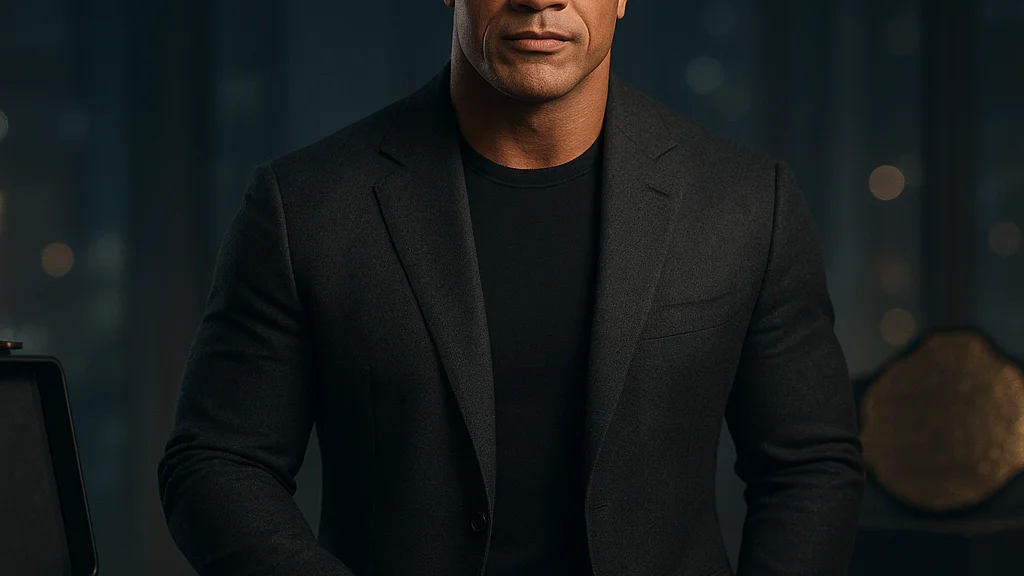

There is a particular kind of celebrity wealth that feels loud, like fireworks over a stadium, and then there is Dwayne Johnson’s fortune, which actually feels more like a freight train at night, heavy, deliberate, impossible to miss once it starts moving. His public image has always been oversized, wrestler’s charisma, movie-star grin, gym videos before dawn, but the money story beneath that image is less about spectacle than disciplined accumulation. Estimates still vary by outlet, because Johnson is tied to private companies and brand equity that do not publish every line in plain daylight. Yet a broad market consensus has formed around one point: Dwayne “The Rock” Johnson sits in the uppermost tier of celebrity earners, with recent reporting from Hindustan Times citing an $800 million net worth figure, while Yahoo Finance has emphasized the billionaire potential attached to his tequila business.
That range matters, because Johnson’s wealth is not a simple salary story. It is a portfolio story. Film paychecks, producer fees, backend participation, his Seven Bucks Productions slate, endorsement deals, equity linked to Teremana Tequila, the long tail of WWE fame, and a brand architecture built around reliability, masculinity, and mass appeal, all of it feeds the total. If you compare his arc with other athletes-turned-moguls, the pattern starts to look familiar. WriteUpCafe’s piece on Magic Johnson’s wealth machine shows how celebrity capital becomes enterprise value once ownership enters the room. Johnson followed a similar instinct, only with more cameras, more protein powder mythology, more Hollywood leverage.
So the real question is not whether The Rock is rich. That is settled. The sharper question is how much of his fortune is liquid cash, how much is tied to private-company valuations, and which parts of the empire are sturdy enough to keep compounding through 2026 and beyond. That is where the story gets interesting, and actually, more textured than the usual headline number.
From wrestling paydays to Hollywood leverage
Johnson’s financial rise began in an industry famous for visibility and not always for durable wealth. In WWE, he became one of the defining stars of the late 1990s and early 2000s, crossing from wrestling ring to mainstream pop culture with rare ease. Wrestling gave him three assets more valuable than any single paycheck: a global audience, a trademark persona, and proof that he could sell tickets by force of personality alone. For many wrestlers, that kind of fame burns hot and fast. For Johnson, it became seed capital.
By the early 2000s he had moved into film, first through projects that leaned on his physical presence, then through increasingly expensive studio vehicles. The old story of his acting career often gets told as if it were inevitable, but his transition actually required a brand reset. He had to become more than a novelty casting choice. He had to become bankable. That happened gradually through action films, family-friendly projects, ensemble franchises, and eventually leading roles where his name itself functioned like a genre. Studios were not just hiring a performer. They were buying a promise of broad international audience recognition.
As Johnson’s box-office reliability grew, so did his bargaining power. Reports over the years have repeatedly placed him among Hollywood’s highest-paid actors, and while annual earnings fluctuate depending on release schedules and production timing, the underlying mechanism is clear. Big stars do not only collect upfront fees. They negotiate producing credits, bonuses, and in some cases slices of downstream upside. Johnson’s Seven Bucks Productions, co-founded with Dany Garcia, turned that leverage into infrastructure. Instead of merely starring in projects, he increasingly helped package and produce them.
That shift, from talent to owner-operator, is where net worth accelerates. Salaries can make someone wealthy. Ownership can make them enduringly wealthy. His path resembles the broader celebrity-business playbook now common across sports and entertainment, but Johnson entered it with one unusual advantage: he had already spent years mastering a live arena economy, where crowd reaction functions like instant market research.
Johnson’s fortune was not built on one blockbuster. It was built on stacking audiences, then turning those audiences into negotiating power.
Even his public persona helped. He has long sold discipline as lifestyle theater, the gym at dawn, the motivational cadence, the sense that every success is earned in sweat. That image made him useful not just to studios, but to brands and investors searching for trust at scale.
The core number: what Dwayne Johnson is probably worth in 2026
Pinning down celebrity net worth is always part accounting, part weather forecast. Public records show some things. Private valuations obscure others. In Johnson’s case, the most widely circulated 2025 and 2026 reporting has clustered around the high hundreds of millions. The Hindustan Times report referenced an $800 million figure. Meanwhile, Yahoo Finance highlighted why some analysts and commentators believe he could eventually cross into billionaire territory, largely because of Teremana Tequila’s reported valuation trajectory.
A careful reading of those numbers suggests this: Johnson’s current net worth is best understood as a range, not a fixed point engraved in marble. A reasonable discussion puts him somewhere around the upper hundreds of millions, with the exact total depending on how one values his private holdings and whether one applies discounts for illiquidity. If Teremana were sold or marked at a generous strategic valuation, his paper wealth could jump sharply. If markets cooled or consumer trends shifted, that same paper wealth could contract. Celebrity fortunes tied to private alcohol brands are especially sensitive to deal timing and investor appetite.
Here are the main components that likely support the current estimate:
- Film and television earnings: leading-man salaries, producing fees, and possible backend participation from major projects.
- Seven Bucks Productions: enterprise value tied to development, production, and packaging power.
- Teremana Tequila: likely the single most important source of upside, especially if valuation expectations hold.
- Endorsements and partnerships: long-running commercial relationships and branded campaigns.
- WWE-related value: less central than before, but still important to his enduring commercial identity.
- Real estate and other investments: harder to quantify publicly, but almost certainly part of the portfolio.
There is also a useful distinction between income and net worth. Johnson has had years when he was among the highest-paid entertainers on earth, but annual income alone does not explain the size of his fortune. Net worth reflects retained earnings, equity appreciation, debt, taxes, and ownership stakes that may not turn into cash for years. That is why a headline salary can mislead. The larger engine is asset ownership.
And actually, Johnson’s wealth story is now less about what he earns per movie than about what his name can value across multiple businesses at once.
Teremana, Seven Bucks, and the machinery behind the brand
If one asset has changed the conversation around Johnson’s fortune, it is Teremana Tequila. Celebrity alcohol brands are now a familiar chapter in modern wealth creation, but not all of them travel the same road. Some are vanity labels. Some are licensing deals with glossy campaigns and thin economics. Teremana has been treated by market watchers as something more substantial, because scale and valuation chatter have remained persistent. Yahoo Finance pointed to a valuation of around $3.5 billion in discussing Johnson’s billionaire potential, though as with any private-company estimate, outside observers should treat that number as indicative rather than definitive.
What matters is not only the headline valuation, but the ownership structure. Johnson’s personal stake has not been fully disclosed in public detail, which means no responsible analyst can simply multiply a rumored percentage by a rumored company value and call it settled fact. Yet the strategic logic is obvious. If he owns a meaningful slice of a fast-growing spirits brand, and if that brand eventually secures a major liquidity event, then his net worth could leap in a way film salaries alone rarely produce.
Seven Bucks Productions matters for a different reason. It is the quiet architecture behind his public visibility. The company has been involved in film, television, nonfiction, and branded content, giving Johnson influence over development rather than mere participation. This is where celebrity becomes infrastructure. A production company can monetize relationships, package projects, reduce dependence on outside gatekeepers, and create recurring value from intellectual property. It is a less glamorous line item than a blockbuster opening weekend, but often a more important one.
His business model can be summarized in three layers:
- Attention: decades of audience familiarity from WWE, film, and social media.
- Conversion: turning that attention into ticket sales, streams, endorsements, and product demand.
- Ownership: holding equity in the companies that capture the value created by that demand.
This is why Johnson belongs in the same conversation as athlete-investors and entertainment moguls who learned to own the pipe, not just the water flowing through it. If readers want another example of how public fame can be converted into enterprise holdings, the WriteUpCafe article on Magic Johnson’s business empire offers a useful parallel, though the sectors are very different.
The modern celebrity fortune is usually built where contracts end and equity begins. Johnson appears to understand that instinctively.
There is a cultural irony here, too. The man once introduced to arenas with pyrotechnics now makes some of his most meaningful money through cap tables, distribution, and brand positioning, the quieter music behind the curtain.
How his wealth compares with other celebrity fortunes
Context sharpens numbers. Eight hundred million dollars, if that estimate is close, places Johnson in rare air, but not at the absolute summit of entertainment wealth. Jerry Seinfeld’s billionaire status, referenced in the Hindustan Times piece, comes from a very different machine, one built on ownership and syndication economics tied to a single television phenomenon. George Clooney’s tequila windfall became a benchmark for celebrity-liquor exits. LeBron James, Magic Johnson, and other athlete-business figures reached towering valuations through diversified holdings, strategic equity, and long-horizon investing.
Johnson’s profile sits somewhere between actor, athlete, and consumer-brand founder. That hybrid identity is unusual, and it changes how his wealth should be read. A traditional actor may depend heavily on project-by-project compensation. A retired athlete may lean on endorsements and investments. Johnson does both, while also carrying founder-style upside through Teremana and producer-style leverage through Seven Bucks. In that sense, his fortune is more diversified than many movie stars, but perhaps still more personality-dependent than the wealth of executives whose companies can operate without them.
One useful comparison is not to another actor, but to a category: celebrity founders who turn personal trust into product sales. That strategy works best when the public image feels coherent. Johnson’s does. Tequila can be marketed through conviviality, masculinity, celebration, ritual, and lifestyle aspiration, all themes that fit his public persona. Athletic wear, fitness content, and aspirational messaging also fit naturally. The less friction there is between the celebrity and the product, the easier it becomes to sell at scale.
According to Indiatimes, projections about Johnson’s fortune by 2030 have become increasingly bullish, reflecting the idea that his current wealth may still be mid-journey rather than endpoint. Koimoi, in its comparison of Johnson and Lauren Hashian, also reinforces the broad disparity between his scale of earnings and the typical celebrity household profile, though such pieces should be read as light comparative commentary rather than audited financial analysis.
There is another layer to comparison, one almost poetic. Johnson’s wealth is not old money, not inherited capital resting in quiet rooms. It is performance money, converted into ownership money. It still carries the heat of the stage lights.
What changed recently, and why 2026 matters
The reason 2026 matters is not because Johnson suddenly became wealthy this year. It matters because the composition of his fortune has tilted further toward business valuation and strategic optionality. The market is watching whether celebrity brands can keep commanding premium multiples after years of enthusiasm around founder-led consumer products. At the same time, Hollywood economics remain under pressure from shifting streaming models, tighter studio budgets, and a more cautious theatrical environment. For Johnson, that means the old formula of simply starring in expensive films is less central than it once was.
His WWE re-engagement in recent years also refreshed an essential part of his public mythology. That matters financially even when it does not show up as a giant standalone paycheck. Wrestling reconnects him with core fans, renews intergenerational relevance, and reinforces the “Rock” identity that powers his broader commercial value. Brand memory is an asset. Johnson has been unusually skilled at keeping his memory vivid.
Meanwhile, consumer-brand investors continue to ask a hard question of every celebrity-backed alcohol company: can it sustain demand once novelty fades? Teremana’s long-term importance to Johnson’s net worth depends on that answer. If the brand continues to hold shelf space, distribution strength, and customer loyalty, then the upside case remains alive. If not, valuation narratives can cool quickly. This is why 2026 feels like a hinge year, less about headlines and more about proof of durability.
There are also reputational dynamics. Johnson’s public brand has weathered periods of criticism, as all large celebrity brands do, but his core marketability remains strong because he still represents effort, accessibility, and scale. Advertisers and business partners tend to prize predictability. He offers that. Even when individual films underperform or media chatter turns skeptical, the larger commercial machine has kept moving.
For readers interested in how public identity can drift into cultural symbolism, then become monetizable shorthand, there is a strange but fitting side path through music history. WriteUpCafe’s look at when hard rock emerged is unrelated in subject, yet it captures how a style can harden into a marketable signal. Johnson’s “The Rock” persona functions similarly, a stage name transformed into durable commercial code.
Risks, blind spots, and what to watch next
No celebrity fortune is immune to gravity. Johnson’s wealth, impressive as it is, rests on assets with different risk profiles. Film income can be cyclical. Production slates can stumble. Consumer brands can lose heat. Private-company valuations can prove optimistic. And because so much of his financial mystique is tied to estimated, not fully disclosed, holdings, the public often mistakes possibility for certainty.
The biggest variable remains Teremana. If there is an eventual sale, merger, or large financing event at a strong valuation, Johnson’s net worth could be repriced upward almost overnight. That is the bullish case. The cautious case is simpler: until a liquidity event happens, paper wealth remains paper wealth. It can be real, but it is still contingent. Markets have a way of turning bright stories softer around the edges.
There are at least four things worth watching over the next few years:
- Any major Teremana transaction: this would be the clearest catalyst for a net worth jump.
- Seven Bucks production output: recurring hits would deepen enterprise value beyond Johnson’s on-screen presence.
- Brand partnerships and new ventures: especially those that include equity rather than flat endorsement fees.
- How he manages overexposure: ubiquity can build a brand, but too much ubiquity can flatten it.
Actually, overexposure is an underrated financial risk for celebrity founders. A brand needs familiarity, but also freshness. Johnson has often walked that line well, partly because he knows how to shift registers, blockbuster star in one moment, sentimental family man in another, wrestling icon the next. The audience keeps seeing movement, not stagnation.
For now, the most defensible conclusion is this: Dwayne Johnson’s net worth in 2026 is best understood as being in the neighborhood of $800 million, with meaningful upside if Teremana’s valuation story becomes a realized transaction rather than a speculative one. He is already one of the richest entertainers in the world. The billionaire question is no longer fantasy. It is a timing question, and a structure question, and maybe a patience question.
His career, when viewed from a distance, resembles a train ride through different weather, wrestling heat, Hollywood glare, boardroom cool, the windows changing but the movement steady. He did not simply cash fame. He kept converting it, again and again, into assets that might outlast the applause. That is the real fortune, and the reason his wealth story still feels unfinished.




























Sign in to leave a comment.