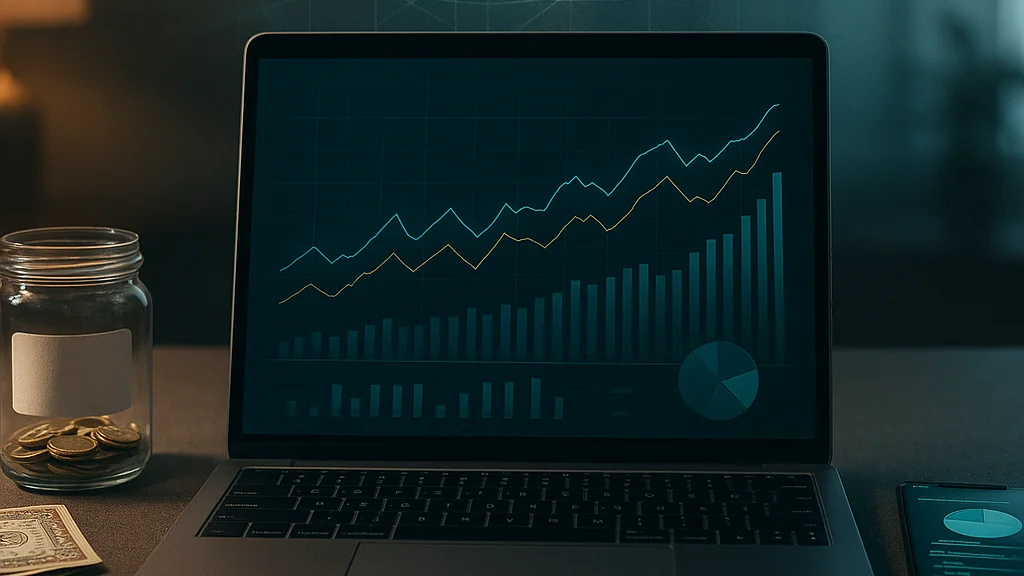

What if the best budgeting tip of the next decade is to stop treating your money like a monthly spreadsheet?
That sounds dramatic, I know. But look around. Rent moves faster than salaries in many cities. Subscription charges multiply quietly. Food prices swing. Side-hustle income arrives in bursts, not neat pay cycles. And one viral TikTok about a “money hack” can send thousands of people into the same budgeting app by Friday night! The old script assumed stable wages, predictable bills, and a household ledger updated once a week. That script is cracking.
The future of budgeting tips is not about writing down every coffee purchase and shaming yourself into discipline. It is about building a system that can survive volatility. That means cash-flow awareness over guilt, automation over memory, and flexible categories over rigid templates. According to the Consumer Financial Protection Bureau, budgeting works best when it helps people align spending with obligations and goals, not when it becomes punishment. That distinction matters because millions of workers now juggle freelance income, creator revenue, part-time shifts, and platform-based payments that do not land on the same date each month.
Even mainstream personal finance coverage has started moving in that direction. Yahoo Finance’s “Grad budgeting 101: Tips to track spending” emphasizes tracking and awareness rather than perfection, while Nasdaq’s critique of common budgeting advice questions one-size-fits-all rules that often collapse under real life.
So yes, the future of budgeting tips looks different. Less scolding. More systems. Fewer recycled slogans. More adaptation. If you want a practical baseline, WriteUpCafe’s beginner budgeting guide and expert budgeting tips are useful starting points. But the bigger story is this: budgeting is becoming dynamic, behavioral, and deeply tied to how people actually earn and spend in 2026.
The next great budgeting tip is not “cut more.” It is “design a money system that still works when life gets messy.”
How budgeting advice got stuck in the past
For years, budgeting advice was built around a stable-paycheck household. You got paid every two weeks or once a month. Housing costs were high but somewhat forecastable. Utility bills moved, though not wildly. Your budget categories were fixed: rent, groceries, transport, savings, entertainment. The logic was tidy because the economy looked tidier from the kitchen table.
Then the ground shifted. The rise of app-based work, creator income, online resale, digital freelancing, and hybrid employment changed how cash enters a household. Inflation shocks after 2021 forced families to revisit categories they thought were under control. Insurance premiums climbed. Food inflation altered weekly spending behavior. Buy now, pay later products normalized installment spending for ordinary purchases. Suddenly, the old “set it and forget it” budget felt like using a paper map in a city where the streets move.
Traditional advice also leaned too hard on moral language. People were told that budget failure reflected weak discipline when, in many cases, the real issue was structural: high fixed costs, unstable income, debt servicing, or poor visibility into recurring charges. MSN’s budgeting explainer, “How to Create a Budget: 4 Simple Steps + Best Budgeting Methods”, still covers the fundamentals well, but the strongest modern reading of that advice is to treat methods as frameworks, not commandments.
That is why some older budgeting tips are fading:
- Track every cent manually forever.
- Use the same category percentages regardless of income volatility.
- Assume monthly budgeting is enough for everyone.
- Treat side-hustle earnings as bonus money instead of core cash flow.
- Focus on small “luxury” cuts while ignoring major fixed expenses.
The future is less about abandoning discipline and more about updating the operating system. If your income changes weekly, a monthly budget alone is too slow. If your biggest problem is housing, cutting takeaway coffee is noise. If your subscriptions renew on random dates, memory is not a strategy. Budgeting advice had to evolve because reality did first.
Bad budgeting tips fail not because people are lazy, but because the advice assumes a world that no longer exists.
The new core principle: budget around cash flow, not calendar myths
Here is the shift that matters most: future-proof budgeting starts with cash flow timing. Not just how much you earn, but when money arrives, when bills hit, and how much buffer sits between those points. This sounds obvious. It is not. A huge amount of budgeting content still centers the month as the natural unit of financial life. For many workers, especially freelancers, contractors, tipped workers, and side hustlers, the month is an administrative fiction.
A stronger system uses multiple layers. First, identify fixed obligations that must be paid no matter what. Second, map income by reliability: guaranteed, likely, variable. Third, create a buffer target measured in weeks of expenses, not abstract “savings.” Fourth, automate what can be automated and review what cannot. This is where modern budgeting gets sharper than old-school envelope advice.
The most useful future-facing budgeting tips will likely revolve around these practices:
- Weekly money check-ins instead of relying only on month-end reviews.
- Bill-date alignment so major obligations hit soon after reliable income arrives.
- Buffer-first saving before aggressive investing or optional debt acceleration.
- Separate accounts for taxes, irregular expenses, and side-hustle revenue.
- Spending caps by category bands rather than rigid single numbers.
Notice what is missing: shame. The point is not to create a perfect chart. The point is to reduce the number of times your account balance surprises you. According to Nasdaq, several common budgeting tips fail precisely because they are too simplistic for modern households. That criticism lands! If your earnings are inconsistent, the smartest move may be to budget from your lowest reliable monthly income and sweep excess into reserves when better months arrive.
There is also a psychological angle. People stick to budgets when the system feels achievable. A budget that breaks three days after payday teaches helplessness. A budget that adapts to timing teaches control. That is why the future belongs to flexible budgeting models, not hardline templates copied from a finance influencer’s carousel post.
For readers trying to bridge old and new methods, WriteUpCafe’s essential budgeting tips offers a solid framework, especially when paired with a calendar-based review of bill timing and subscription renewals.
What 2026 changed: AI tools, embedded finance, and subscription creep
Budgeting in 2026 is no longer just a notebook, a spreadsheet, or even a banking app. It is an ecosystem. Banks, fintech apps, payroll platforms, and even commerce platforms increasingly offer spending insights, alerts, and categorization. Some tools now flag duplicate subscriptions, identify recurring merchants, estimate upcoming bills, or nudge users when spending exceeds prior patterns. This is where the future of budgeting tips gets practical FAST.
Artificial intelligence is part of that shift, though people should stay skeptical about hype. The useful role of AI in budgeting is not magic stock-picking or robotic life coaching. It is pattern recognition: spotting bill spikes, categorizing transactions, forecasting low-balance risk, and highlighting habits a person may miss. If a tool tells you that your food delivery spending rose 28% over three months, that is actionable. If it simply says “spend less on fun,” that is wallpaper.
Another major 2026 development is embedded finance. More consumers interact with financial tools inside platforms they already use: e-commerce checkouts, payroll apps, creator dashboards, and marketplace seller accounts. That convenience can help, but it also fragments visibility. You can now have money moving through five or six channels before it reaches your main account. Budgeting advice that ignores this is outdated on arrival.
Then there is subscription creep, the silent assassin of modern budgets. Streaming, cloud storage, software tools, wellness apps, gaming memberships, grocery delivery upgrades, premium social features, AI assistants, and membership bundles can create a recurring-expense layer that feels small individually and heavy in aggregate. Daily Express, in its TSB Bank summer spending piece, stresses planning for seasonal expenses and discretionary drift. The same logic applies year-round: recurring spending deserves more scrutiny than occasional treats because it compounds quietly.
In 2026, the strongest budgeting systems account for:
- AI-generated spending summaries that still require human review.
- Multiple income streams arriving through different platforms.
- Recurring digital subscriptions hidden across cards and wallets.
- Seasonal price spikes in travel, utilities, and food.
- Short-term financing options that disguise future obligations.
The old tip was “write a budget.” The new one is “build a dashboard for your real financial life.” Big difference!
The most important budgeting tips of the future will target fixed costs first
Here is where a lot of budgeting advice still loses the plot. People are encouraged to optimize tiny discretionary purchases while the giant categories sit untouched. That makes for catchy social media content, but it is weak strategy. In most households, the biggest levers remain housing, transport, insurance, debt payments, childcare, and taxes. If the future of budgeting tips means anything, it means shifting attention toward the categories that can actually change financial trajectory.
Consider the math. Cutting four small weekly purchases might save a useful amount over a year, yes. But renegotiating insurance, refinancing expensive debt where appropriate, changing commuting patterns, downsizing one recurring service bundle, or reducing a major fixed monthly bill can dwarf those savings. The challenge is that fixed-cost changes are harder and less glamorous. They require calls, comparisons, moving parts, maybe even uncomfortable decisions. Still, that is where serious budgeting wins happen.
Smart future-oriented budgeting advice will likely emphasize a hierarchy of action:
- Protect income stability where possible.
- Reduce expensive fixed obligations before chasing micro-savings.
- Build a cash buffer for irregular costs.
- Automate essentials and savings transfers.
- Use discretionary cuts as fine-tuning, not the main engine.
This is especially relevant for side hustlers. Many people treat extra income as a patch for overspending, when it should often be used to reshape the budget itself. If a side hustle consistently generates revenue, part of that money can be directed toward debt reduction, emergency reserves, tax obligations, or future business costs. That creates resilience instead of dependency.
And yes, this applies to project spending too. If you are budgeting for a home upgrade, a move, or a large purchase, category discipline matters less than total-cost realism. WriteUpCafe’s home renovation budgeting guide is a useful reminder that underestimating irregular big-ticket costs can wreck an otherwise solid financial plan.
The future budget is not anti-coffee. It is anti-blind spot.
Behavior will matter more than formulas, and that changes everything
People love formulas because formulas feel objective. The 50/30/20 rule. Zero-based budgeting. Cash stuffing. No-spend challenges. These methods can help, but none of them is universally superior. The future of budgeting tips will focus more on behavior design than on allegiance to one framework. Why? Because a budget succeeds when a person can repeat it under stress, not when it looks elegant in a screenshot.
Behavioral finance has made this clear for years. Friction matters. Defaults matter. Visibility matters. If saving requires six manual steps, many people will not do it consistently. If spending alerts arrive too late, they do not change behavior. If categories are too complicated, users abandon the system. The best budgeting advice of the future will be brutally practical: reduce decision fatigue, make essentials automatic, and create small moments of accountability before money leaves your account.
That could mean using separate accounts for bills and discretionary spending. It could mean setting a 24-hour pause on nonessential purchases over a certain amount. It could mean weekly “money dates” with a partner instead of monthly arguments after the damage is done. It could also mean assigning side-hustle income a job before it arrives, so extra cash does not evaporate into random spending.
Useful behavior-based budgeting tools often include:
- Friction: removing saved cards from shopping apps.
- Automation: scheduled transfers right after payday.
- Visibility: one dashboard for all recurring bills.
- Rules: personal thresholds for impulse buys.
- Rewards: planned guilt-free spending after hitting targets.
Yahoo Finance’s budgeting guidance for graduates is relevant here because younger earners often need systems that teach awareness before optimization. That is not childish. It is foundational. A person who knows where money goes can improve. A person who guesses cannot.
The future will reward budgeting systems that feel sustainable on boring Tuesdays, not just inspiring on January 1. That is the whole trick!
Real-world budgeting is becoming hybrid: human judgment plus machine assistance
There is a temptation to imagine the future of budgeting as fully automated. The app categorizes transactions, predicts bills, sweeps spare cash into savings, and tells you whether you can afford concert tickets on a Thursday night. Nice fantasy. Real life is messier. Categories are never perfect. Shared expenses confuse systems. Side-gig tax obligations require judgment. Family obligations do not fit cleanly into AI labels. Human oversight remains essential.
That said, machine assistance is getting genuinely useful. Banks and fintech platforms can already detect recurring merchants, issue low-balance warnings, and summarize spending trends. Some payroll-linked tools help users smooth income volatility by forecasting likely inflows. For freelancers and creators, bookkeeping and budgeting are also converging. The future budgeting tip may not be “use a better budget app,” but “connect your income, tax, and expense systems so they stop contradicting each other.”
This hybrid model works best when people know what to outsource and what to own. Outsource categorization, reminders, and pattern detection. Own your priorities, risk tolerance, and major trade-offs. No software can decide whether paying down debt faster matters more to you than building a travel fund. No app understands family pressure, burnout risk, or the strategic value of investing in a side hustle that could grow future income.
That is why expert budgeting advice is shifting from rigid prescriptions to decision frameworks. Nasdaq’s warning against bad budgeting tips reflects this broader change. The most reliable systems are customizable because real households are not standardized products.
A smart hybrid budgeting routine in 2026 might look like this:
- Automatic transaction categorization across all accounts.
- Weekly manual review for errors, unusual charges, and cash flow timing.
- Monthly reset of savings goals and sinking funds.
- Quarterly review of fixed costs, subscriptions, and insurance.
- Annual redesign after major life changes or income shifts.
That is not flashy. It is effective. And effective beats aesthetic every single time.
What to watch next: budgeting tips will split into survival, growth, and freedom modes
The next wave of budgeting advice will probably become more segmented. That is overdue. A person trying to avoid overdrafts needs different guidance from someone optimizing retirement contributions or managing side-hustle expansion. One of the biggest failures of legacy budgeting content is that it lumps everyone into the same conversation. The future will be more honest.
Expect budgeting tips to sort into three broad modes. Survival mode focuses on bill coverage, debt triage, and emergency buffers. Growth mode prioritizes savings rates, income expansion, tax planning, and fixed-cost optimization. Freedom mode centers lifestyle design, optionality, and aligning money with long-term values. People can move between modes, and many households will straddle more than one at once.
This matters because the “right” budgeting tip depends on the mode. If you are in survival mode, automating investing may be less urgent than preventing missed payments. If you are in growth mode, side-hustle income should be assigned strategically, not treated as spending fuel. If you are in freedom mode, the question becomes whether your budget supports flexibility, not just accumulation.
Here is what I would watch closely over the next few years:
- More budgeting tools built for irregular earners and creators.
- Greater integration between banking, tax prep, and invoicing.
- Smarter recurring-expense detection across digital wallets.
- Behavior-based coaching replacing generic category advice.
- More attention to major fixed costs rather than symbolic frugality.
The best takeaway is simple. Future budgeting tips will be less about restriction and more about control. Less about proving virtue and more about buying resilience. Less about copying someone else’s percentages and more about designing a system that matches your income pattern, obligations, goals, and stress points.
If that sounds less romantic than a viral “no-spend month” challenge, good. Real money management is not performance. It is infrastructure. Build it well, and everything else becomes easier: saving, side hustles, investing, even guilt-free fun. Build it badly, and every surprise feels like a crisis.
That is the future of budgeting tips. Not louder rules. Smarter ones!!!




























Sign in to leave a comment.